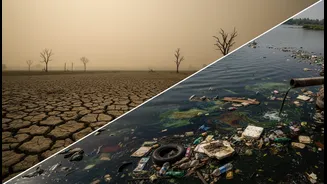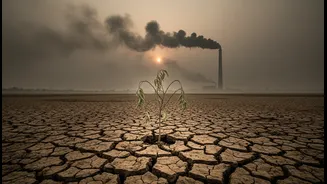









The Air We Breathe, The Price We Pay
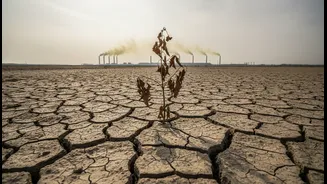
Air pollution remains one of India's most silent and pervasive killers. While discussions often centre on the Air Quality Index (AQI) in major cities, the true impact is measured in lives and livelihoods. In 2019, air pollution was linked to 1.67 million
deaths, accounting for nearly 18% of all deaths in the country. The economic loss from this public health crisis is staggering, estimated at 1.36% of India's GDP due to lost productivity from premature deaths and illnesses. The burden has shifted over the decades; while deaths from household pollution have decreased, mortality linked to ambient particulate matter and ozone pollution has risen sharply since 1990. This isn't just a respiratory issue; emerging research now links long-term exposure to cognitive decline and dementia, posing a new threat to India's ageing population.
A Land of Extremes: Droughts and Deluges
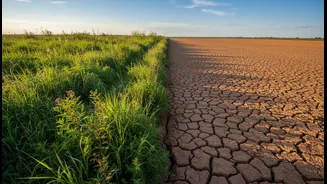
India's relationship with water has become a dangerous paradox, swinging violently between scarcity and flood. Cities like Mumbai, Chennai, and Bengaluru now experience a bewildering cycle of dry taps in summer followed by inundated streets during the monsoon. This is not just a failure of infrastructure but a consequence of destroying natural water systems like wetlands and floodplains. NITI Aayog has warned that millions face extreme water stress, with major cities racing towards groundwater depletion. Meanwhile, climate change is making rainfall more erratic and intense. The year 2025 saw extreme weather events on a staggering 99% of its days, affecting 17.41 million hectares of cropland and causing thousands of deaths. This volatility directly threatens food security and the livelihoods of millions dependent on agriculture.
The Growing Crisis of Waste
Rapid urbanisation and changing consumption patterns have created a monumental waste crisis. India generates approximately 62 million tonnes of municipal solid waste annually, a figure projected to rise dramatically. The problem is not just the volume, but the mismanagement; only a fraction of this waste is properly processed or treated. Cities like Delhi generate thousands of tonnes of waste daily, yet struggle with basic source segregation, which is the critical first step for effective recycling and treatment. As a result, towering landfills have become grim landmarks, polluting the air, water, and soil. While the government aims to remediate thousands of legacy dumpsites by 2026, the slow adoption of recycling technologies and low public participation in waste segregation remain significant hurdles.
Heat, Health, and Threatened Harvests
Intensifying heatwaves are no longer a seasonal headline but a recurring drag on the Indian economy and public health. Extreme heat reduces labour productivity, particularly for those in outdoor sectors like agriculture and construction, putting up to 4.5% of India's GDP at risk by 2030. The agricultural sector is especially vulnerable. The 2022 heatwave, for example, cut wheat yields significantly, impacting food security. High temperatures damage crops, stress livestock, and deplete water resources, creating a cascade of economic and social consequences. This also leads to surges in electricity demand for cooling, straining power grids and leading to outages that further disrupt daily life and economic activity.
Our Shrinking Natural World
Beyond the immediate crises of pollution and climate events, India is facing a steady erosion of its rich biodiversity. Despite being a megadiverse nation, home to a significant percentage of the world's plant and animal species, India is losing habitats at an alarming rate. Forest land is cleared daily for infrastructure projects, fragmenting ecosystems and disrupting wildlife corridors. This has led to a rise in human-wildlife conflict, including an increase in tiger attacks near reserves as their habitats shrink. The country has hundreds of species classified as endangered or critically endangered, facing threats from habitat loss, climate change, and poaching. The loss of biodiversity is not just an ecological tragedy; it undermines the very systems that provide clean water, fertile soil, and climate resilience.