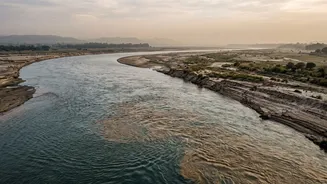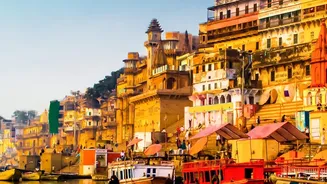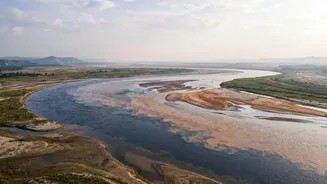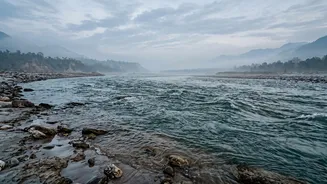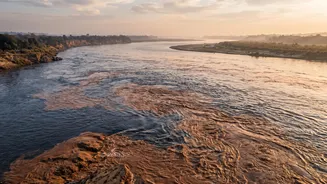




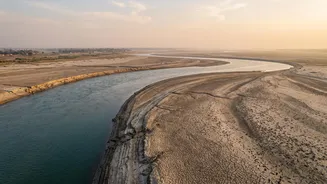
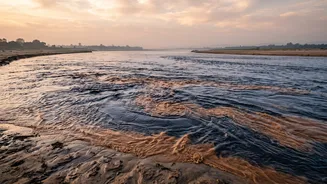
A cornerstone of India-Bangladesh relations for three decades, the Ganges Water-Sharing Treaty, is set to expire. With the deadline looming, both nations face a critical diplomatic test with high stakes for millions of people and the environment.
A Landmark Accord's Sunset
Signed
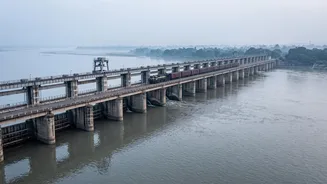
on December 12, 1996, the Ganges Water Treaty was a significant diplomatic achievement between India and Bangladesh. For 30 years, it has provided a framework for sharing the river's flows during the critical dry season, from January 1 to May 31 each year. The agreement dictates a complex formula for water allocation at the Farakka Barrage in West Bengal, located just upstream of the border. However, the treaty was not designed for automatic renewal and is scheduled to lapse in December 2026, forcing both countries back to the negotiating table to chart a new path forward.
The Farakka Flashpoint
The origins of the treaty lie in the Farakka Barrage, which India commissioned in 1975. Its primary purpose was to divert water into the Hooghly River to flush out silt and maintain navigability for Kolkata Port. For Bangladesh, the lower riparian country, the barrage immediately became a point of major contention. It argued the diversion drastically reduced the downstream flow of the Ganges—known as the Padma in Bangladesh—leading to severe consequences. These included increased salinity in southwestern Bangladesh, damage to agriculture and fisheries, and disruption to delicate ecosystems like the Sundarbans. The dispute led to years of tense negotiations, culminating in the 1996 treaty.
Three Decades of Uneasy Cooperation
The 1996 treaty has been hailed as a model for resolving transboundary water disputes, establishing a Joint Rivers Commission (JRC) to monitor its implementation. It has successfully prevented the issue from derailing the broader bilateral relationship. However, it has not been without criticism. Many in Bangladesh feel the agreement failed to secure a guaranteed minimum flow, a provision that was part of a previous, short-term accord in 1977. They argue that reduced dry-season flows have continued to harm livelihoods and the environment. Meanwhile, on the Indian side, there is growing concern that the treaty does not account for the increasing water demands of states like West Bengal and Bihar for agriculture, industry, and drinking water.
What's at Stake in the Renewal?
As the expiration date nears, the stakes are higher than ever. Bangladesh is pushing for a new or revised agreement that includes a 'guarantee clause' to ensure a minimum water share, especially during the leanest periods. Officials in Dhaka have stated they want a fresh agreement rather than a simple renewal, one that better protects their interests as a lower riparian state. For India, the negotiations are complicated by domestic politics. The government in Bihar has publicly urged the Centre not to renew the treaty in its current form, arguing it harms the state's development. New Delhi must balance the water needs of its own populous states with its crucial diplomatic relationship with Dhaka.
New Challenges on the Horizon
The context for water sharing has changed dramatically since 1996. Climate change is altering rainfall patterns and glacial melt, making river flows less predictable. Population growth and rapid industrialisation on both sides of the border have also significantly increased freshwater demand. Any new agreement will need to be more resilient and adaptable, potentially moving towards a more comprehensive, basinwide management approach that considers the health of the entire river system. With formal talks yet to gain momentum, the pressure is mounting on diplomats and technical experts from both nations to find a solution before the December deadline.