





Why Use AI for Your Cover Letter?
The job market is competitive, and tailoring your application is non-negotiable. However, starting from a blank page each time is draining and inefficient. This is where AI tools like ChatGPT, Gemini, and specialized platforms come in. They serve as excellent
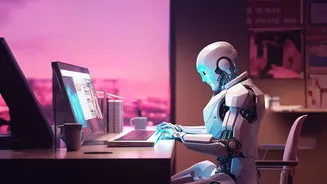
brainstorming partners, helping you overcome writer's block and structure your thoughts. An AI can quickly generate a first draft based on your experience and the job description, saving you hours of work. It can help refine your tone, improve language, and ensure your letter is well-organized. The goal isn't to replace your effort but to augment it, allowing you to focus on the high-impact parts of the application: personalization and strategy.
The Art of the Perfect Prompt
The quality of your AI-generated draft depends entirely on the quality of your instructions, a skill now known as prompt engineering. A vague request like "write a cover letter for me" will produce a generic and useless document. To get a strong starting point, you must provide specific inputs. Your prompt should act like a detailed brief, including the job title, company name, the full job description, and your resume. Go further by telling the AI which of your skills and experiences are most relevant and asking it to highlight them. For example, a great prompt might be: "Act as a career coach. Write a professional cover letter for a Senior Marketing Manager role at [Company Name], using my attached resume and this job description. Focus on my experience in leading successful campaigns and managing a team."
From Generic to Genuine: The Human Touch
An AI-generated draft is the starting line, not the finish line. Recruiters are becoming adept at spotting the robotic, impersonal tone of unedited AI content, which can harm your application. The most critical step is to review, edit, and personalize the text. Your first task is to fact-check everything; AI can make mistakes or misrepresent your experience. Next, inject your own voice and personality. Tweak the language to match your natural communication style. The introduction and conclusion are especially important places to add a personal touch. Weave in specific anecdotes or achievements that an AI wouldn't know, such as a challenging project you overcame or a particular reason you are passionate about the company's mission. Your goal should be to heavily customize the draft, ensuring it sounds authentic and truly represents you.
Avoiding Common AI Pitfalls
While AI is a valuable tool, misuse can backfire. One of the biggest risks is producing a cover letter that is too generic and fails to stand out. If a sentence could apply to any candidate, it's not strong enough. Another danger is a lack of authenticity; hiring managers want to connect with a real person, not a machine. Relying too heavily on AI without thorough editing could also lead to embarrassing factual errors or awkward phrasing. Furthermore, there are data privacy considerations. Be mindful of the personal information you share with AI tools and review their privacy policies. Some employers also view over-reliance on AI as cheating, so it's crucial to use it as an assistant to enhance your own work, not as a substitute for it.