

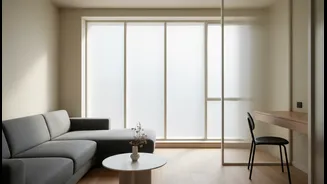
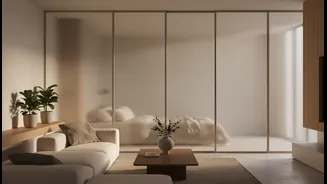
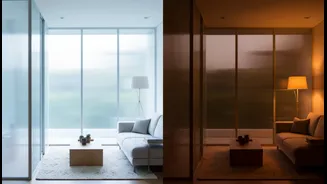


Beyond Beige: What is an Earthy Home?
Forget the idea that 'earthy' is just a synonym for boring beige. This design approach is about creating a home that feels grounded, warm, and deeply connected to the natural world. It’s a gentle rebellion against the fast-paced, mass-produced trends
that dominate social media feeds. The goal is to build a sanctuary that soothes the senses and nurtures well-being. This philosophy values simplicity, not for a stark, minimalist look, but to allow the inherent beauty of materials and forms to shine. An earthy home is less about a specific look and more about a feeling: calm, serene, and timeless. It’s about choosing items with intention, favouring craftsmanship over clutter, and creating a space that tells a personal story.
The Foundation: A Palette of Natural Materials
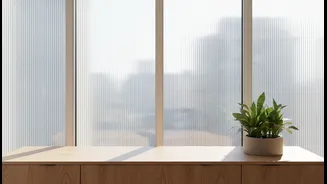
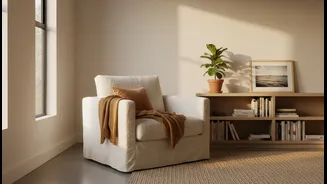
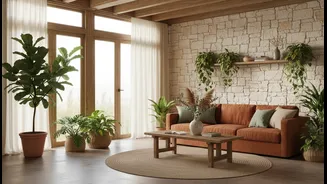
The soul of an earthy home lies in its materials. Think of surfaces that are pleasing to touch and connect us to the outdoors. Wood, in all its forms—from reclaimed timber to polished teak—adds warmth and a sense of history. Stone, whether it’s rugged laterite from Western India, smooth marble from Rajasthan, or simple granite countertops, provides a feeling of permanence. Textiles are natural and textural; think of coarse jute rugs, breathable khadi cotton, soft wool throws, and airy linen curtains that filter sunlight beautifully. Even smaller accents play a crucial role. Terracotta pots, clay-based lime plaster walls, and handcrafted ceramic vases bring a rustic, handmade elegance into the space. These materials are not just beautiful; they are often sustainable choices that age gracefully.
Colours Pulled from the Landscape
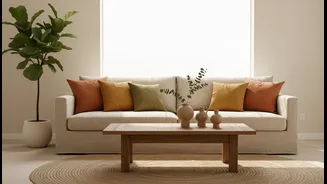
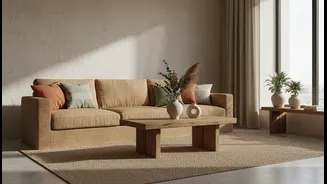
The colour scheme of an earthy home is drawn directly from nature. It’s a palette designed to be soothing and harmonious. Start with a foundation of warm, muted neutrals like sand, cream, and soft grey, which mimic the colours of stone and soil. These tones create a versatile and calming backdrop. From there, layer in richer earth tones like terracotta, ochre, cocoa brown, and various shades of green, from subtle sage to deep olive. These colours evoke a sense of the outdoors—the richness of soil, the colour of autumn leaves, and the varied greens of a forest. This natural palette helps to create an inviting and restful atmosphere, transforming rooms into relaxing havens. The key is to use warm-toned lighting (around 2700K) to enhance these colours and avoid the sterile feel of cool-white light.
The Art of Simplicity and Texture
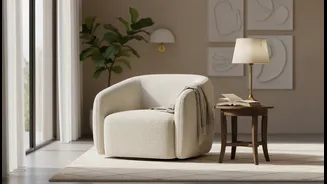
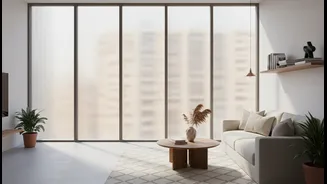
Simplicity in an earthy home does not mean emptiness. It means creating uncluttered, open spaces where furniture and objects can breathe. Instead of filling a room, the focus is on choosing fewer, more meaningful pieces. This approach allows the textures within the space to become a primary design element. The rough grain of a wooden table, the softness of a woollen rug underfoot, the smooth coolness of a stone surface, and the nubby weave of a linen sofa all add depth and interest. This layering of textures prevents neutral palettes from feeling flat and makes a space feel cosy and inviting. The Japanese philosophy of wabi-sabi, which finds beauty in imperfection, is a guiding principle here—celebrating the slightly uneven surface of a handmade bowl or the natural patina of aged wood.
Finding Home: Cultivating a Sense of Place
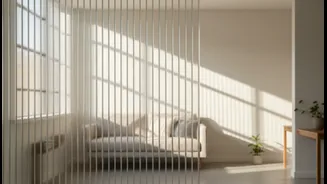
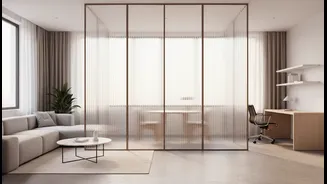
Perhaps the most powerful aspect of the earthy home is its ability to create a 'sense of place'. This means moving beyond generic, globalised design and grounding your home in its specific location and your personal history. For an Indian context, this can be beautifully expressed by integrating local craftsmanship and materials. Imagine a wall finished with the lustrous texture of Chettinad plaster, floors laid with colourful Athangudi tiles from Tamil Nadu, or a partition inspired by traditional jaali patterns. Incorporating indigenous art forms like Dhokra metalwork from Chhattisgarh, Warli paintings from Maharashtra, or Madhubani art from Bihar adds a unique story and cultural depth. By choosing items made by local artisans, you not only support heritage crafts but also infuse your home with an authentic identity that cannot be replicated. This is how a house truly becomes a home: a space that reflects not just a style, but a story, a culture, and a connection to the world around it.