





The One-Screen Nation
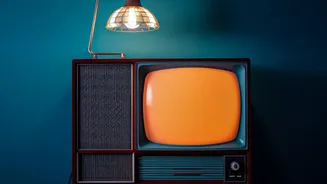
In the 1980s and early 90s, television viewing was a community event. With the state-run Doordarshan as the sole broadcaster, entertainment was a shared national experience. Streets would reportedly empty out for mythological epics like 'Ramayan' and 'Mahabharat',
which became cultural phenomenons. Shows like 'Hum Log' and 'Buniyaad' mirrored the struggles and aspirations of a middle-class India, making television a focal point of family life. This was the era of appointment viewing, a time when the TV schedule dictated the rhythm of the household, and watching together was a cherished ritual.
The Satellite TV Disruption
The 1990s economic liberalisation opened the floodgates to private and foreign satellite channels like Zee TV and Star TV. Suddenly, the Indian viewer was flooded with choice. This boom forever changed home entertainment, leading to an explosion of networks and content. It was during this period that the daily soap opera, particularly the 'saas-bahu' genre pioneered by producers like Ekta Kapoor, took firm root. Shows like 'Kyunki Saas Bhi Kabhi Bahu Thi' became a staple, creating long-running narratives that held a massive audience, primarily women, captive for years. While family viewing continued, content began to target specific demographics, setting the stage for a more fragmented audience.
A Screen in Every Hand
The real revolution began quietly, with the arrival of affordable smartphones and, crucially, cheap high-speed data plans in the mid-2010s. This digital transformation turned every individual into a potential viewer with their own personal screen. The power shifted from the broadcast schedule to the viewer's fingertips. This personal, on-demand ritual was the perfect environment for Over-the-Top (OTT) platforms to thrive. The stage was set for content to be consumed anytime, anywhere, liberating viewers from the living room television set.
The Age of Web Originals
Global giants like Netflix and Amazon Prime Video, alongside homegrown players like Disney+ Hotstar, ZEE5, and SonyLIV, didn't just offer old movies; they invested heavily in 'web originals'. These were series made specifically for a streaming audience. Freed from television's censorship and time constraints, creators could explore darker, more complex, and mature themes. Shows like 'Sacred Games' and 'Mirzapur' presented a grittier reality, a stark contrast to the sanitised world of family soaps. This new wave of content catered to a younger, globalised audience, offering everything from intense thrillers to nuanced dramas that would have been impossible on traditional TV.
The Fractured Living Room
Today, the Indian family home looks very different. While the big screen TV remains, it's often just one of many screens in use. It's common to find different family members in the same room, each engrossed in their own content on a phone, tablet, or laptop. The shared, collective experience of 'Ramayan' has given way to individual binge-watching sessions. This shift reflects a broader societal change—a move from a collective 'we' to a more individualistic 'I'. While it provides unprecedented choice and access to diverse, high-quality global content, it has also fragmented the family viewing ritual that once brought everyone together.