









The Mindset, Not the Major
The true value of an education at a premier institution like an IIT isn't just the subject matter; it's the crucible effect. These campuses are designed to push students to their intellectual limits. They teach a specific way of thinking: breaking down
complex, seemingly impossible problems into manageable parts, working collaboratively under intense pressure, and building resilience through repeated failure and eventual success. This problem-solving 'operating system' is field-agnostic. It’s a powerful toolkit that graduates carry with them, whether they’re building a bridge, a company, a story, or a national policy. The major is the starting point; the mindset is the launchpad.
1. The Entrepreneurial Trailblazer
The most visible pivot from a technical background is into entrepreneurship. The story of Flipkart, founded by IIT Delhi alumni Sachin Bansal and Binny Bansal, is legendary. They didn't just use their coding skills; they applied an engineering mindset to solve a massive logistical and commercial problem: how to build an e-commerce giant for India. They identified inefficiencies, designed systems, and scaled solutions. This path is well-trodden by graduates who see a problem in the world and feel an overwhelming urge to build the solution themselves, proving that the campus teaches you how to build not just products, but entire ecosystems.
2. The Bestselling Author and Storyteller
Perhaps the most surprising path is from engineering to the arts. Chetan Bhagat, an alumnus of IIT Delhi and IIM Ahmedabad, is the prime example. How does an engineer become one of India’s most commercially successful authors? Bhagat himself has noted that his training helped him structure narratives logically and understand his audience (the market) with an analytical eye. He writes with a clarity and directness that connects with millions. It’s a powerful reminder that creativity isn’t the opposite of logic; sometimes, it’s structured by it. The ability to craft a compelling narrative, whether in code or in prose, is a fundamental skill.
3. The Global Financier and Policymaker
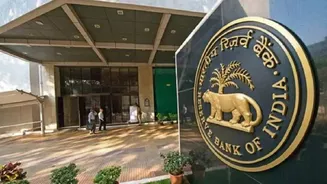
From the campus in Hauz Khas to the highest echelons of global finance, the leap is one of intellect and ambition. Raghuram Rajan, former Governor of the Reserve Bank of India and an IIT Delhi graduate in electrical engineering, exemplifies this trajectory. His journey through management and a PhD in economics shows how a quantitative, systems-thinking background is a massive advantage in understanding the complex, interconnected world of global economics. He applied a diagnostic, problem-solving approach to monetary policy, demonstrating that the skills to design a circuit can be repurposed to design frameworks that impact the lives of a billion people.
4. The Venture Capitalist and Kingmaker
After building something new, what’s the next step? For some, it’s helping others build the next big thing. Vinod Khosla, another IIT Delhi alumnus and co-founder of Sun Microsystems, is one of Silicon Valley’s most influential venture capitalists. VCs with technical backgrounds have a distinct edge: they can evaluate the technological feasibility of a startup’s claims and understand the founder’s vision on a deeper level. They aren't just betting on business plans; they’re betting on technological revolutions. Their engineering past allows them to see the future with greater clarity and invest in the people and ideas that will shape it.