

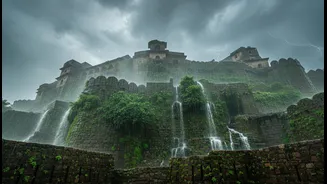


Lohagad Fort, Maharashtra: The Iron Fortress
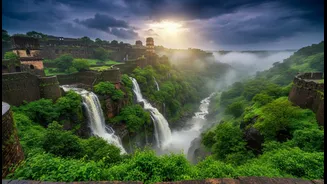
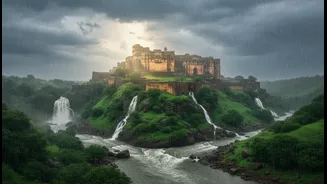
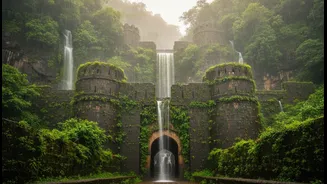
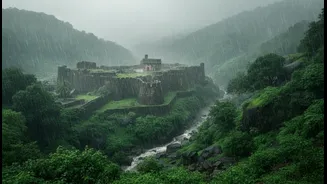
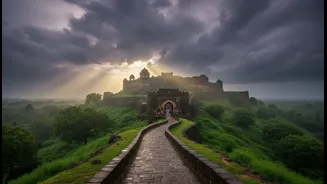
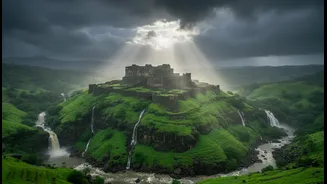
Often the first monsoon trek for residents of Mumbai and Pune, Lohagad is a beginner-friendly fort that delivers spectacular rewards. Meaning "Iron Fort," its pathways and ramparts come alive during the rains. The entire Sahyadri range turns a vibrant
green, waterfalls appear from nowhere, and clouds drift right through the fort's ancient gates. The main trail consists of well-laid stone steps, making it accessible even for families. The highlight is the 'Vinchu Kata' or Scorpion's Tail, a long, fortified ridge offering breathtaking views of the Pawna reservoir below. Given its popularity, it's best visited on a weekday to avoid the weekend rush and truly soak in the misty atmosphere.
Mandu, Madhya Pradesh: The City of Joy
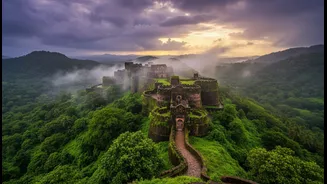
Perched in the Vindhya Range, the entire fortified city of Mandu is a monsoon dream. It was once named 'Shadiabad' or the 'City of Joy' by Emperor Jehangir, who loved its monsoon beauty. Unlike the trekking-focused forts of Maharashtra, Mandu is about soaking in the romantic atmosphere of palaces, tombs, and mosques dotting the lush landscape. The legendary love story of Baz Bahadur and Rani Roopmati echoes through the pavilions. From Roopmati's Pavilion, it is said she could gaze upon the Narmada river. The famous Jahaz Mahal, or Ship Palace, appears to float between two artificial lakes, a sight made even more magical by the falling rain. The rains wash the ancient structures, fill the lakes, and make the entire city feel like a lost, green paradise.
Kumbhalgarh, Rajasthan: The Great Wall of Mewar
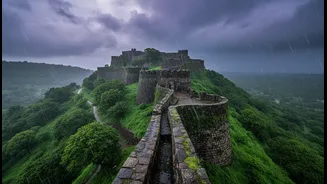
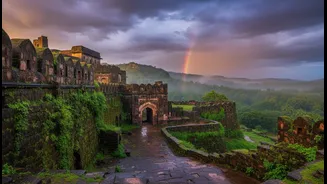
Rajasthan in the monsoon offers a completely different kind of magic. The arid Aravalli hills surrounding Kumbhalgarh, a UNESCO World Heritage Site, are transformed into a vibrant, emerald landscape. The fort boasts the second-longest continuous wall in the world, which looks even more formidable snaking through the mist-covered hills. Exploring the vast complex is far more pleasant in the cooler, rain-washed weather than in Rajasthan's usual dry heat. The highest point, Badal Mahal or the 'Palace of Clouds,' truly lives up to its name as you can literally stand with your head in the clouds, watching the fog roll across the valleys below. It's a chance to see a familiar landscape with a fresh, green perspective.
Sinhagad, Maharashtra: History, Views, and Hot Bhajis
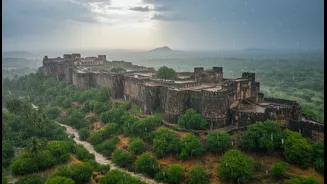
For the people of Pune, a monsoon trip to Sinhagad is a cherished ritual. Located just a short drive from the city, this fort is steeped in the history of Tanaji Malusare's heroic battle. The trek to the top is invigorating, with lush greenery and stunning views of Khadakwasla lake. However, the true Sinhagad experience is what awaits at the summit: numerous small stalls serving piping hot, authentic Maharashtrian snacks. Enjoying a plate of Kanda Bhaji (onion fritters) and Pithla Bhakri (a traditional gram flour dish with flatbread) while enveloped in cool mist is an experience that defines the monsoon for many. But be aware, due to its popularity and the risk of slippery paths, authorities sometimes restrict access during heavy rainfall for safety.
Rajmachi, Maharashtra: The Twin Forts in the Forest
Offering a slightly more rugged experience, Rajmachi is a favourite among those looking for a mix of history and nature. The destination actually consists of two forts, Shrivardhan and Manaranjan, perched on a wide plateau. The trek, especially the longer route from Lonavala, takes you through a dense forest that is at its absolute best during the monsoon. This route is more sheltered and ecologically rich than many open-hillside climbs. Before the heavy rains set in, the area is famous for its pre-monsoon firefly season in June. During the peak monsoon, the plateau offers stunning views of the surrounding valleys, often shrouded in a thick blanket of fog, making you feel a world away from the city.