





More Than Just Rain
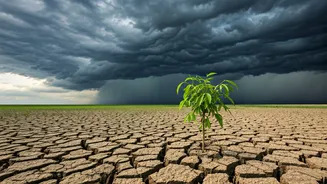
For centuries, India's agricultural calendar has danced to the predictable beat of the monsoon. [13] But that rhythm is changing. Climate change isn't just about the total amount of rain; it's about timing, intensity, and distribution. [4, 5] Scientists
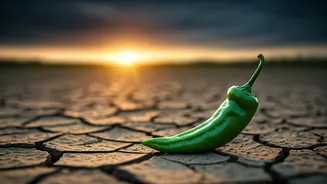
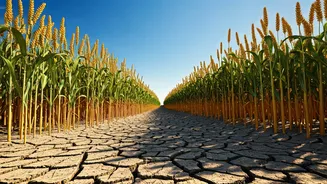
and farmers are observing delayed monsoon arrivals, long dry spells punctuated by intense, crop-damaging downpours, and early withdrawals. [13] A normal amount of rain on paper can be disastrous if it all falls in a few short weeks, causing floods, instead of being spread out over the season. [13, 19] This new unpredictability, with some regions facing deficits while others are inundated, is creating significant stress for a system that feeds over a billion people and where over half of the farmland is still rain-fed. [3, 16]
From Field to Crisis
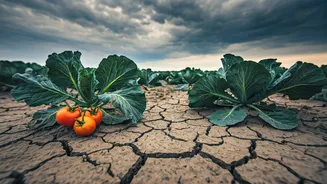
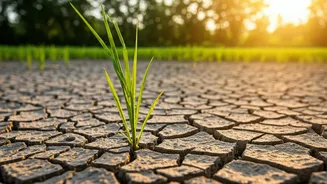
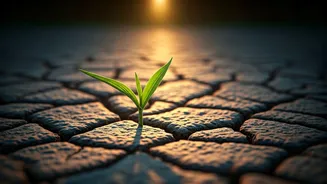
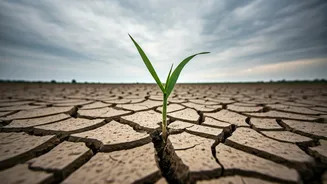
This meteorological chaos translates directly into agricultural distress. A delayed monsoon throws off the entire sowing schedule for critical Kharif crops like rice, pulses, and oilseeds. [12, 13] Farmers who sow seeds in anticipation of rain that never arrives risk losing their investment entirely. [4, 17] Conversely, sudden, heavy rainfall can wash away newly planted seedlings or damage mature crops waiting to be harvested. [4, 19] For instance, a 6% rainfall deficit in 2023 reduced the sown area for essential pulses and oilseeds. [6] staples like rice, wheat, and sugarcane are vulnerable to these shifts, with extreme weather shocks capable of reducing farmer incomes significantly. [3] The impact is felt most acutely in unirrigated areas, making millions of small and marginal farmers highly vulnerable to these new weather patterns. [3]
The Ripple Effect on Your Plate
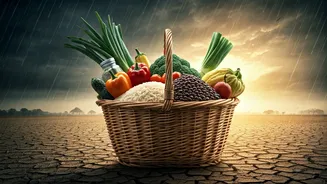
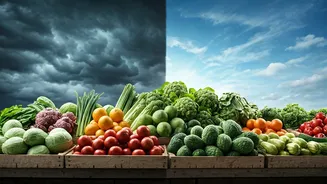
The journey from a struggling farm to your grocery basket is short and direct. Lower crop yields and outright crop failures immediately tighten supply. [7] This creates a chain reaction: supply bottlenecks, hoarding, speculation, and ultimately, higher food prices. [10] Food and beverages make up nearly half of India's Consumer Price Index (CPI), so any shock to agriculture is quickly reflected in retail markets and overall inflation. [6, 7] We see this in the volatile prices of staples like tomatoes and onions, which can skyrocket due to weather-related disruptions. [20] The Economic Survey has directly linked recent spikes in vegetable and pulse prices to erratic weather, noting that climate change is transforming food security from an issue of availability to one of affordability. [6, 20]
A New Grocery Reality
These changes are forcing a rethink of India's entire food system. For the consumer, this could mean more than just higher prices. The availability of certain regional fruits and vegetables might become less predictable. [18] What were once common staples could become seasonal luxuries. This new reality is also shaping how we might shop in the future, with a potential shift in consumer habits toward more resilient or less water-intensive food items. Farmers are already trying to adapt by using short-duration crop varieties, micro-irrigation, and better weather forecasting, sometimes powered by AI. [2, 14] However, these long-term disruptions challenge the assumption that supply shocks are temporary, suggesting that climate-driven food inflation may become a more persistent feature of our economy. [9]