

The Annual Pothole Problem
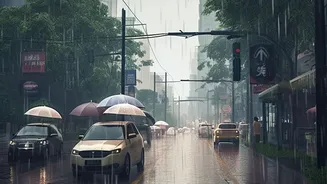
The relationship between Indian cities and the monsoon is complex. While the rains offer relief from scorching heat, they unleash havoc on our infrastructure. Roads, in particular, bear the brunt. Water penetrates small fissures in the asphalt and concrete.
The constant pressure from traffic then widens these gaps, creating the potholes that plague drivers and municipal corporations alike. This triggers an expensive, seemingly endless cycle: roads are patched up post-monsoon, only for the same problems to reappear the following year. This constant repair work not only drains public funds but also causes significant traffic disruption. The need for a more durable, resilient solution has never been more apparent, pushing engineers and scientists to look beyond traditional materials.
What Is 'Living' Concrete?
Imagine a road that can fix its own cracks. This is the promise of self-healing concrete, an innovative material that mimics the regenerative processes found in nature. Unlike standard concrete, which is inert, this 'living' version has a biological component added during the mixing process. Tiny capsules or pellets containing specific, harmless bacteria and their food source are embedded within the concrete matrix. These microorganisms, often strains like Sporosarcina pasteurii or Bacillus pseudofirmus, are chosen for their ability to endure the highly alkaline environment of concrete and remain dormant for extended periods—some estimates suggest up to 200 years. They essentially sleep within the structure, waiting for a specific trigger to awaken them and begin their repair work.
How Bacteria Become Builders
The genius of this technology lies in its activation mechanism. When a crack forms in the concrete, it allows water to seep in. This is the wake-up call for the dormant bacteria. Once activated by the presence of water, the microbes begin to consume the nutrient source packed with them, typically a substance like calcium lactate. As they metabolize this food, they initiate a process called Microbially Induced Calcium Carbonate Precipitation (MICP). Through a series of chemical reactions, they produce calcium carbonate—essentially limestone—which fills and seals the crack. This new limestone deposit hardens, bonding the cracked surfaces together and restoring the concrete's structural integrity and water resistance. The crack is healed from the inside out, preventing further deterioration.
A Perfect Match for Monsoons?
The very problem that destroys conventional roads—water—is the key that unlocks the healing potential of bio-concrete. This makes it a fascinating proposition for monsoon-prone regions. During the rainy season, any new micro-cracks that form would be almost immediately exposed to the water needed to activate the bacteria. Instead of water being a destructive force that expands damage, it becomes an essential part of the solution, triggering the limestone production that seals the fissures. This could transform road maintenance from a reactive, manual process into a proactive, autonomous one. A road built with this technology could theoretically strengthen itself during the wettest months of the year, drastically extending its lifespan and reducing the need for constant, costly repairs.
The Road Ahead: Hurdles and Hopes
While the technology is revolutionary, it's not yet a common sight on our city streets. Several challenges hinder its widespread adoption. The primary hurdle is cost; self-healing concrete can be significantly more expensive upfront than its traditional counterpart. Researchers are actively working to bring this cost down by finding cheaper nutrient sources for the bacteria. Furthermore, issues of scalability for large infrastructure projects and the lack of standardized regulations are yet to be fully addressed. While research is underway in India, including at institutions in Bangalore and Hyderabad, the technology is still largely in the pilot and experimental phase. The dream of self-healing roads across the country remains a future goal, not a present reality.