




India’s Next Great Interplanetary Adventure
The Indian Space Research Organisation (ISRO) is cementing its reputation as a major player in planetary exploration. Following the historic successes of the Mangalyaan Mars mission and the Chandrayaan missions to the Moon, the agency is now diligently
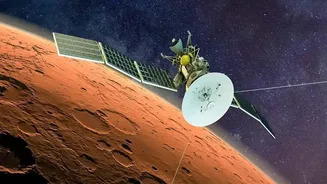
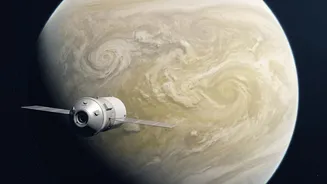
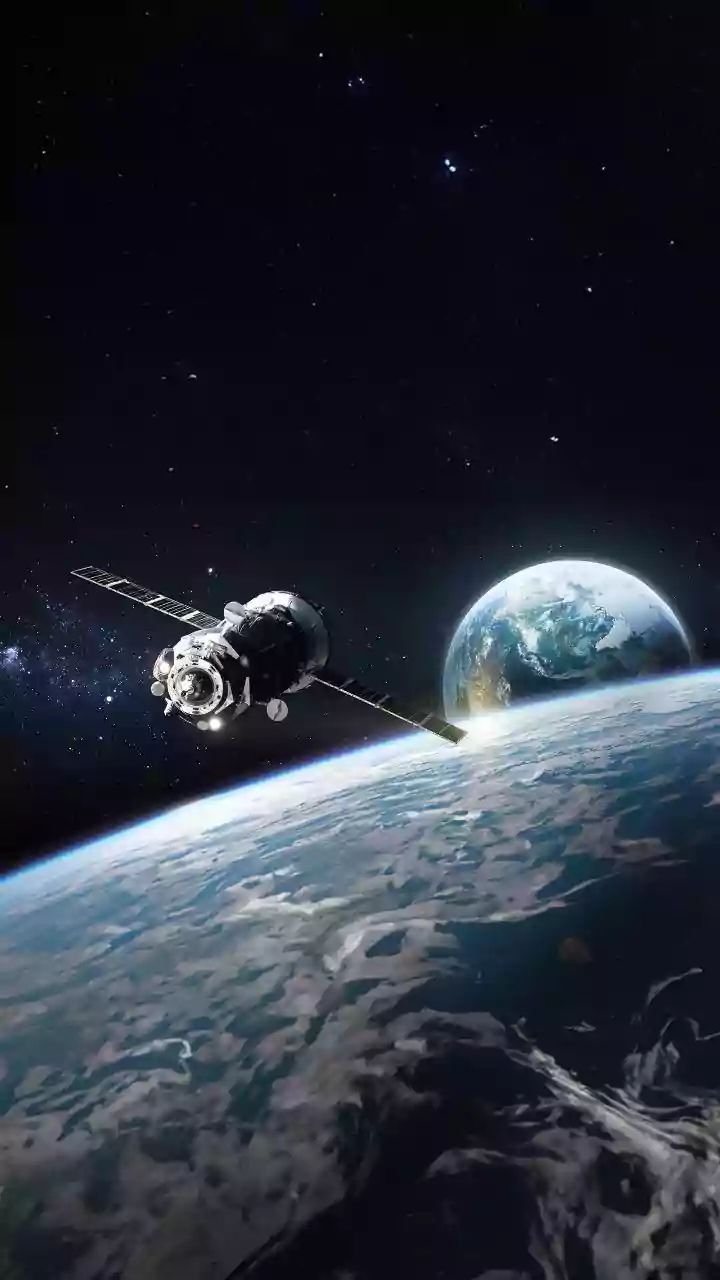
preparing for its first-ever voyage to Venus. Named Shukrayaan-1, which translates from Sanskrit to 'Venus Craft', this orbiter mission represents a significant leap in India's scientific ambitions. The government officially approved the mission in September 2024, signalling a firm commitment to exploring the second planet from the sun. The mission will place India in an elite club of nations that have ventured to study one of the most challenging and enigmatic environments in our solar system.
Why Venus? Uncovering Earth's 'Evil Twin'
Venus is often called Earth's twin due to its similar size, mass, and composition. Yet, the similarities end there. Venus is a hellish world with surface temperatures hot enough to melt lead, a crushing atmospheric pressure over 90 times that of Earth's, and dense clouds of sulfuric acid. Scientists are deeply intrigued by why these two sibling planets evolved so differently. Venus experienced a runaway greenhouse effect, a scenario that offers a stark cautionary tale for understanding climate change on our own planet. By studying Venus, scientists hope to gain invaluable insights into planetary evolution, atmospheric dynamics, and the conditions that determine a planet's habitability.
The Search for Active Volcanoes
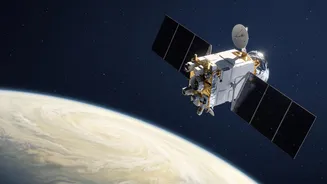
One of Shukrayaan's primary scientific goals is to investigate the geology of Venus, particularly to find out if the planet is still volcanically active. Previous missions have revealed a surface covered in volcanic features, but whether any of these volcanoes are currently erupting remains a key unanswered question. To achieve this, the Shukrayaan orbiter will be equipped with a suite of advanced instruments. A high-resolution Synthetic Aperture Radar (SAR) will be able to peer through the dense cloud cover to map the surface in unprecedented detail, with a resolution up to four times better than NASA’s Magellan mission from the 1990s. The mission will also carry a ground-penetrating radar, a world-first for Venus exploration, designed to study the planet's subsurface layers. These tools will hunt for tell-tale signs of recent volcanic activity, such as fresh lava flows and the presence of specific volcanic gases.
Analysing the Toxic Atmosphere
Understanding the complex chemistry of Venus's thick atmosphere is another crucial objective. The mission's payload is specifically designed to analyse the composition of its toxic clouds and the gases swirling within. An instrument co-developed by Russia and France, called the Venus InfraRed Atmospheric gases Linker (VIRAL), will study the chemical makeup, looking for key gases like sulfur dioxide, carbon monoxide, and water vapour. These gases can provide clues not only about volcanic eruptions but also about the chemical processes driving the planet's extreme climate. Some instruments will also investigate the controversial 2020 detection of phosphine gas in the Venusian clouds, a compound that, on Earth, is associated with microbial life.
A Global Effort on the Road to Launch
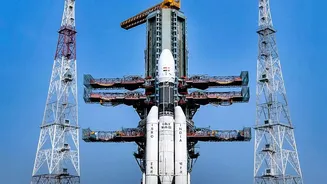
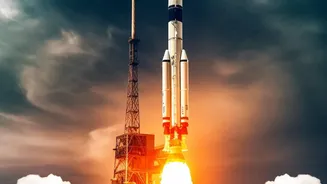
Shukrayaan-1 is not just an Indian mission; it's a collaborative international effort. While the majority of the nearly 20 scientific instruments are Indian, the mission includes significant contributions from global partners. Besides the Franco-Russian VIRAL instrument, Sweden is providing a key sensor called the Venusian Neutrals Analyzer (VNA) to study the interaction between the solar wind and the planet's upper atmosphere. This spirit of collaboration is vital for tackling the immense challenges of deep-space exploration. The mission is currently slated for launch on March 29, 2028, aboard ISRO's powerful LVM-3 rocket, the same launch vehicle used for the Chandrayaan missions. After a journey of over 100 days, the spacecraft is expected to enter its elliptical orbit around Venus in July 2028.