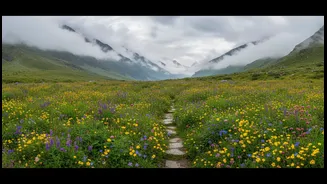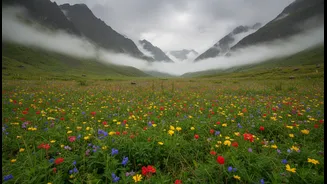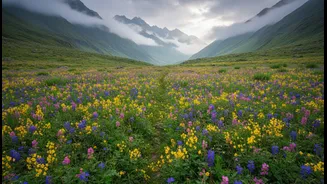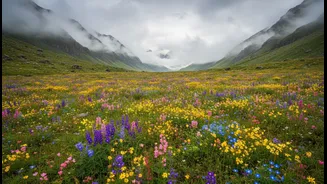




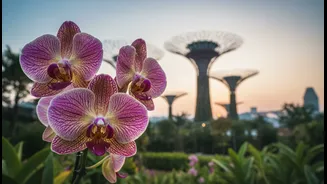
The Magic of the Valley
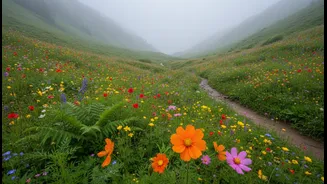
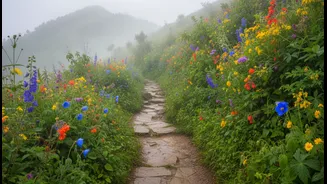
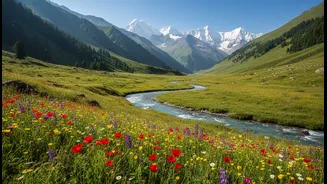
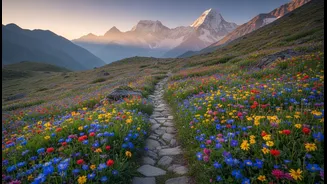
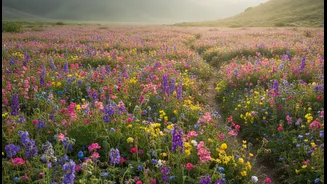
The Valley of Flowers National Park is renowned for its meadows of endemic alpine flowers and breathtaking natural beauty. Home to over 500 species of flora, the valley transforms into a riot of colour during its short blooming season. It's not just flowers;
the park is also home to rare wildlife like the snow leopard and Asiatic black bear, though sightings are rare. This protected area, bordering the rugged Nanda Devi National Park, offers a trekking experience that is both physically rewarding and spiritually uplifting, with landscapes that change dramatically with the shifting mists and light.
The All-Important Bloom Window
The park is only accessible from June to October, as it's covered in snow the rest of the year. The absolute best time to witness the floral spectacle is during the monsoon, specifically from mid-July to mid-August. During this peak window, the flowers are in full, vibrant bloom. Visiting in June means you'll see early blossoms and fewer crowds, while September offers a quieter experience with late-bloomers as the valley prepares for winter. For the 2026 season, the park opened on June 1st and is expected to close around early October.
Permits and Timings
A permit from the Uttarakhand State Forest Department is mandatory to enter the valley. These can be obtained offline at the entry point, but booking online in advance is highly recommended, especially for the peak season. The permit is typically valid for three days. As of recent seasons, the cost for Indian citizens is around ₹150, and for foreign nationals, it is approximately ₹600. The park has strict timings: entry is allowed from 7:00 AM to 2:00 PM, and all visitors must exit the valley by 5:00 PM. Overnight stays inside the park are not permitted.
A Typical 6-Day Itinerary
Most treks start from Haridwar or Rishikesh. Day 1 involves a long 10-12 hour drive to Govindghat. On Day 2, you travel a short distance by road to Pulna and then begin the 13-14 km trek to Ghangaria, the base camp for the valley. Day 3 is dedicated to exploring the Valley of Flowers, a 4-5 km trek one way from Ghangaria. Many trekkers use Day 4 for the steep but rewarding trek to Hemkund Sahib, a high-altitude Sikh Gurudwara and lake. Day 5 involves trekking back down from Ghangaria to Govindghat and driving to a nearby town like Joshimath. Finally, Day 6 is the return journey to Haridwar/Rishikesh.
Getting There and Staying
The journey begins by reaching Haridwar, Rishikesh, or Dehradun. From there, you undertake a long road journey of about 270-300 km to Govindghat. The actual trek starts from Pulna, a short drive from Govindghat. Ghangaria is the only place to stay for the trek into the valley and to Hemkund Sahib. Accommodation here is basic but sufficient, ranging from private guesthouses and budget hotels to the government-run GMVN Tourist Rest House and tented camps. Given the limited options and high demand during peak season, it is crucial to book your stay well in advance.
What to Pack for a Monsoon Trek
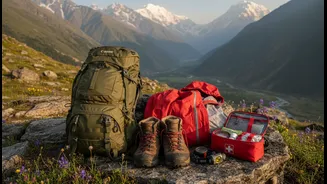
Packing for a monsoon trek requires a focus on staying dry and warm. Essential items include waterproof trekking shoes with good grip, a reliable poncho or a rain jacket and pants, and a rain cover for your backpack. Layering is key, so pack quick-dry t-shirts, a fleece jacket, and a light insulated jacket. Carry a daypack for the valley excursions to hold water, snacks, your packed lunch, and a first-aid kit. A trekking pole is highly recommended for stability on slippery trails. Don't forget sunscreen, a sun hat, sunglasses, and personal medications.
Responsible Trekking in a Fragile Zone
The Valley of Flowers is a delicate ecosystem. Visitors are urged to trek responsibly. This means not picking any flowers or plants, as many are rare and endangered. Stick to the designated trails to avoid trampling the flora. Carry all your non-biodegradable waste, like plastic wrappers and bottles, back with you to Ghangaria or Govindghat for proper disposal. The guiding principle is to leave the valley exactly as you found it, ensuring its pristine beauty remains for future generations to cherish.