



The dust has settled on the November 2026 midterm elections, and the results have created a new political dynamic in Washington. With a reconfigured Congress, the world is now watching to see what this means for US foreign policy.
A New Balance of Power
The midterm elections
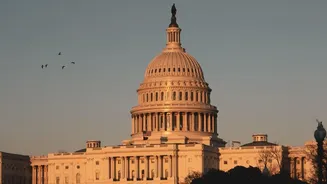
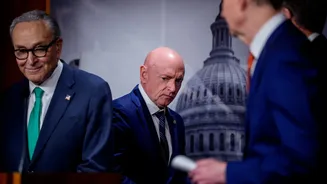
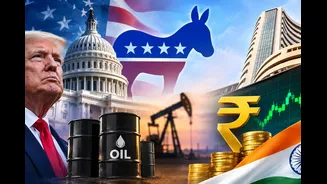
delivered a significant shift, with the Democratic Party winning control of both the House of Representatives and the Senate. This ends unified Republican control and ushers in a period of divided government for the remaining two years of Donald Trump's presidential term. While a president traditionally retains significant authority in foreign affairs, the new Democratic majority in Congress now holds powerful levers of influence, including control over government spending, the power to launch investigations, and the Senate's role in confirming appointments. This sets the stage for potential clashes between the White House and Capitol Hill on the direction of America's role in the world.
The Future of Aid for Ukraine
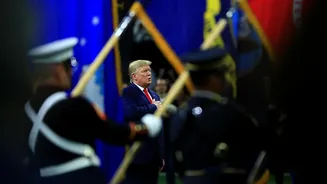
Support for Ukraine has become a major point of contention. President Trump had previously suspended most financial and military aid to Kyiv, a move that drew criticism from both parties. With Democrats now in control of Congress, analysts expect a strong push to restore and even increase support for Ukraine. The new majority has made assisting Kyiv a stated priority and may be able to secure enough bipartisan backing to approve new aid packages, potentially with majorities large enough to override a presidential veto. However, some experts caution that President Trump may still seek to use his executive power to end the war, possibly on terms unfavorable to Ukraine, creating a tense standoff with lawmakers.
The China Equation
The US-China relationship remains a central focus for global stability. While there is a strong bipartisan consensus in Washington on the need to be competitive with China, the midterm results could change the tactical approach. Analysts suggest the new Democratic majority might challenge Trump's heavy reliance on tariffs, especially if they are seen as raising costs for American consumers. At the same time, Congress could exert more pressure on the administration to take a firm stance on other issues, such as arms sales to Taiwan. For Beijing, the election outcome presents a mixed picture: a weakened president might be more open to deals, but a more hawkish Congress could introduce new friction points.
Flashpoint in the Middle East
The Middle East remains a region of critical importance and potential volatility. The midterm results have intensified scrutiny of the Trump administration's confrontational stance toward Iran. Analysts note that with domestic priorities likely to be gridlocked, a president often turns to foreign policy, where they have more freedom to act. This could lead to unpredictable moves. The new Democratic majority in Congress is expected to challenge the administration's approach, potentially using its control over funding to limit military action or restrict arms sales in the region. However, the president retains significant authority as commander-in-chief, meaning the next two years could see a tug-of-war over policy toward Iran and other regional allies.