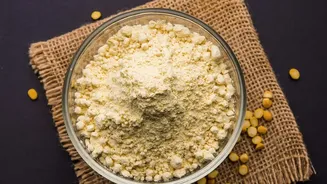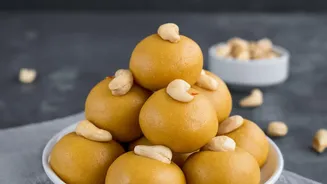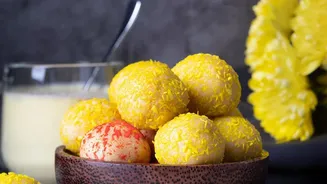




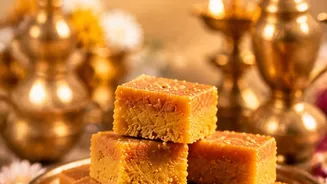

The perfect Besan Ladoo is a thing of beauty: a sweet, nutty sphere that melts in your mouth. But achieving this texture while perfectly roasting the gram flour (besan) can be tricky. Here’s how to master the technique for flawless ladoos every time.
The Roasting Ritual: Patience is Key
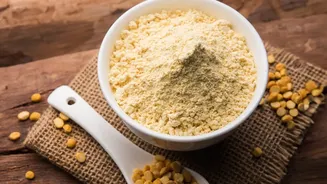
The single most critical step in making delicious Besan Ladoo is roasting the gram flour. This is not a process to be rushed. Roasting on high heat is the fastest way to get a ladoo that tastes both raw and bitter, as the outside burns while the inside remains uncooked. Always use a heavy-bottomed pan (kadai) on a low to medium-low flame. Stir the besan continuously to ensure it cooks evenly and doesn't stick to the bottom. The process can take anywhere from 15 to 25 minutes. You will know it's ready when the colour changes to a uniform golden brown and the kitchen fills with a sweet, nutty aroma. Any raw smell means it needs more time. A quick taste test of a cooled pinch of flour should confirm a toasted flavour with no raw, beany notes.
Managing the Ghee: For Flavour and Texture
Ghee does more than just add richness; it's essential for the ladoo's final texture. A common mistake is adding all the ghee at once, which can make the mixture heavy and difficult to roast evenly. A better approach is to start with about half to three-quarters of your ghee, adding the rest gradually as the besan roasts. In the beginning, the mixture will look thick and somewhat lumpy. As you continue to stir and cook, the besan will loosen and transform into a smooth, glossy paste as it releases its own oils and absorbs the ghee. If the final roasted mixture looks too dry and sandy, you may need to add a little more warm ghee. The right amount will give you a soft, melt-in-the-mouth texture, while too little results in a dry, firm ladoo.
The Sweet Spot: When to Add Sugar
Timing the addition of sugar is crucial for texture. Adding sugar to a hot besan mixture is a guaranteed way to create flat, sticky ladoos. The heat will melt the sugar into a syrup, ruining the consistency. Instead, transfer the roasted besan to a separate plate or bowl and let it cool until it is just warm to the touch, which usually takes about 15 minutes. The mixture should be cool enough to handle without it feeling hot. However, don't let it cool completely, as cold, solidified ghee will prevent the ladoos from binding. For the best texture, use finely powdered sugar or a traditional variety like 'boora' or 'tagar', as regular granulated sugar can leave a gritty mouthfeel.
Troubleshooting: Fixing Common Ladoo Problems
Even with care, issues can arise. If your ladoo mixture is dry and crumbly and refuses to hold its shape, it almost always means you need more ghee. Add a teaspoon or two of warm, melted ghee at a time until the mixture comes together. If it's still not binding, some suggest refrigerating the mixture for 10–15 minutes can help. Conversely, if your mixture is too wet and loose, it’s likely due to too much ghee or adding sugar when the besan was too hot. The best fix for this is to refrigerate the mix for 15–30 minutes to let the ghee firm up. If it's still too soft, you can try adding a small amount of separately dry–roasted besan or some powdered nuts to absorb the excess fat.
Achieving the Perfect Grainy Texture
A truly great Besan Ladoo has a slightly grainy, sandy texture that collapses on the tongue, rather than being smooth like fudge. This texture often starts with the type of flour; a coarser variety, sometimes sold as 'ladoo besan', is ideal. If you only have fine besan, some cooks add a tablespoon or two of semolina (rava/suji) during the roasting process to introduce that granular feel. Another traditional trick is to sprinkle a tablespoon of water or milk over the hot, roasted besan mixture. It will sizzle and bubble, creating a 'danedar' or grainy effect. However, be aware that adding moisture can slightly reduce the shelf life of the ladoos.