

India’s Next Great Space Adventure
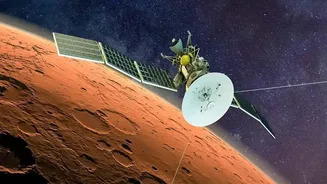
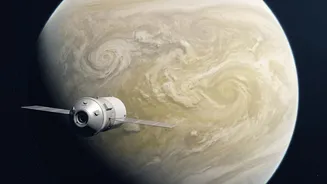
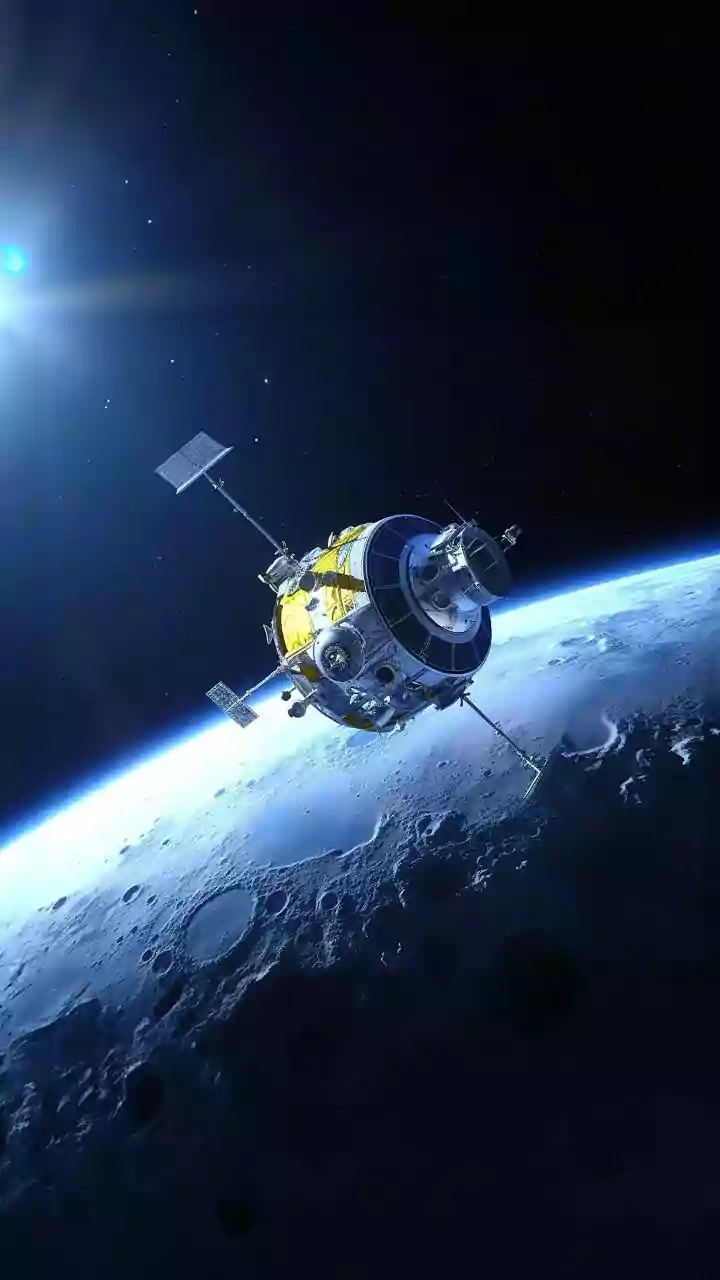
Following the monumental successes of its lunar and Martian missions, the Indian Space Research Organisation (ISRO) is turning its gaze to one of the most enigmatic planets in our solar system: Venus. The Shukrayaan mission, formally the Venus Orbiter
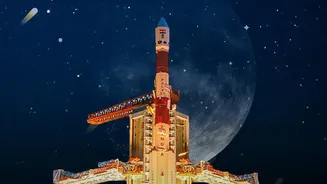
Mission, represents India's ambitious next step in planetary exploration. Officially approved in September 2024, the mission is currently planned for a launch in March 2028. Its primary goal is to place a spacecraft in a long, elliptical orbit around Venus, allowing for a comprehensive, multi-year study of its surface, atmosphere, and interaction with the sun. This mission not only builds on ISRO's legacy but also positions India as a key player in the renewed global interest in understanding our planetary neighbour.
The Challenge of a Toxic Twin
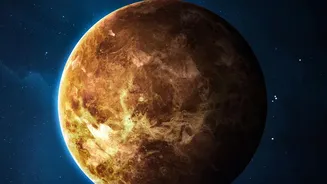
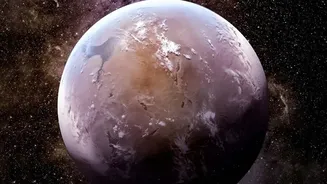
Venus is a world of extremes. While similar in size to Earth, its surface is a hellscape with temperatures hot enough to melt lead and pressures that would crush a submarine. This is largely due to a runaway greenhouse effect, driven by an atmosphere more than 90 times denser than Earth's and composed almost entirely of carbon dioxide. Shrouding the entire planet is a thick, unbroken layer of clouds made not of water, but of corrosive sulfuric acid. These clouds are so opaque they permanently hide the surface from view in visible light, and they whip around the planet at incredible speeds in a phenomenon known as 'super-rotation'. Understanding the composition and dynamics of these clouds is a major scientific objective for Shukrayaan.
A Toolkit for Piercing the Veil
To study such a hostile world, Shukrayaan will be equipped with a payload of about 100 kilograms of advanced scientific instruments. The headliner is a high-resolution Synthetic Aperture Radar (SAR). Unlike a regular camera, radar can penetrate the dense cloud cover to map the geological features of the surface, searching for signs of active volcanoes and other processes. The mission also plans to carry a ground-penetrating radar, which would be a first for Venus exploration, designed to study the planet’s shallow subsurface. This combination of tools will provide an unprecedented view of Venus's geology.
Sniffing and Seeing the Atmosphere
Several instruments will focus directly on analyzing the atmosphere and its cloud particles. A Venus Cloud Monitoring Camera (VCMC) will observe the cloud tops, studying atmospheric waves and searching for lightning. Spectrometers operating in infrared and ultraviolet wavelengths will analyze the chemical composition of the atmosphere. One key international payload is the Venus Infrared Atmospheric Gases Linker (VIRAL), developed with France and Russia, which will hunt for specific gases like sulfur dioxide and carbon monoxide. Another instrument, the Venusian Neutrals Analyser (VNA) developed with Sweden, will study how particles from the solar wind interact with the upper atmosphere, helping scientists understand why Venus lost its water and lacks a protective magnetic field.
Why This Cosmic Investigation Matters
Studying Venus isn't just about exploring another planet; it's also about understanding our own. Venus offers a natural laboratory for studying the runaway greenhouse effect, providing a cautionary tale for climate change on Earth. By learning why Earth's twin took such a different evolutionary path, from a world that may have once hosted oceans to its current fiery state, scientists can gain invaluable insights into the factors that make a planet habitable. The Shukrayaan mission, with its unique instruments and ambitious scientific goals, promises to contribute significantly to this global effort, pushing the boundaries of our knowledge and cementing India's status as a leader in space science and technology.