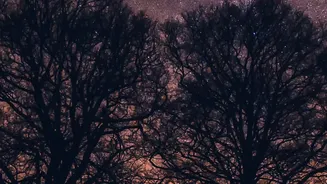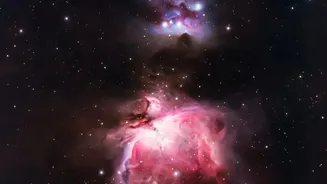



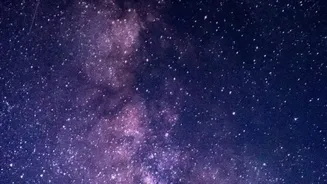
What is Computational Astrophotography?
At its core, computational astrophotography is about using software to achieve what was once only possible with sophisticated hardware. Instead of needing a large lens and a sensor that can stay open for minutes to gather faint light from stars, your
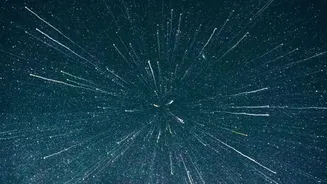
phone uses its processor to cleverly combine multiple shots into one. When you point your phone at the night sky and activate a feature like Google's Astrophotography mode or even a standard Night Mode, the phone isn't just taking one long picture. It's rapidly capturing a series of shorter exposures over a period that can last up to four minutes. This process is often called 'stacking'. An algorithm then intelligently aligns all these individual frames, identifying the stars and distinguishing them from random sensor noise. By averaging out the 'noise'—the grainy, discolored pixels that plague low-light photos—and amplifying the 'signal'—the actual light from the stars—the final image appears remarkably bright and clear. It's a software miracle that bypasses the physical limitations of a tiny smartphone sensor.
The Tech Giants Vying for the Stars
This pocket-sized revolution is a key battleground for major smartphone manufacturers. Google arguably kickstarted the trend with its dedicated Astrophotography mode on Pixel phones. When placed on a tripod, the phone automatically detects the stability and darkness, initiating a long-exposure sequence that produces stunningly clean images of the night sky. Competitors like Samsung and Apple have followed suit with their own powerful tools. Samsung's Galaxy devices offer an 'Expert RAW' mode, giving users granular control over settings like ISO and shutter speed, which are crucial for astrophotography. Meanwhile, Apple's iPhones use a more automatic Night Mode that can extend to 30-second exposures when stabilized, which is also capable of capturing impressive star fields, though it lacks a specific 'astro' mode. This competition is great for consumers, as each new flagship phone pushes the boundaries of what's possible, turning a niche hobby into a mainstream feature.
So, Can You Really Capture a Galaxy?
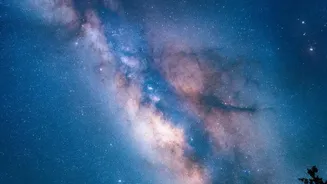
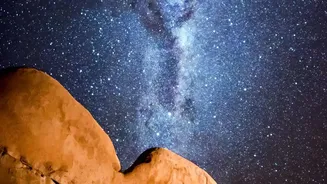
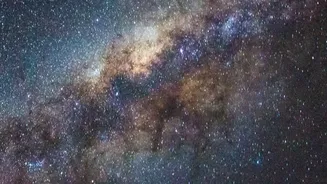
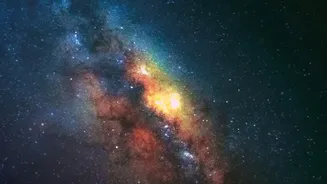
The headline claim of capturing galaxies is both true and needs a little clarification. For most users, the 'galaxy' you will be capturing is our own, the Milky Way. On a clear, dark night, modern phones are fully capable of revealing the Milky Way's dense, star-filled core in a way the naked eye cannot perceive. It's a breathtaking sight. Capturing other, more distant galaxies like the Andromeda Galaxy (M31) is the next frontier. While it appears as a faint smudge to the naked eye in very dark skies, capturing it with a phone is challenging but not impossible. The very best camera phones, when used with a tripod and manual settings in an area with minimal light pollution, can resolve Andromeda as a distinct, fuzzy oval. However, don't expect the detailed spiral arms you see in photos from the Hubble telescope; it’s more about the thrill of capturing an object 2.5 million light-years away with the device you use for daily texting.
Your First Steps into the Cosmos
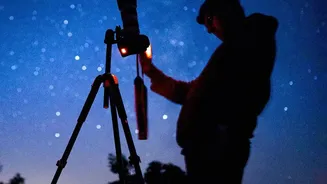
Ready to try it yourself? Getting started is simpler than you think. The most important factor is getting away from city lights. Light pollution is the enemy of astrophotography, so find the darkest spot you can. A rural park or a remote beach is ideal. The second non-negotiable piece of equipment is a tripod. Computational astrophotography modes require the phone to be perfectly still for several minutes. Any movement will blur the shot. You can find inexpensive phone tripods online. Once you're set up, use an app like Star Walk or SkyView to locate interesting objects like the Milky Way. Then, open your camera app. If your phone has a dedicated astrophotography or pro mode, use that. If not, the standard Night Mode will still yield great results. Set your focus to infinity if you can manually control it, aim, and shoot. Patience is key; let the phone finish its entire exposure sequence.