



First, What Are CAFE Norms?
Think of CAFE norms not as a rule for a single car, but as a report card for a carmaker's entire yearly sales. First introduced in 2017, these regulations require each manufacturer to meet a fleet-wide average fuel consumption target. This means the combined
fuel efficiency of all the cars a company sells in a year—from the smallest hatchback to the largest SUV—must be below a specific limit. This approach gives carmakers flexibility; they can sell some less efficient but popular models as long as they balance them out with highly efficient ones like hybrids or electric vehicles (EVs).
The Big Leap to CAFE-III
The upcoming CAFE-III rules, which will be effective from April 2027 to March 2032, represent a significant tightening of these standards. The government has set progressively stricter targets for each financial year. For a manufacturer with a reference fleet weight of 1,229 kg, the target will drop from an average of 3.996 litres/100km (around 94.8g of CO2/km) in FY2028 to just 3.3273 litres/100km (around 78.9g of CO2/km) by FY2032. This is a substantial reduction that makes simply tweaking existing petrol engines an insufficient strategy.
The Conventional Petrol Engine's Limit
While modern petrol engines are more efficient than ever, meeting the steep annual improvements demanded by CAFE-III will be a monumental task. The market's increasing preference for heavier SUVs further complicates this, as heavier vehicles naturally consume more fuel. Although the norms give heavier fleets a slightly more lenient target, the overall direction is clear: emissions must come down drastically. Relying on a portfolio dominated by conventional petrol cars, especially in the popular SUV segment, makes it mathematically almost impossible to meet the fleet average without incurring significant penalties.
A Mandate for a Multi-Powertrain Future
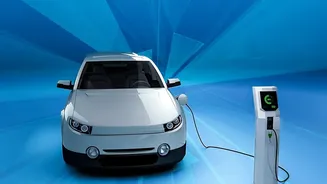
This is why carmakers cannot go it alone with petrol. The CAFE-III framework is explicitly designed to push them towards a diversified powertrain strategy. The regulations offer significant compliance advantages for cleaner technologies. For example, each battery EV sold will count as three vehicles in the company's fleet calculation, a mechanism known as a 'super-credit'. Strong hybrids, plug-in hybrids, and cars running on alternative fuels like CNG and higher-blend ethanol also receive benefits that help lower a company's fleet average. This incentivises manufacturers to invest in and sell more of these vehicles to offset the emissions from their traditional petrol models.
The Way Forward: A Mixed Bag of Solutions
To stay compliant, automakers are now forced to accelerate their multi-powertrain plans. This means we will see a greater push for a variety of vehicle types. Mild-hybrid systems, start-stop technology, and more efficient transmissions will become more common as they provide small but crucial efficiency gains. More importantly, carmakers will have a strong regulatory and financial incentive to launch and promote strong hybrids and EVs across different price points. The era of relying on a single fuel type is effectively over; the future of the Indian car market will be a strategic mix of petrol, CNG, hybrid, and electric technologies, all co-existing in the same showroom.