








The Hero Who Wrecked the World
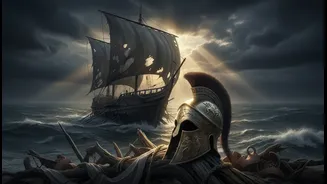
Odysseus, the hero of Homer’s epic poem The Odyssey, is celebrated for his cunning intelligence. He’s the man who dreamed up the Trojan Horse, a stroke of genius that ended a decade-long war. But we often forget the next part of his title: “sacker of cities.”
His cleverness was a weapon, and it left a trail of devastation. His journey home was not just a series of adventures but a catalogue of moral compromises. He blinded the Cyclops Polyphemus, but only after trespassing and arrogance. To save most of his crew, he knowingly sacrificed a few to the monster Scylla, a brutal calculation of loss. Upon returning to Ithaca, his homecoming wasn't a warm embrace but a bloody massacre, as he and his son slaughtered the suitors who had overrun his palace. Odysseus is the prototype of the brilliant man whose greatness is inseparable from the ruin he causes. His story asks a timeless question: what is the price of a hero’s victory?
Nolan's Architects of Ruin
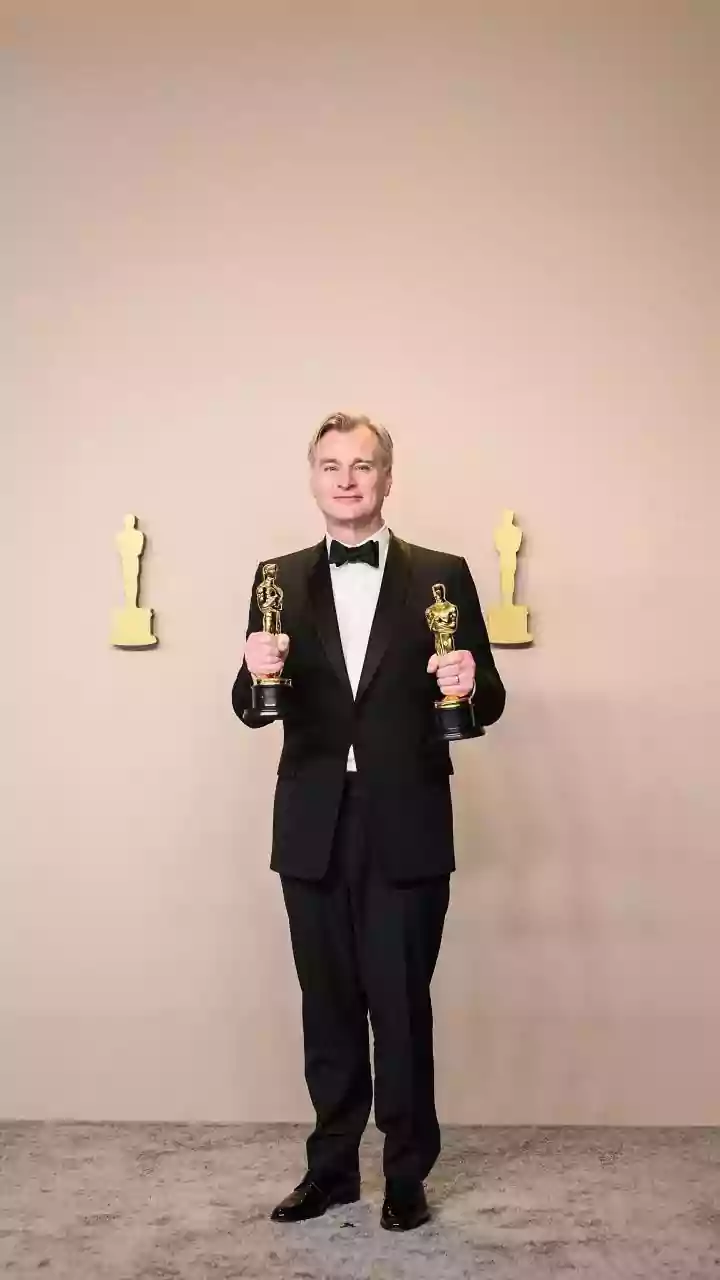
Enter Christopher Nolan, a filmmaker obsessed with brilliant men haunted by their own actions. His protagonists are almost always masters of their craft, whether it's magic, vigilante justice, or theoretical physics, but their genius comes at a staggering cost. In The Prestige, two magicians destroy their own lives and the lives of those they love in a relentless pursuit of the ultimate illusion. In Inception, Dom Cobb is a master thief of the mind, but his skills have made him a fugitive, unable to return to his children. And most explicitly, in Oppenheimer, J. Robert Oppenheimer gifts humanity the power to annihilate itself, becoming a “destroyer of worlds.” Nolan’s films are populated with these morally grey figures who make appalling choices, often for what they believe is the greater good. They are not simple heroes or villains but complex individuals whose brilliance is a burden that isolates them and causes immense suffering.
The Burden of Cleverness
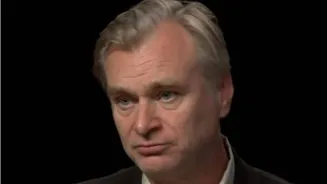
The throughline from Odysseus to Oppenheimer is the theme of consequential action. Both figures change the world, and not necessarily for the better. In a recent interview, Nolan himself drew this parallel, noting his interest in characters who carry the guilt of shifting the world on its axis. Odysseus’s defining trait is his “metis,” or cunning wisdom, but this very quality leads him to lie, deceive, and manipulate to survive. This is the same moral universe inhabited by Nolan's characters. Bruce Wayne wiretaps an entire city in The Dark Knight to catch one man, mirroring Odysseus’s willingness to make terrible sacrifices for a desired outcome. Cobb’s team plants an idea in someone’s mind, a profound violation for corporate gain. Both Homer and Nolan are fascinated by the idea that a hero’s greatest strengths are often the source of their greatest flaws, forcing audiences to question where the line between hero and anti-hero truly lies.
A Modern Odyssey?
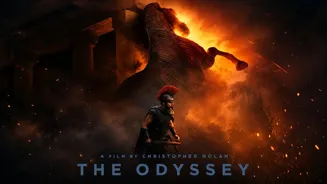
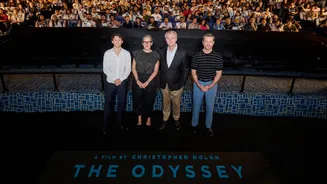
The connection is no longer just thematic. Nolan's next major project is a direct adaptation of The Odyssey itself, confirming his long-held fascination with the epic poem. He has stated that the story is a “foundational text” for him and that, in many ways, he's been telling versions of it his entire career. This presents a fascinating opportunity. Nolan can explore the moral ambiguity of Odysseus with the same lens he applied to Oppenheimer. The story of a broken man trying to find his way home after committing terrible acts in a war is ripe for Nolan’s style of complex, non-linear storytelling. Will he force us to see the Cyclops not as a monster, but as a victim in his own home? Will he frame the slaughter of the suitors not as righteous justice, but as a final, tragic act of violence from a man consumed by it? Given his track record, Nolan's Odyssey is unlikely to be a straightforward adventure tale. Instead, it promises to be a deep-dive into the psychological cost of being a hero who leaves nothing but destruction in his wake.