
A Crisis Averted, A Games Transformed
The road to the XXIII Commonwealth Games has been anything but smooth. Originally awarded to Victoria, Australia, the Games were thrown into jeopardy in July 2023 when the state pulled out, citing skyrocketing costs projected to be over A$6 billion. For
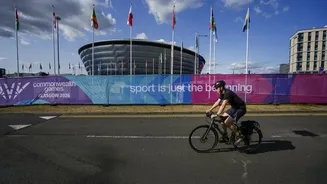
a period, the very future of the quadrennial event was in doubt until Glasgow, Scotland – which hosted a successful edition in 2014 – stepped in as a rescue host. However, this rescue came with a condition: the Glasgow 2026 Games would be a 'scaled-down' or 'leaner' version to ensure financial viability. This has resulted in a drastically different event than the one athletes were preparing for, with major consequences for participating nations, especially India.
The Decimation of India's Strongholds
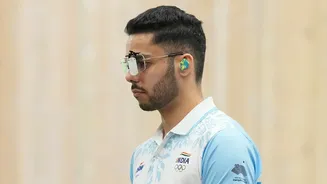
The biggest change for the Glasgow Games is a severely reduced sports program. To cut costs, the number of sports has been slashed from 20 in Birmingham 2022 to just 10. For the Indian contingent, this is a catastrophic blow. Sports that have traditionally been guaranteed medal sources, such as wrestling, badminton, hockey, and table tennis, have been completely removed from the schedule. Wrestling alone contributed 12 medals, including six golds, to India's tally in 2022. Badminton stars like P.V. Sindhu and the duo of Satwiksairaj Rankireddy and Chirag Shetty won golds in Birmingham. None will have a chance to defend their titles in Glasgow. This, combined with the continued absence of shooting—India's most successful CWG sport historically—means India's potential medal count has been slashed before a single athlete has even competed.
Recalibrating Expectations: From Top 3 to a New Battle
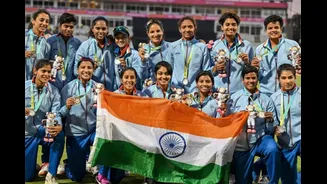
In 2022, India finished a commendable fourth with 61 medals (22 gold, 16 silver, 23 bronze), trailing only Australia, England, and Canada. That performance was achieved even without shooting. The expectation was that with shooting's potential return, India would be a strong contender to break into the top three, challenging Canada and England. However, the current reality paints a very different picture. With the culling of its strongest sports, a prediction of India's final rank becomes a complex exercise. A finish in the top five would now be considered a significant achievement. The battle for supremacy has shifted, and India must now rely on a much narrower set of disciplines to make its mark.
All Eyes on Athletics, Boxing, and Weightlifting
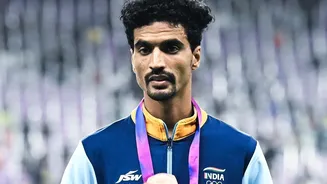
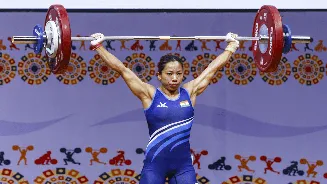
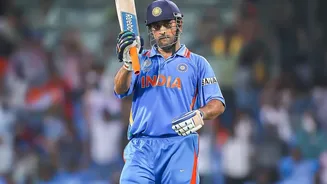
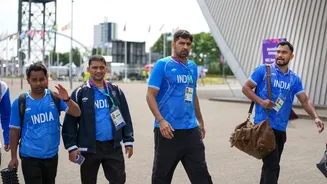
With its traditional pillars gone, the onus now falls squarely on India's athletes in the 10 sports that remain: athletics, boxing, weightlifting, judo, gymnastics, track cycling, lawn bowls, swimming, 3x3 basketball, and netball. India is sending a contingent of 126 athletes. The athletics squad, led by two-time Olympic champion Neeraj Chopra, will be crucial. Chopra, who missed the 2022 Games, will be a headline attraction and a strong favourite for gold. Similarly, the weightlifting team, spearheaded by Olympic medallist Mirabai Chanu who is aiming for a third consecutive CWG gold, will be expected to deliver multiple medals. Our boxers, led by Olympic medallist Lovlina Borgohain, must also have a strong showing if India hopes to feature high on the medals table.
The Final Prediction: A Fight for the Top 5
So, at which spot is India predicted to finish? Given the massive disadvantages, breaking into the top three seems highly improbable. Australia and England remain formidable forces across the board. The key battle for India will likely be to secure a place within the top five, holding off challenges from nations like New Zealand, South Africa, and Scotland, which will enjoy a home advantage. Realistically, India's predicted finishing spot is between 4th and 6th. While this may seem like a step back from the 4th place finish in 2022, achieving it under these circumstances would be a testament to the resilience and quality of the athletes in the remaining sports. It will be a Games not about the quantity of medals, but the quality of victories against the odds.