


The Fading Underwater Rainbow
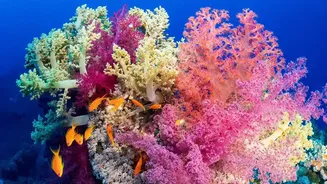
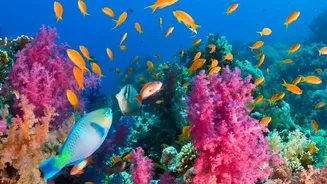
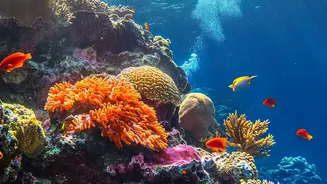
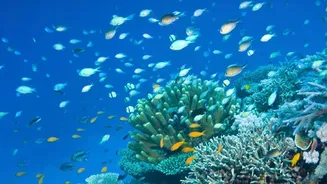
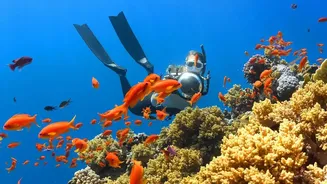
Coral reefs, often called the ‘rainforests of the sea’, are crucial ecosystems that support about a quarter of all marine life. India’s extensive coastline, including the rich waters around the Andaman and Nicobar Islands, the Gulf of Mannar, and Lakshadweep,
hosts some of these precious habitats. However, as global ocean temperatures rise, corals are put under immense stress. This leads to bleaching—a phenomenon where the corals expel the colourful, life-sustaining algae living in their tissues, turning a ghostly white. While a bleached coral is not dead, it is severely weakened and vulnerable to disease and starvation. With increasingly frequent and severe marine heatwaves, entire reefs are struggling to recover, threatening coastal protection, fisheries, and biodiversity.
Yesterday's Restoration Playbook
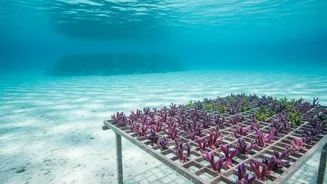
For years, the primary strategy for reef restoration has been a practice known as coral gardening. This involves collecting fragments from healthy corals, growing them in underwater nurseries on structures like concrete frames, and then transplanting them back onto degraded reefs. India has seen notable efforts using this method, with a two-decade-long project in the Gulf of Mannar showing promising results in increasing coral cover and bringing back fish populations. However, these conventional approaches have a significant limitation: they are often a race against time. Planting corals that are not equipped to handle future temperature spikes is like planting a forest with trees that cannot withstand a drought; the next heatwave can wipe out years of hard work.
The Hunt for 'Super Corals'
Recognising this challenge, the focus of marine science has shifted from simply replanting to actively identifying and cultivating corals with built-in resilience. These so-called ‘super corals’ are not genetically modified organisms from a sci-fi film but are naturally occurring corals that have demonstrated an ability to withstand higher temperatures. This resilience can stem from their genetic makeup or the type of microscopic partners they host. For instance, some corals house hardier strains of symbiotic algae that don't flee during heat stress. Recent findings even point to beneficial bacteria that can act as a probiotic, protecting the coral from the inside out. This emerging field, known as ‘assisted evolution’, aims to accelerate natural selective processes to give corals a fighting chance.
A New Blueprint for Rebuilding Reefs
This research is fundamentally reshaping restoration strategies. The new blueprint is proactive, not just reactive. Instead of rebuilding with just any available coral, conservationists can now be far more strategic. The key techniques of assisted evolution include selectively breeding naturally heat-tolerant parent corals to produce tougher offspring, a trait that studies show can be inherited. Another method is ‘stress hardening’, where corals are exposed to gradually warmer water to condition them for future stress. This means restoration projects can now create nurseries of climate-ready corals. The goal is no longer just to increase coral cover but to enhance the entire reef's resilience, seeding it with individuals that can survive and reproduce, passing on their hardy genes to the next generation.
Hope on the Horizon, with a Dose of Realism
While the science of heat-tolerant corals offers a powerful new tool, it is not a magic bullet. Scientists caution that assisted evolution is a complex, often expensive process, and scaling it up to match the vastness of global reefs is a monumental challenge. Some models suggest that for these efforts to have a lasting impact, they must be conducted at an enormous scale over centuries. Moreover, even the toughest corals have their limits. These strategies can only succeed if the root causes of reef decline are addressed: global climate change and local stressors like pollution and overfishing. Planting a super coral in polluted water is still a recipe for failure.