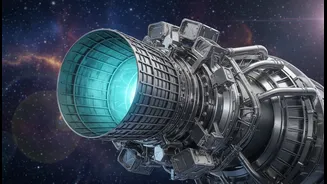






What is a Semicryogenic Engine?
Think of rocket engines as having two main ingredients: fuel and an oxidiser to help it burn. A 'fully' cryogenic engine uses fuels that are gases at room temperature and must be super-cooled into liquids, like liquid hydrogen and liquid oxygen. A 'semicryogenic'
engine makes a clever switch. It keeps the liquid oxygen but swaps the difficult-to-handle liquid hydrogen for a more stable, room-temperature fuel like highly refined kerosene, which ISRO has dubbed 'Isrosene'. This combination gives it the 'semi' label and a host of advantages, placing India in an elite group of nations with this technology.
The Kerosene Advantage
The main benefit of using kerosene is its density. Kerosene is much denser than liquid hydrogen, meaning you can store more fuel in a smaller tank. This shrinks the rocket's overall size and weight, freeing up mass that can be dedicated to the payload, like a heavier satellite. It's also significantly cheaper and safer to handle. Liquid hydrogen must be kept at a brutally cold -253°C, which requires complex and heavy insulation. Kerosene, being storable at ambient temperatures, simplifies launch preparations, reduces costs, and makes the entire process faster and less hazardous.
Inside the Landmark Tests
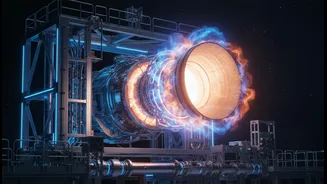
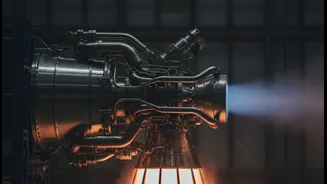
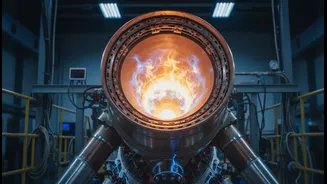
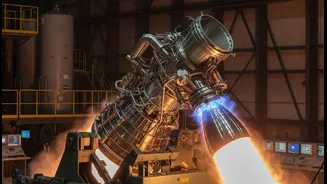
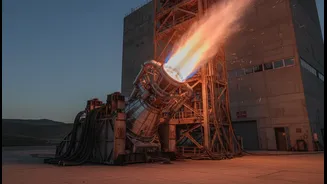
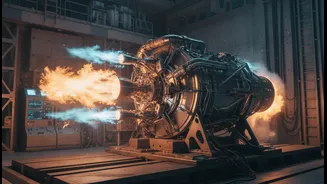
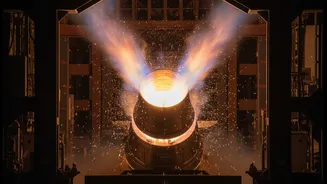
In a series of tests at the ISRO Propulsion Complex in Mahendragiri, Tamil Nadu, engineers have been pushing the new SE-2000 engine to its limits. In the most recent major test on June 24, 2026, they fired the engine's 'power head'—which includes the crucial turbopumps—without the main combustion chamber. This allowed them to stress-test the internal machinery, reaching 175 tonnes of force, which is 88% of the engine's full target thrust of 200 tonnes. Following successful earlier tests at lower thrust levels, this achievement gives ISRO the confidence to proceed towards a full-thrust demonstration.
Upgrading India's 'Baahubali' Rocket
The immediate application for this new engine is a major upgrade to ISRO's most powerful rocket, the Launch Vehicle Mark-III (LVM3), often called 'Baahubali'. The plan is to replace the LVM3's current L110 liquid core stage with a new, more powerful SC120 stage powered by the SE-2000 semicryogenic engine. This single change is a strategic game-changer. It will boost the LVM3's payload capacity significantly, allowing it to lift heavier satellites into orbit. With this upgrade, the LVM3's capacity to a Geostationary Transfer Orbit (GTO) is expected to increase from four tonnes to five tonnes.
Unlocking Heavier Payloads and the Future
That extra tonne of payload capacity is a huge deal. It means ISRO can launch heavier, more advanced communication satellites for India, reducing dependence on foreign launchers. It also opens the door for more ambitious missions, including carrying heavier modules for the planned Bharatiya Antariksh Station (India's space station) and supporting the Gaganyaan human spaceflight program. The increased power is a critical step for future deep-space missions and strengthens India's position in the global commercial launch market, with goals to increase its market share from 2% to 10%. This engine technology is also seen as a key step towards developing reusable launch vehicles.