









The Danger of Humid Heat
For decades, India's definition of a heatwave has been tied to scorching dry temperatures, like the northern Loo winds. But climate change is rewriting the rules. The new danger is not just temperature, but the combination of heat and high humidity, a measure
known as the wet-bulb temperature. Your body’s primary cooling system is sweat. As it evaporates, it cools your skin. But when the air is already saturated with moisture—as it often is during the monsoon—sweat cannot evaporate effectively. The body’s natural air conditioning fails, leading to rapid overheating, heat exhaustion, and potentially fatal heatstroke, even at temperatures that might seem manageable on a dry day.
A Monsoon Paradox
The monsoon season itself creates the conditions for this threat. While rainfall can lower the air temperature, it dramatically increases atmospheric moisture. This is especially true during “break” periods in the monsoon, when the rain stops for a few days but the humidity lingers, creating a window for the sun to beat down on moisture-heavy air. As a result, the number of dangerously humid days during the monsoon can be far higher than the number of extremely hot dry days that precede it. This phenomenon is particularly acute in coastal cities like Mumbai, Chennai, and Kolkata, but is increasingly being felt in inland urban centres as well, turning the season of relief into a period of sustained physiological stress.
Why Our Cities Are Unprepared
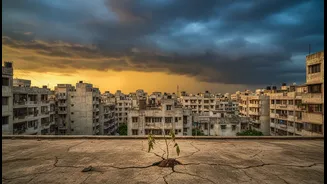
India’s urban infrastructure and public warning systems are still largely geared towards fighting dry heat. Most of the country's Heat Action Plans (HAPs), first pioneered by Ahmedabad in 2013, focus on temperature thresholds, providing drinking water, and opening cooling centres. While these measures are vital, they don't fully address the complexities of humid heat. The design of our cities exacerbates the problem. The proliferation of concrete and asphalt creates “urban heat islands” that absorb and trap heat, preventing cities from cooling down at night. This loss of nighttime cooling is critical, as it denies the body a chance to recover from daytime heat stress, making the danger cumulative.
A New Blueprint for Resilience
Tackling humid heat requires a fundamental shift in urban planning and policy. Heat Action Plans must be updated to include humidity and wet-bulb temperature thresholds as key indicators for issuing warnings. Studies show that such heat events can be forecast weeks in advance, providing a crucial window for preparation. Cities need to invest heavily in “blue-green infrastructure”—restoring water bodies, expanding green cover, and planting more trees—which provide natural cooling. Building codes must be updated to promote passive cooling strategies, such as better ventilation and cool roofs, which can reduce indoor temperatures by several degrees. Solutions like cool roofs made from materials like coconut husks have already shown success in lowering indoor temperatures in low-income housing. Protecting vulnerable populations, especially outdoor workers in construction and agriculture, is also critical. Measures could include mandated changes to working hours and access to shaded rest areas.