


The Ultimate Power Problem
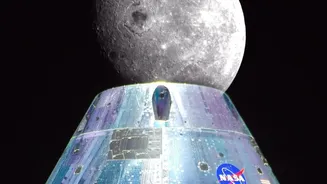
Imagine a night that lasts for 14 Earth days and gets cold enough to freeze the liquids inside a standard battery, permanently destroying it. This is the core challenge facing NASA's Artemis program and its goal of a sustained human presence on the Moon.
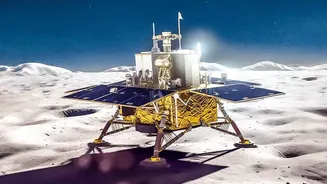
The lunar South Pole, a prime target for exploration due to the potential for water ice in its craters, experiences these extreme temperature swings. Daytime highs can reach a scorching 100 C, while the long night brings a deep, penetrating cold of around -200 C. Conventional lithium-ion batteries, like those in our phones and cars, rely on liquid electrolytes that freeze and become useless in such conditions, potentially damaging the battery's internal structure. To date, surviving the lunar night has required bulky, inefficient heating systems to keep batteries warm, consuming precious energy that could otherwise be used for science or life support.
What is SPEARS?
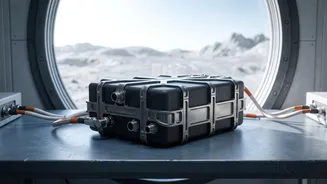
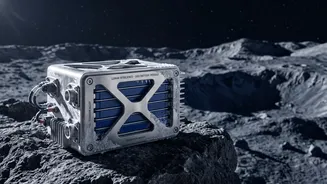
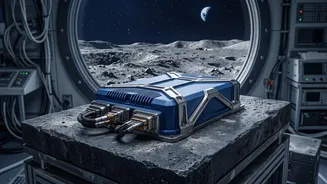
Enter SPEARS, which stands for Solid Power for Extreme Environment Adaptability and Resilience in Space. This NASA project, led by Glenn Research Center, is developing a new class of battery designed not just to survive the lunar night, but to be a reliable power source for future missions. It’s a critical technology that could enable everything from rovers exploring permanently shadowed craters to an an astronaut's emergency power pack. The key innovation is a fundamental change in the battery's chemistry. Instead of a 'splashy' problem, NASA is pursuing a 'solid' solution. The goal is to create a power source that is robust, safe, and can handle the wild temperature fluctuations on the Moon without needing constant, energy-intensive warming.
A Solid-State Solution
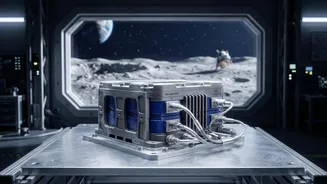
The magic of SPEARS lies in replacing the liquid electrolyte found in typical batteries with a solid material, such as a specialized ceramic or polymer. This solid-state design offers several key advantages. First, since there is no liquid to freeze, the battery isn't physically damaged by the extreme cold. While the battery won't operate at the lowest temperatures of the lunar night, it can endure the cold soak and be ready to work once warmed up. This 'survival' is a crucial distinction. The plan is to use small, efficient heaters to bring the batteries back to an operating temperature only when needed, rather than spending huge amounts of energy keeping them warm for two straight weeks. Recent tests have been promising. Prototype cells have operated successfully at temperatures as low as minus 80 C and survived exposure down to minus 170 C without damage.
Powering the Artemis Generation
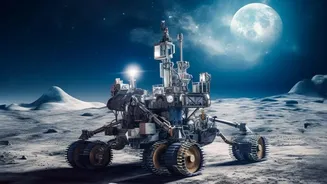
This research is not happening in a vacuum. It is a direct enabler for the Artemis campaign, NASA's ambitious plan to return humans to the Moon and establish a long-term base. To have a functioning Artemis Base Camp at the South Pole, NASA needs a reliable power grid that can function through the long lunar night. Solid-state batteries like those being developed by the SPEARS team are a cornerstone of this strategy. They could power long-duration scientific instruments, drills for collecting samples from icy craters, and the Lunar Terrain Vehicle (LTV) that will carry astronauts across the surface. By solving the battery problem, NASA unlocks the ability to conduct continuous operations, transforming lunar exploration from short sorties into a sustained presence.
The Road Ahead
While the SPEARS project has shown great promise in early tests, there is still work to be done. The prototypes tested were small 'coin cells', and the technology needs to be scaled up to full-sized battery packs. The team will continue to refine the materials and design to improve performance at even lower temperatures and ensure the batteries are durable and safe for astronaut use. Though the project is still in the technology development phase, it represents a fundamental shift in how we approach power in extreme environments. The lessons learned and the technology created could one day find applications not just on the Moon and Mars, but also in demanding environments here on Earth.