


Recognising the Root-Bound SOS
Before you can solve the problem, you need to know what to look for. A plant is 'root-bound' or 'pot-bound' when its root system has completely filled its container and has nowhere left to go. The most obvious signs include roots peeking out of the drainage
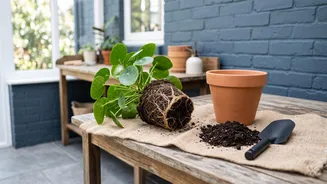
holes or even pushing up through the topsoil. Other symptoms can be more subtle and mimic other issues, like slowed or stunted growth, yellowing leaves, or water that seems to run straight through the pot without being absorbed. This happens because the dense mass of roots leaves very little soil to hold moisture and nutrients. When you slide the plant out of its pot, a root-bound plant’s roots will often hold the exact shape of the container, with thick roots circling the outside of the soil.
The Danger of a Simple Transfer
It might seem gentler to just move the entire root ball, soil and all, into a larger pot. However, this is often a critical mistake. If you don't loosen the tangled, circling roots, they will continue to grow in that same constricted pattern, even with fresh soil around them. The roots can effectively strangle the plant, unable to spread out to absorb the water and nutrients in their new, roomier environment. This can lead to a plant that fails to thrive, appears water-stressed despite being watered, and may eventually decline. The old, compacted soil within the root ball can also become a barrier, preventing water from reaching the core of the root system. You’re giving the plant a bigger house, but it’s still stuck in its old, small room.
The Gentle Root Inspection
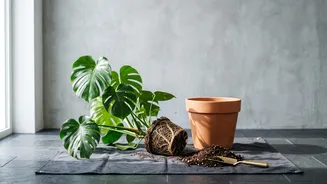
Once you’ve decided to repot, the first step is a careful examination. It’s often helpful to water your plant a day or two before repotting to ensure the root ball is hydrated and slides out more easily. To remove the plant, turn the pot on its side and gently tap or squeeze it to loosen the contents. Support the base of the plant and ease it out; never pull it by its stem. With the plant free, take a moment to assess the root system. Healthy roots are typically firm and light-coloured, often white or tan. Unhealthy roots may appear brown or black, feel mushy, and could be a sign of root rot from overwatering. Gently shake or brush off some of the old soil to get a clearer view.
Pruning for a Healthier Future
The idea of cutting your plant's roots can be intimidating, but it is often essential for its future health, especially if it's severely root-bound. Using clean, sharp scissors or pruning shears, trim away any roots that are clearly dead, mushy, or black. Next, address the circling roots. Making several vertical cuts into the sides of the root ball can break the circular growth pattern and encourage new roots to grow outward into the fresh soil. You can also trim off the bottom third of the root mass if it's particularly dense. Don't worry about causing harm; most healthy plants can easily tolerate losing up to a third of their root system and will be better for it in the long run.
Teasing and Untangling
After any necessary pruning, the final step before placing the plant in its new pot is to gently detangle the remaining roots. Use your fingers to carefully tease apart the coiled roots, starting from the bottom and working your way up. The goal is not to straighten every single root but to loosen the overall structure so the roots are free to explore their new environment. If the root ball is extremely tight and dry, soaking it in water for a bit can make the roots more flexible and easier to work with. This gentle 'massage' signals to the plant that it has room to grow and is critical for helping it establish itself quickly in the new pot.