






The Runner's World: A Game of Numbers
For many runners, the activity is a conversation with the clock. The language is one of splits, pace, and cadence—the number of steps taken per minute. The primary goal is often efficiency: how to cover a set distance with the least amount of effort and in the quickest
time. Runners frequently use music as a metronome, a steady beat to maintain a consistent rhythm over kilometres. This approach is measurable and goal-oriented. Improving means seeing the numbers go down. Good running form is about optimising biomechanics to reduce braking forces and vertical oscillation, turning the body into a well-oiled machine designed for forward motion. This focus on repetitive, linear movement strengthens the heart and lungs, building a powerful aerobic engine.
The Dancer's World: Movement as Expression
In dance, rhythm is not just a background beat; it is the very soul of the movement. While a runner uses rhythm for consistency, a dancer uses it for communication, emotion, and artistry. The focus shifts from 'pace' to 'musicality'—the ability to interpret music through dynamic physical expression. Instead of steady-state endurance, dancers build stamina through high-intensity, anaerobic bursts required for complex choreography. A single dance routine can involve explosive jumps, rapid changes in direction, and sustained balances, demanding strength from multiple planes of motion, not just the forward-moving sagittal plane used in running. Style and technique are paramount, but they serve an aesthetic and narrative purpose, not just mechanical efficiency.
Endurance, Built Differently
Both disciplines build impressive stamina, but the training methods diverge. Runners typically build their base through long, steady-state runs and use interval training to increase speed and VO2 max. This method is excellent for sustained cardiovascular output. Dancers, on the other hand, build endurance that is more stop-and-start. Their training involves repeating physically demanding phrases and routines, which conditions the body for short bursts of intense effort followed by brief periods of lower-intensity movement or rest. Simply running through a dance routine is often not enough to build the required stamina, which is why many dancers now incorporate specific cross-training to boost their cardiovascular fitness for demanding performances.
What Runners Can Learn From Dancers
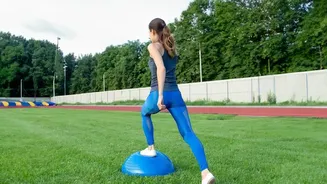
Runners can gain a significant edge by adopting a dancer's mindset. Dance training builds incredible core strength, which is vital for maintaining good posture and stability during long runs. It also enhances balance and proprioception—the body's awareness of its position in space. Since running is essentially a series of single-leg balances, improving this skill can reduce the risk of injury. Furthermore, dance develops musculature in different planes of motion, strengthening hip stabilisers and other muscles often neglected in the linear motion of running. This multi-directional strength creates a more resilient and coordinated athlete, potentially transforming a runner's stride into a more fluid and less jarring motion.
What Dancers Can Learn From Runners
Conversely, dancers can benefit immensely from a runner's approach to conditioning. While dance builds power, it can sometimes lack the sustained aerobic endurance needed for a full-length performance. Incorporating steady-state running 2-3 times a week can significantly boost a dancer's stamina, helping them perform with more energy and less fatigue. This is crucial, as many dance injuries are linked to fatigue. Running also helps strengthen internal rotator muscles in the hips, providing a necessary balance to the overused external rotators common in styles like ballet. Structured running programmes teach the mental side of pacing and sustained effort, which can help a dancer manage their energy more effectively throughout a long and demanding show.