





Why Late August is a Great Time
Late August provides a unique opportunity for stargazing in India. While the Perseid meteor shower, one of the year's best, peaks around August 12-13, its activity continues until the end of the month. This means you can still catch stray 'shooting stars'
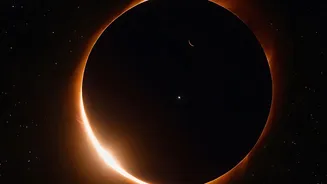
in the latter half of August. More importantly, in many parts of the country, the heavy monsoon rains begin to subside, leading to nights with exceptional transparency. This post-rain clarity washes dust and haze from the atmosphere, creating a darker, crisper canvas for the stars to shine. While a partial lunar eclipse is expected on August 28, 2026, it won't be visible from India, ensuring dark skies for your adventure. The core of the Milky Way, a breathtaking smudge of light composed of billions of stars, is also well-positioned for viewing in the southern sky during this period.
Picking the Perfect Dark-Sky Location
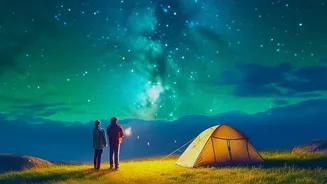
The single most important factor for good stargazing is getting away from city lights. Light pollution can wash out all but the brightest stars. Luckily, India has several excellent dark-sky locations, especially in regions less affected by the monsoon in August. The high-altitude cold deserts of Ladakh and Spiti Valley in Himachal Pradesh are premier choices, as they largely escape the monsoon and offer some of the clearest, darkest skies in Asia. In fact, Hanle in Ladakh is India's first official Dark Sky Reserve. For those in other parts of the country, the Thar Desert near Jaisalmer in Rajasthan is a more accessible option that also offers reliably clear skies. In the south, Coorg in Karnataka, with its coffee plantations nestled in the hills, can provide lovely dark skies once the monsoon clouds part. Even the buffer zones of national parks in central India, like Pench or Kanha, can be surprisingly dark.
What to Look For in the Night Sky
Once you're settled in a dark spot, what should you look for? First, find the Milky Way. In August, it appears as a faint, cloud-like band stretching across the sky, best seen towards the southern horizon within the constellations Sagittarius and Scorpius. Speaking of constellations, try to spot the 'Summer Triangle', a bright and easily identifiable asterism formed by three prominent stars: Vega, Deneb, and Altair. You can also look for Scorpius, which genuinely resembles a scorpion with its curved tail. For planet-spotting, Mars and Saturn may be visible. A good stargazing app can help you locate planets and constellations in real-time. Don't forget to keep an eye out for the occasional Perseid meteor, which can appear anywhere in the sky.
Essential Gear for Your Stargazing Trip
You don't need expensive equipment to enjoy the night sky, but a few items can greatly enhance the experience. While a telescope is a bonus, a simple pair of binoculars can reveal stunning details, like the craters on the moon or the moons of Jupiter. Perhaps the most crucial tool is a red flashlight; red light helps you see your surroundings without ruining your night vision, which takes about 20-30 minutes to fully adapt to the dark. Dress in warm layers, as temperatures can drop significantly at night, even in summer. A comfortable blanket or a reclining chair will make craning your neck much more pleasant. Finally, download a stargazing app like SkyView or Star Walk before you go. These apps use your phone's GPS to create a live map of the sky, helping you identify stars, constellations, and planets effortlessly.
Tips for an Unforgettable Night
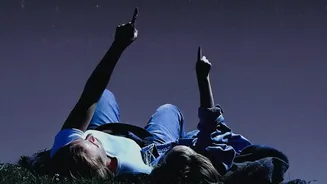
To make the most of your stargazing session, planning is key. Always check the weather forecast for clouds and rain before you head out. Plan your trip around the new moon phase for the darkest possible skies, as a bright moon can wash out fainter stars. Once you arrive at your spot, turn off all white lights, including your phone screen, and allow your eyes at least 20 minutes to fully dark-adapt. This is when the real magic happens, as thousands of stars become visible. Be patient. The sky is constantly in motion. Lying back and simply watching for a while is often the most rewarding part of the experience. And remember, the goal isn't just to see specific objects, but to soak in the immense beauty and scale of the universe.