








The Allure of the Connected Carry-On
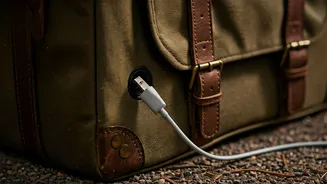
Let's be honest, the appeal is obvious. You’re navigating a new city, your phone's battery is flashing red, and instead of digging for a power bank, you just plug your cable into your backpack strap. It sounds sleek, futuristic, and incredibly convenient.
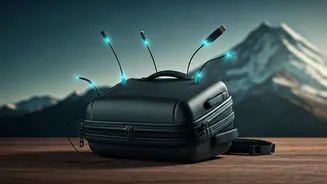
Marketers have successfully sold this vision of a seamless travel experience, where your luggage is as smart as your phone. For first-time backpackers or tech-savvy travellers, it can seem like a must-have feature, a solution to the perennial problem of keeping devices charged on the move. The promise is one of integration and ease, eliminating one small piece of friction from a day of exploration. But as many veterans of the road have discovered, the reality rarely lives up to the marketing hype.
A Failure Point You Don't Need
The primary argument against integrated USB ports is simple: they introduce an unnecessary point of failure. Backpacks, especially for long-term travel, need to be tough. They are thrown into bus luggage holds, dragged through dusty streets, and exposed to rain. A good backpack is, above all, a durable piece of equipment. An integrated electronic component—a flimsy cable running through the fabric and a plastic port exposed to the elements—is the antithesis of this. Ports can get clogged with dirt, internal wires can fray from the constant flexing of the bag, and the plastic housing can crack. When it inevitably breaks, you’re left with a useless feature and, in some cases, a hole in your bag. It’s a gimmick that compromises the very ruggedness a backpack is supposed to embody.
Waterproofing: A Bag's Core Duty
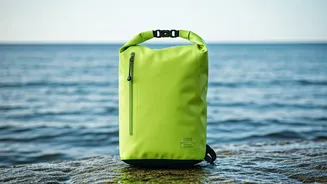
For any serious traveller, a backpack's most critical job is to protect its contents. Whether you’re caught in a Mumbai monsoon or a downpour in the mountains, keeping your clothes, electronics, and documents dry is non-negotiable. This is where the USB port becomes a significant liability. Creating a hole in the outer shell of a bag to fit a port fundamentally compromises its water resistance. While some manufacturers add rubber gaskets or flaps, these are rarely as reliable as an unbroken sheet of high-denier, coated nylon or canvas. Water has a way of finding any weakness. Experienced backpackers know that a truly waterproof or highly water-resistant bag is one of the best investments they can make. Sacrificing that core function for a minor convenience is a trade-off they are increasingly unwilling to make.
The Humble Power Bank Does It Better
The irony is that a better, more flexible solution to the charging problem already exists: the portable power bank. A separate power bank is a modular solution that is superior in every way. You can choose the capacity you need, from a slim unit for a day trip to a high-capacity brick for multi-day treks. When it breaks or becomes obsolete, you can replace it without having to buy a whole new backpack. You can hold it in your hand with your phone, leave it to charge in your hostel locker, or lend it to a friend. Tethering your charging activity to a large, bulky backpack is simply impractical. Why have your phone physically connected to a bag on your back when you could have a compact power bank in your pocket or a small daypack?
The Return to Simplicity and Durability
Ultimately, the rejection of the USB port is part of a larger philosophy in the backpacking community that prioritises simplicity, durability, and functionality over feature creep. The best travel gear is often the simplest. It’s the gear that does one or two things exceptionally well and can be trusted not to fail when you’re thousands of miles from home. This mindset values well-stitched seams over smart-tech integrations, comfortable harness systems over charging ports, and robust, water-resistant fabrics over gimmicks. Travellers are learning that true convenience on the road doesn't come from a bag that tries to do everything, but from a system of simple, reliable tools that work together seamlessly. The backpack's job is to carry things comfortably and protect them from the elements. Everything else is a distraction.