





The Science Behind Desk-Bound Discomfort
The human body is designed for movement. When you sit for extended periods, this natural design is disrupted. Certain muscles, like your hip flexors, remain in a shortened position, while others, such as your glutes, become inactive. This imbalance creates
significant stress on your spine, hips, and shoulders. Over time, this leads to poor posture, with shoulders rounding and the head pushing forward, causing neck and back pain. Reduced movement also slows down circulation, which means less oxygen and fewer nutrients reach your muscles and joints, making them feel tired, stiff, and sore. This lack of blood flow and joint lubrication is a primary reason why you might feel “locked up” after a long day at your computer.
Counteracting Strain: Stretches for Neck and Shoulders
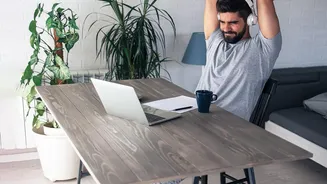
The neck and shoulders are often the first areas to protest after hours spent hunched over a keyboard. Taking a moment to stretch can provide immediate relief and prevent long-term tension. A simple shoulder roll is a great start; just lift your shoulders up toward your ears, then roll them back and down, opening up the chest. Another effective move is the head glide. While sitting tall, slowly tuck your chin toward your chest as if creating a double chin, then glide your head backward. This counteracts the forward-head posture common among desk workers. For a deeper stretch, try a tricep stretch by reaching one arm over your head, bending the elbow, and gently pulling the elbow with your opposite hand.
Relieving Your Back and Mobilizing Your Hips
Your lower back and hips bear a heavy load when you're seated. Sitting increases pressure on your spinal discs compared to standing. To combat this, a seated spinal twist can work wonders. Sit on the edge of your chair with your feet flat on the floor. Gently twist your torso to one side, using the chair for support. Hold for 15-30 seconds and repeat on the other side. To address tight hips, the seated figure-four stretch is excellent. Cross one ankle over the opposite knee and gently press down on the bent knee until you feel a stretch in your hip and glutes. This movement helps lengthen the hip muscles that become shortened from constant sitting.
Improving Circulation and Mental Focus
The benefits of stretching extend beyond just muscles and joints. Taking short, active breaks increases blood flow throughout the body, including to your brain. This boost in circulation enhances cognitive function, helping to improve concentration, memory, and creativity. Furthermore, stretching can be a form of mindfulness, offering a mental pause from work-related stress. Studies have shown that regular stretching can help lower levels of cortisol, the body's stress hormone, while releasing endorphins, which act as natural mood elevators. This mental reset can leave you feeling more energized, focused, and productive when you return to your tasks.
How to Build a Consistent Stretching Habit
Knowing how to stretch is one thing; remembering to do it is another. Experts suggest taking a brief stretching break every 30 to 60 minutes. The key is consistency. Try linking your stretches to a recurring event, like the end of every phone call or before you check your email. Set a timer on your phone or computer as a simple reminder to get up and move for just a few minutes. Some research suggests that breaking up sedentary time with just one to two minutes of movement every half hour can significantly promote blood circulation and reduce muscle stiffness. You don't need a full workout; even standing up and reaching for the ceiling is a beneficial start.