








The Legend of the Seven Pagodas
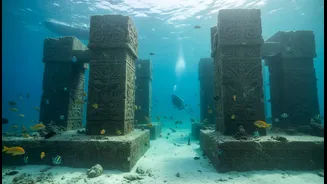
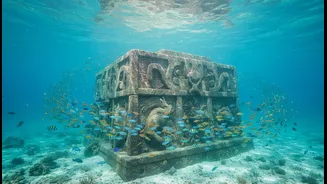
The magnificent Shore Temple at Mahabalipuram, a UNESCO World Heritage site, has stood against the sea for over 1,200 years. Yet, ancient folklore and the accounts of early European sailors speak not of one temple, but of seven. This collection was known
as the Seven Pagodas. According to the legend, six of these glorious structures were consumed by the ocean in a great deluge, leaving only the Shore Temple as a silent witness. For generations, this was considered more myth than history, a romantic tale told by fishermen who claimed to glimpse submerged walls on rare, clear days. But the line between myth and reality began to blur at the turn of the century, prompting a more scientific investigation into the enduring story.
A Glimpse Beneath the Waves
The devastating Indian Ocean tsunami in December 2004 brought immense destruction, but it also offered a fleeting, extraordinary clue. As the sea temporarily receded from the Mahabalipuram coastline, onlookers reported seeing a long row of large, man-made stone boulders emerge from the water before being swallowed again by the returning waves. This dramatic event lent sudden, powerful credence to the old legends. It spurred the Archaeological Survey of India (ASI) and the Indian Navy to conduct sonar scans in 2005, which revealed the first concrete evidence of large underwater structures, including what appeared to be a 70-metre-long wall.
A New Era of Underwater Search
Early explorations in the 2000s, conducted by teams from the National Institute of Oceanography (NIO) and the ASI, confirmed the presence of submerged man-made structures scattered over a wide area. These initial surveys, using sonar and diver explorations, found fallen walls, stone blocks, and what looked like a flight of stairs about 800 metres from shore. However, strong currents and thick aquatic growth made detailed analysis difficult. Now, a new phase of exploration has been launched by the ASI’s dedicated Underwater Archaeology Wing. This renewed effort is equipped with more advanced technology, including a Remotely Operated Vehicle (ROV) capable of capturing high-resolution video and images of the seabed without disturbing the delicate archaeological site. This modern toolkit allows for safer, more precise documentation in the challenging marine environment, representing a significant leap forward in the quest.
Technology Unlocking History
The use of high-tech tools is crucial. While earlier sonar scans could map the general layout of large structures, the new generation of ROVs provides a visual clarity that was previously impossible. Archaeologists can now examine chisel marks on stone blocks and study architectural features from the safety of a control room, helping them to date the ruins and understand their purpose. The goal is to solve the riddle of the Pallava-era structures that have been hidden for centuries. These explorations, guided by a team of archaeologists and technicians, aim to create a detailed digital map of the underwater site, distinguishing between natural reefs and man-made temple or port complexes that may date back 1,200 to 1,500 years.
Why the Discovery Matters
Confirming the existence of the six lost pagodas would be more than just validating a local legend; it would rewrite a significant chapter of Indian history. The findings could provide invaluable insights into the maritime prowess of the Pallava dynasty, the architectural genius of the era, and the historical coastline of ancient India. Uncovering a submerged temple complex or a bustling port would offer a direct look into a world that was lost to the sea over a millennium ago. As the Union Culture Ministry has noted, this mission is about preserving India’s ocean heritage and ensuring the treasures beneath the waves are documented and cherished for future generations.