


Gajar ka Halwa: The Carrot Classic
Though often seen as a winter delicacy, Gajar ka Halwa is a year-round comfort food that feels especially right on a rainy day. [4] This classic North Indian dessert consists of grated carrots slow-cooked in milk, sugar, and generous amounts of ghee until
it reaches a rich, pudding-like consistency. [2, 23] Believed to have been popularized during the Mughal era, this dish transforms simple carrots into a decadent treat. [2, 20] The slow cooking process allows the carrots to caramelize, infusing the halwa with a deep, sweet, and slightly earthy flavor. Fragrant with cardamom and garnished with cashews, almonds, and raisins, a warm bowl of Gajar ka Halwa is the perfect, homely companion for a cool, rainy afternoon. [4, 2] Its warmth and richness are precisely what one craves when the weather turns damp and chilly. [15, 28]
Moong Dal Halwa: A Golden Delight
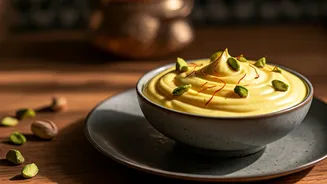
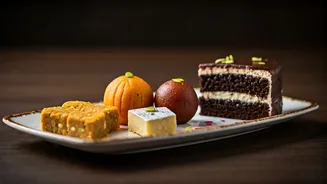
Moong Dal Halwa is the epitome of indulgence. Originating from Rajasthan, this dessert is famous for its rich flavour and melt-in-the-mouth texture. [8, 12, 32] Making it is a true labour of love, involving soaking yellow moong dal, grinding it into a paste, and then patiently slow-roasting it in a generous amount of ghee. [8, 32] The process is time-consuming, requiring constant stirring, but the result is a grainy-yet-smooth, golden-brown confection with a nutty aroma that is simply irresistible. [12, 8] Sweetened with sugar and simmered with milk, it’s often flavoured with cardamom and saffron. [8] While traditionally a winter sweet, its warming properties make it an excellent choice for a damp monsoon evening, offering a burst of energy and pure comfort. [12, 15, 28]
Hot Gulab Jamun: The Spongy Sweet Bomb
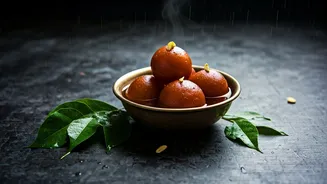
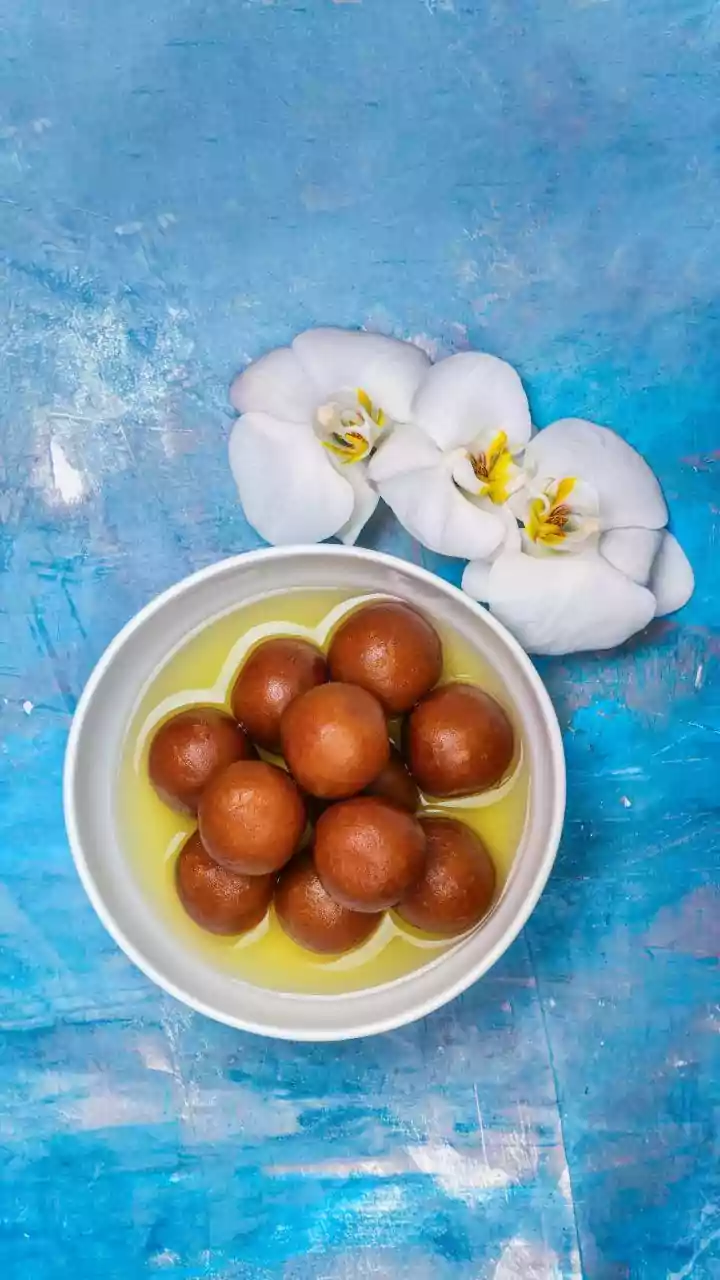
There are few things as satisfying as a warm Gulab Jamun on a rainy day. [17, 28] These iconic, deep-fried balls, traditionally made from khoya (milk solids), are soft, spongy, and utterly decadent. [4, 10] After being fried to a perfect golden-brown, they are soaked in a warm, fragrant sugar syrup often infused with rose water, saffron, or cardamom. [31, 6] The name itself is a nod to this syrup—'gulab' for rose and 'jamun' for the Indian black plum it resembles. [3, 9] While its exact origins are debated, it is widely believed to have been introduced to India from Persia during the Mughal era. [6, 3, 9] The sensation of biting into a warm, syrup-laden Gulab Jamun as it melts in your mouth is a heavenly experience that makes grey, rainy days significantly brighter. [4, 17]
Jalebi with Rabri: The Ultimate Indulgence
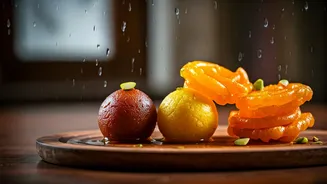
Jalebi, with its vibrant orange spirals, is a quintessential rainy-day treat for many across India. [4, 15] These crispy, deep-fried whirls are made from a fermented batter and then soaked in sugar syrup, resulting in a dessert that is crunchy on the outside and chewy and syrupy on the inside. [5, 31] While delicious on its own, pairing hot, fresh jalebi with cool, creamy rabri elevates it to another level. [11] Rabri is a traditional dessert made by slow-cooking full-fat milk until it thickens and reduces, sweetened and flavoured with cardamom and nuts. [35] The contrast of the warm, crisp jalebi with the chilled, rich rabri creates a divine combination of temperatures and textures that is hard to resist. [5, 11, 16]
Shahi Tukda: A Treat Fit for Royalty
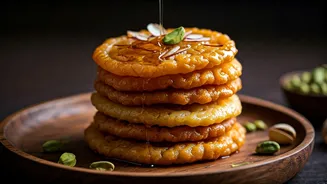
As the name suggests, Shahi Tukda, or 'royal piece', is a dessert with a rich history. [19, 24] This Mughlai-era bread pudding is said to have been created in the royal courts and is a staple at festive gatherings. [19, 24] To make it, slices of bread are deep-fried in ghee until golden and crisp. [19, 22] These pieces are then soaked in a sweet sugar syrup and finally topped with rabri—thickened, sweetened milk fragrant with saffron and cardamom—and a generous garnish of chopped nuts like almonds and pistachios. [21, 29] It's a luxurious combination of textures: the crispiness of the fried bread, the softness from the syrup, and the creamy richness of the rabri. It’s an easy yet decadent dessert to make at home, perfect for making a rainy evening feel a little more special. [26, 29]