





What Exactly Is El Niño?
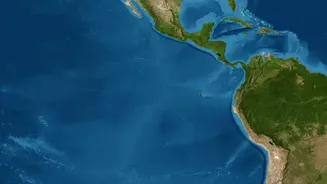
El Niño is a naturally occurring climate phenomenon marked by the unusual warming of sea surface temperatures in the central and eastern equatorial Pacific Ocean. Think of the Pacific as a giant bathtub where, normally, winds push the warm surface water
to the west, towards Asia. During an El Niño, these trade winds weaken, or even reverse, allowing the warm water to slosh back towards the eastern Pacific, near South America. This change in ocean temperature, however minor it sounds, is powerful enough to disrupt atmospheric patterns and influence weather across the globe.
The Pacific-Monsoon Connection
India's southwest monsoon relies on a delicate pressure and temperature balance. The intense heating of the Indian subcontinent during summer creates a low-pressure area that pulls in moisture-laden winds from the cooler Indian Ocean. El Niño messes with this system. The warming of the Pacific Ocean alters a major atmospheric circulation pattern, known as the Walker Circulation, which is linked to the monsoon winds. This disruption can weaken the entire monsoon system, leading to less moisture being drawn towards India. The result is often reduced or uneven rainfall across the country during the critical June-to-September period.
Why It's a Risk, Not a Guarantee
While a strong correlation exists, an El Niño year does not automatically mean a drought in India. Historically, many of India's worst droughts have coincided with El Niño events, but there have also been El Niño years with normal rainfall. This is because the monsoon is a complex system influenced by multiple factors. Other climatic conditions, like the Indian Ocean Dipole (IOD)—a sort of El Niño-like pattern in the Indian Ocean—can either worsen or counteract El Niño's effect. A 'positive' IOD, with warmer waters in the western Indian Ocean, can sometimes help the monsoon even when El Niño is present. This makes accurate forecasting a challenging but crucial task for meteorologists.
The Ripple Effect on India's Economy
The concern over El Niño stems from its potential economic fallout. With around 70% of its annual rainfall arriving during the monsoon, India's agricultural sector is deeply vulnerable. A weak monsoon can lead to lower crop yields for key kharif crops like rice, soybeans, and pulses. This directly impacts the income of millions of farmers and can reduce rural demand for goods like tractors and two-wheelers. The consequences quickly spread to the wider population. Lower agricultural output can tighten food supplies, leading to a rise in food inflation, which affects household budgets across the nation. It can also strain water resources, affecting drinking water supplies and reducing generation from hydroelectric power plants.
The 2026 Outlook
As of August 2026, global weather agencies like the National Oceanic and Atmospheric Administration (NOAA) are forecasting a rapidly strengthening El Niño, with a high probability of it becoming a 'strong' or even 'historic' event by the end of the year. While El Niño's full impact on India is influenced by a time lag and other regional factors, the developing situation is being closely watched. A powerful El Niño event increases the chances of erratic weather patterns, making it a significant risk factor for the ongoing monsoon and the seasons that follow.