








The Old Way: Hidden Costs of Credit Cards
For years, using a credit card abroad was the convenient choice. It's universally accepted and saves you from carrying wads of cash. However, this convenience comes at a cost, often hidden in the fine print. Most standard Indian credit cards charge a 'foreign
currency transaction fee' or 'forex markup fee' on every international swipe. [14, 20] This fee typically ranges from 1.5% to 3.5% of your transaction value. [11] So, on a trip where you spend ₹2 lakh, you could be silently paying between ₹3,000 and ₹7,000 extra in just fees. [14, 19] Then there's the exchange rate. Credit cards use the exchange rate that's applicable on the day of the transaction, which is subject to market fluctuations. [8] This means you have no certainty about how much you're actually spending in rupees until you see your statement. [20] Another potential pitfall is Dynamic Currency Conversion (DCC), where a merchant offers to charge you in Indian Rupees. While it seems helpful, DCC often comes with an unfavourable exchange rate set by the merchant's bank, making the transaction even more expensive. [13, 23]
The Smart Swap: How Forex Cards Work
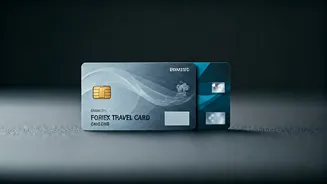
Enter the forex card. A forex card is a prepaid travel card that you load with foreign currency before your trip. [6] Think of it like a local debit card for the country you're visiting. You load it with US Dollars, Euros, British Pounds, or other supported currencies at an exchange rate that gets 'locked-in' on the day of loading. [3, 5] This is the key advantage: you are protected from any future currency fluctuations. [4, 8] If the rupee weakens during your trip, your spending power remains unaffected because your funds are already held in the foreign currency. [20] These cards, offered by most major banks like ICICI, HDFC, and Axis, can be used at ATMs to withdraw cash and at merchant outlets for payments, just like a credit or debit card. [2, 10] Many are multi-currency cards, allowing you to load several different currencies onto a single card, which is perfect for a multi-country European holiday. [5]
Head-to-Head: Fees and Exchange Rates
The primary reason travellers switch is cost savings. Since the currency is already pre-loaded, forex cards don't typically charge a foreign transaction fee for payments made in that currency. [3] This alone can save you the 2-4% you'd pay with a credit card. [9] While there might be an issuance fee (around ₹150-₹500) and fees for reloading, these are often lower than the cumulative forex markup on a credit card for a substantial trip. [11] Withdrawing cash is also generally cheaper. Credit card cash advances are notoriously expensive, attracting high fees (2.5-3.5%) and immediate interest charges at annual rates of over 40%. [11] Forex cards have a much lower, fixed ATM withdrawal fee (typically around $2-3 per transaction). [11]
Convenience, Security, and The Modern Exception
Both card types are chip-and-PIN protected, making them much safer than carrying large amounts of cash. [3, 10] If lost or stolen, they can be blocked and often replaced. [7, 8] In terms of acceptance, credit cards still have a slight edge, especially for pre-authorisation holds at hotels or car rentals. [10] Reloading a forex card while abroad can sometimes be less straightforward than the instant credit offered by a credit card, although many banks now offer online reloading facilities. [5] However, the financial landscape is evolving. In response to the popularity of forex cards, some banks have started offering 'zero forex markup' credit cards. [14, 19] These premium cards, like the Niyo Global or Scapia Federal Bank card, eliminate the foreign transaction fee, bridging the gap with forex cards. [14, 21] They often come with travel benefits and rewards points, making them a compelling new option for frequent flyers. [17]
The Verdict: What's Right For Your Trip?
For most travellers, especially those on a budget or taking a single, long trip, a forex card is the smarter financial choice. [5] The locked-in exchange rate provides peace of mind and the absence of markup fees ensures significant savings. [4, 8] It’s an excellent tool for managing a pre-planned budget. [10] However, a credit card remains an invaluable backup for emergencies or for transactions where a forex card might not be accepted. [8] For the globetrotter who travels frequently, a zero-forex markup credit card might offer the best of both worlds: no extra fees plus the benefits of a credit line and reward points. [9, 14] The smartest strategy of all? Carry a combination: a forex card for your planned day-to-day expenses and a credit card (ideally a zero-markup one) for backup and bookings. This two-card approach gives you cost savings, flexibility, and security.