






An Unwanted Signal Over India
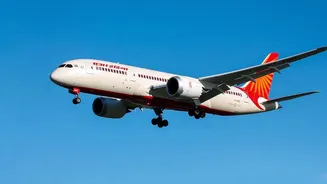
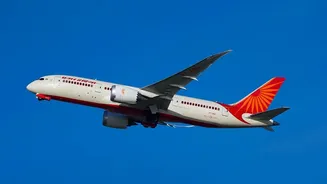
On Wednesday, October 14, Air India flight AI2030 was on its way from Frankfurt to Delhi with 306 passengers and crew members on board when air traffic control (ATC) received an alert. For reasons now under intense investigation, the aircraft's transponder
appeared to be 'squawking' the code 7500, the universal signal for a hijacking. This immediately set off alarms within India's aviation security network. Though the flight crew quickly confirmed via radio that everything was normal on board, protocols are rigid and non-negotiable. Authorities in the Delhi airport's war room made the decision to divert the Boeing 787-9 to Jaipur as a precaution.
What is a '7500' Squawk?
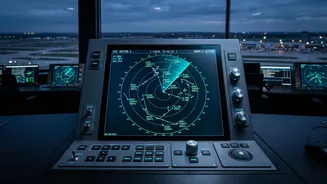
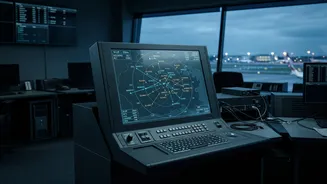
In aviation, a 'squawk' code is a four-digit number that an aircraft's transponder sends out to help ATC identify it on radar. While most codes are for routine identification, three are reserved for emergencies worldwide: 7700 for a general emergency, 7600 for a communications failure, and 7500 for unlawful interference, or a hijacking. This code allows pilots to silently alert authorities to a threat without tipping off hijackers. When ATC sees a 7500 code, the aircraft's icon on their radar screen often turns red and triggers an audible alarm, launching an immediate, high-priority response on the ground. It is treated as a confirmed threat until proven otherwise.
The Protocol on the Ground
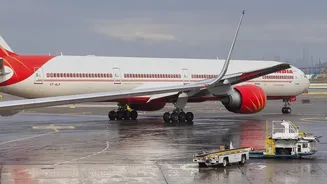
Once the hijack alert was perceived, a well-rehearsed, multi-agency security protocol swung into action. Upon landing safely in Jaipur around 9:35 am, the aircraft was directed to a remote isolation bay, away from the main terminal. Personnel from the Central Industrial Security Force (CISF), local police, and the Bomb Detection and Disposal Squad (BDDS) were mobilized. The National Security Guard (NSG) was also placed on standby in New Delhi. All 306 people on board were deplaned and, along with their luggage, underwent mandatory security screenings before the aircraft was thoroughly inspected and finally cleared. The flight was eventually permitted to continue its journey to Delhi later that afternoon.
Pinpointing the Cause
The key question for the Directorate General of Civil Aviation (DGCA), India's top aviation regulator, is what triggered the false alarm. The investigation is exploring several possibilities. One theory is a technical glitch, possibly with a newly installed radar system at Mumbai ATC, which may have erroneously generated the alert. Another is the slim chance of an inadvertent manual entry by the pilots, though experts consider this a 'one in a trillion' chance on a Boeing 787, where the code must be entered digit-by-digit. The flight crew has denied setting the code. Investigators will scrutinize the aircraft's flight data recorder and ATC logs to determine if the signal originated from the plane or a ground system.
A System Tested, and Passed
While the incident caused significant disruption and anxiety, it also served as an unintentional, real-world stress test of India's aviation security apparatus. From the immediate diversion to the coordinated ground response, every agency involved followed established anti-hijacking protocols. Civil Aviation Minister K. Rammohan Naidu has confirmed that the DGCA's findings will determine if any changes to security norms are needed. However, the initial takeaway is that even when triggered by a false alarm, the system designed to protect passengers and crew from the worst-case scenario worked exactly as it was supposed to.