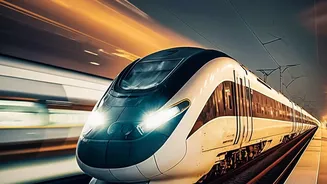




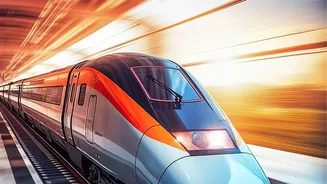
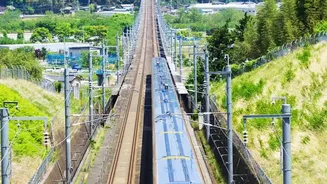
India's dream of high-speed rail is drawing closer, with officials now targeting 2027 for the first passenger operations on the Mumbai-Ahmedabad bullet train corridor. This marks a pivotal moment for one of the nation's most ambitious projects.
The 2027 Goal Explained
Railway
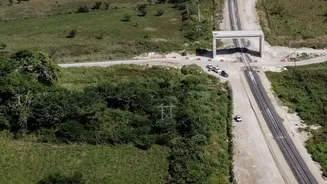
Minister Ashwini Vaishnaw has announced that the first section of India's inaugural bullet train service is slated to begin operations in the last quarter of 2027. The initial route will cover the stretch between Surat and Vapi in Gujarat. This follows a timeline where trial runs on a 50-km segment from Surat to Bilimora are expected to start by May 2027. Recent progress includes the crucial energisation of the overhead electrical systems on the Surat-Bilimora section on November 20, 2026, a key step before testing can commence. The National High Speed Rail Corporation Limited (NHSRCL), the body overseeing the project, has confirmed that infrastructure work like pier and viaduct construction has advanced significantly, setting the stage for this first phase.
Why This Gujarat Section First?
The decision to prioritise the Gujarat portion of the 508-km Mumbai-Ahmedabad corridor is strategic. The project initially faced significant delays, largely due to challenges in land acquisition in Maharashtra and the impact of the COVID-19 pandemic. As a result, construction work in Gujarat, where land acquisition progressed more smoothly, is now far more advanced. Railway Minister Ashwini Vaishnaw has noted that while the project was launched years ago, serious construction has only been underway for about five years due to these early hurdles. Focusing on the Surat-Vapi stretch allows for a phased rollout, enabling Indian Railways to launch the service on a completed segment while work continues on more complex parts of the line, including a challenging undersea tunnel in Maharashtra.
An Indigenous Train Takes the Lead
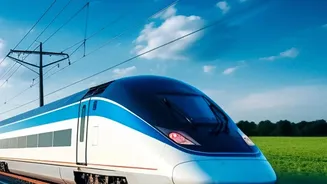
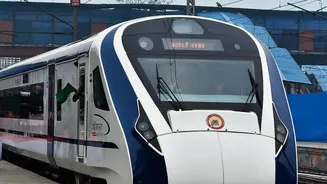
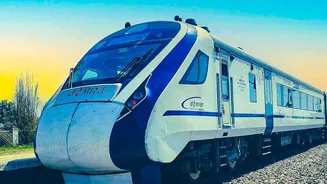
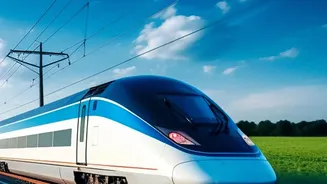
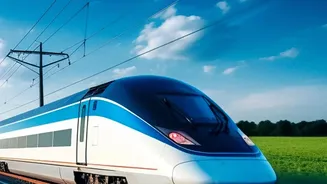
While the project is a collaboration with Japan, leveraging its famed Shinkansen technology, the initial runs will be conducted using a domestically manufactured train. The indigenous B28 trainset, designed for speeds up to 280 kmph, is being built by public sector undertakings ICF and BEML. This 'Make in India' approach extends to the infrastructure, with major components of the high-speed electrification system, including transformers and masts, also being made in India. The first B28 train's body frame has already completed structural 'squeeze tests' to ensure it can withstand the immense air pressure at high speeds. The plan to use an Indian train for the inaugural run came after it became clear the newer Japanese E10 series Shinkansen trains would only be available later.
Overcoming Complex Challenges
The journey to 2027 has not been without its difficulties. The project's overall cost has increased from an initial estimate of around ₹1.08 lakh crore to nearly ₹2 lakh crore due to delays and other factors. Beyond land acquisition, the engineering itself is monumental. The full corridor includes 21 km of tunnels in Maharashtra, with a 7-km portion running under the sea at Thane Creek—a first for India. Two massive Tunnel Boring Machines, each as tall as a four-storey building, were launched in July 2026 to excavate this undersea section. Furthermore, a former Japanese official has noted that completing a 500-km high-speed line in under a decade is a challenge even for Japan, highlighting the project's inherent complexity.
The Bigger Picture: A High-Speed Future
The Surat-Vapi launch is just the beginning. The plan is to commission the entire 508-km Mumbai-Ahmedabad corridor in phases. After the initial 2027 launch, services are expected to extend towards Thane by 2029. Once fully operational, the bullet train will reduce travel time between Mumbai and Ahmedabad to approximately two hours, a significant drop from current rail journey times. The project involves installing an advanced 2x25 kV overhead traction system and constructing 12 stations and three rolling stock depots. The successful implementation of this corridor is seen as a crucial test case, potentially paving the way for a larger network of high-speed rail lines across India and demonstrating the nation's capability to execute complex, large-scale infrastructure projects.