
Kinkaku-ji, Kyoto: The Golden Re-evaluation
The gleaming Golden Pavilion, perfectly reflected in its mirror pond, is one of Kyoto's most defining images. It is undeniably beautiful, a stunning example of Muromachi period design. However, the experience of seeing it can be less than tranquil. The site
is almost always crowded, with visitors funnelled along a one-way path. You cannot enter the pavilion itself, making the visit primarily a quick, outdoor photo opportunity that can last as little as 30 minutes. For many, the reality is a jostle for a photo spot rather than a peaceful moment of zen. While the queue to enter is often managed efficiently, the sheer volume of people makes a contemplative experience nearly impossible. If you're short on time in Kyoto, the journey to this northern temple might feel underwhelming compared to more immersive, walkable areas.
Fushimi Inari Shrine, Kyoto: The Endless Gates and People
The seemingly infinite tunnel of vermilion torii gates at Fushimi Inari Shrine is a quintessential Japan photo. The good news is that the shrine is open 24 hours a day. The bad news is that between 9 a.m. and 4 p.m., especially on weekends, the lower paths can be overwhelmingly crowded. The narrow tunnels become a slow-moving queue, making it difficult to capture that perfect, empty-path photo or soak in the spiritual atmosphere. However, the key to enjoying Fushimi Inari is to keep walking. The shrine complex covers an entire mountain with about 4 kilometres of trails. Most tourists turn back after the first few hundred metres. If you're willing to hike further up Mount Inari, the crowds thin out dramatically, revealing quieter paths, smaller sub-shrines, and a more authentic experience. For a truly peaceful visit, your best bet is to arrive before 7 a.m. or after 8 p.m.
Arashiyama Bamboo Grove, Kyoto: A Short, Crowded Walk
Images of the Arashiyama Bamboo Grove suggest a serene, otherworldly walk through towering green stalks. The reality is often a short, 400-metre path packed with people, all vying for the same photo. The experience can feel more like navigating a busy sidewalk than a peaceful forest escape. The problem is so pronounced that overtourism has led to vandalism, with tourists carving names into the bamboo stalks, scarring the natural beauty. For photographers, it’s also important to know that the most famous 'empty lane' photo is often taken from a section reserved for rickshaw tours, which is not accessible on the public path. To avoid the worst of the crowds, an early morning visit before 8 a.m. is essential. Alternatively, consider visiting other, quieter bamboo groves in Kyoto, such as the one at Adashino Nenbutsu-ji Temple.
Kiyomizu-dera Temple, Kyoto: A Stage for the Masses
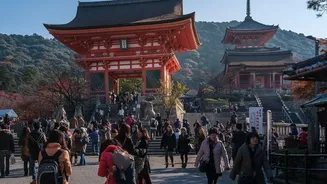
Perched on a hillside with a famous wooden stage that offers panoramic views of Kyoto, Kiyomizu-dera is a magnificent UNESCO World Heritage site. It's also one of the city's most visited temples, meaning the grounds, and the historic Sannenzaka and Ninenzaka streets leading up to it, are often packed. During peak cherry blossom and autumn foliage seasons, the crowds can become so dense that it's difficult to move freely, especially on the main stage. The temple opens at 6 a.m., and arriving at dawn is by far the best way to experience its grandeur without the masses. By 9 a.m., the tour groups have arrived, and the site remains extremely busy until late afternoon. Special night viewings are beautiful but are also famously crowded.
Shibuya Crossing, Tokyo: Organized Chaos Isn't for Everyone
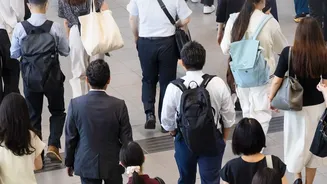
Billed as the world's busiest intersection, where up to 1,000 people can cross at once, Shibuya Crossing is a spectacle of modern Tokyo. For many, it's a thrilling, must-see symbol of the city's energy. For others, it's simply a crowded intersection. While fascinating to watch from a high vantage point like the Starbucks overlooking the crossing, being in the middle of the 'scramble' can be overwhelming and less exciting than it appears. It's a prime example of a destination that is more about the idea of it than the experience itself. If massive crowds aren't your thing, you might find more enjoyment exploring Tokyo's other vibrant, but less chaotic, neighbourhoods like Nakano or Koenji.