





What is That Magical Blue Glow?
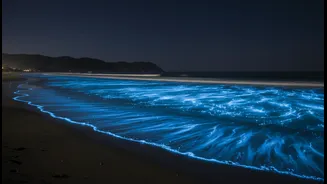
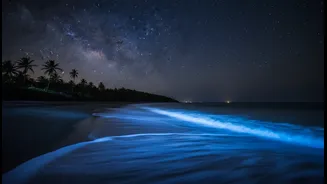
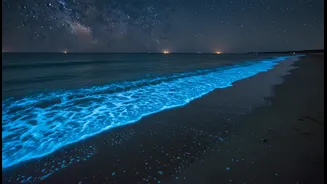
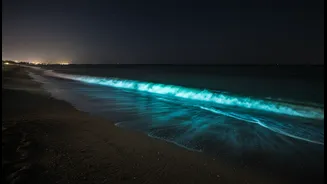
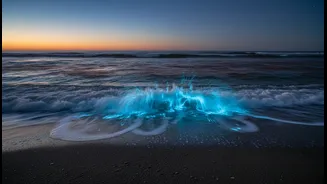
The phenomenon captivating Mumbai is called bioluminescence, often referred to as a 'blue tide'. It's caused by microscopic marine organisms, a type of phytoplankton called dinoflagellates. Specifically, the species Noctiluca scintillans, or 'sea sparkle',
is responsible for this stunning display. These single-celled organisms produce light through a chemical reaction inside their bodies when they are disturbed. The agitation from crashing waves, a boat, or even a hand moving through the water triggers a defense mechanism, causing them to flash a brilliant blue light. This flash is created by a light-producing molecule reacting with oxygen. While many deep-sea creatures can glow, seeing it so vividly on coastal shores is a relatively rare and breathtaking event.
Why Is It Happening in the Off-Season?
Typically, bioluminescence on India's west coast is most common during the cooler, post-monsoon months from September to January or November and December. The current sightings are unusual because they fall outside this typical window. The appearance of these blooms is highly dependent on environmental conditions, including water temperature, nutrient levels, and rainfall patterns. Scientists suggest that off-season blooms can be triggered by several factors. Increased nutrient runoff from land following heavy or unseasonal rains can fuel the growth of these plankton. Furthermore, shifts in sea surface temperature and changing water stratification, which are linked to broader climate change patterns, can also create favourable conditions for Noctiluca scintillans to thrive when they normally wouldn't. This makes their appearance both unpredictable and a subject of scientific interest.
A Beautiful Sight, But Is It Good News?
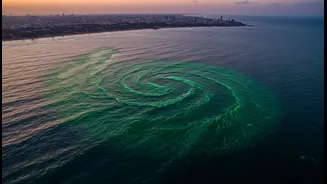
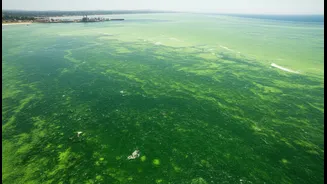
While the glowing waves are undeniably beautiful, scientists caution that these blooms are not always a positive sign. Noctiluca scintillans is a voracious organism. It feeds on other essential phytoplankton, like diatoms, which form the base of the marine food web. When these blooms become large and dense, they can out-compete other organisms for food and resources. Even more concerning, while Noctiluca itself is not toxic, the decay of a massive bloom consumes large amounts of oxygen in the water, creating hypoxic or 'dead zones'. These low-oxygen conditions, combined with the ammonia the plankton release, can lead to mass fish die-offs, harming local fisheries and the overall health of the marine ecosystem. Therefore, a large-scale blue tide can be an indicator of an ecosystem under stress.
From Juhu to Instagram: A Social Media Spectacle
The rare sight has transformed Mumbai's beaches into late-night destinations, with locals and tourists flocking to shores like Juhu and Aksa to witness and capture the event. Social media platforms are flooded with stunning videos and photos of the glowing blue surf, with many posts going viral. This has created a buzz, with people sharing tips on the best times to visit—often late at night, past midnight, when the city's light pollution is lower and the glow is more prominent. The social media frenzy highlights a collective fascination with this natural wonder, bridging the gap between urban life and the mysterious workings of the ocean at our doorstep.