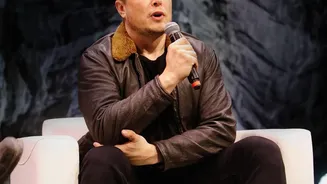







Elon Musk has become one of the largest political donors in the United States, pouring hundreds of millions into the 2026 midterm elections. This has sparked a conversation about the influence of wealth in politics. But how would such a move fare in India?
Musk's Multi-Million Dollar Political Playbook
In the run-up to the October 2026 US midterm elections, Elon Musk, a naturalised US citizen, has established himself as a dominant force in political financing. Reports indicate he has funnelled hundreds of millions of dollars to Republican groups and his own super PAC, 'America PAC'. This includes staggering sums, such as a reported $158 million to the Senate Leadership Fund, a committee backing Republican candidates for the Senate. This level of spending by a single individual, while enormous, is permissible within the framework of US election finance laws, which allow citizens to make large, often unlimited, contributions to independent political action committees, or 'super PACs'. Musk's spending spree has made him the top known donor in the midterms, significantly boosting the financial advantage of the Republican party.
India's Iron-Clad Stance on Foreign Funding
The Indian legal system takes a fundamentally different approach, rooted in the principle of insulating the nation's democratic process from foreign influence. The key piece of legislation governing this is the Foreign Contribution (Regulation) Act, or FCRA. Section 29B of the Representation of the People Act, 1951, works in tandem with the FCRA to explicitly prohibit political parties from accepting any contribution from a 'foreign source'. This ban is categorical and applies to political parties, candidates, legislators, and even media organisations. The definition of 'foreign source' is broad, encompassing foreign governments, companies, and individual foreign citizens. The core purpose is to protect India's sovereignty and ensure that political allegiance remains solely with the Indian electorate.
A Tale of Two Democratic Systems
The contrast is stark. If a foreign national like Musk, prior to his US citizenship, were to attempt a similar donation to an Indian political party, it would be illegal. The transaction would violate the FCRA, and the party accepting it would face severe legal consequences. While the US system prioritises free speech, which courts have interpreted to include political spending, India prioritises the prevention of foreign interference. In America, a wealthy citizen's financial support is a powerful tool of political expression. In India, the law builds a high wall to ensure that financial power from outside its borders cannot translate into political power within them. This reflects different historical contexts and national priorities, with India taking an uncompromising stance on financial sovereignty in its elections.
The Nuance: NRIs and Indian Subsidiaries
The rules become more complex when considering Non-Resident Indians (NRIs) and foreign companies operating in India. Generally, an NRI who holds an Indian passport is considered an Indian citizen and can make donations to political parties. However, the regulations surrounding foreign funding have been a subject of debate and amendment. Changes to the FCRA have, in the past, redefined what constitutes a 'foreign source', particularly concerning Indian subsidiaries of foreign companies. While direct funding from a foreign parent company is barred, amendments have created pathways for companies registered and operating in India, even with foreign ownership, to make political contributions. This has led to criticism from watchdog groups who argue that it creates a loophole for foreign influence, albeit an indirect one. Despite these complexities, the foundational rule remains: direct donations from a foreign citizen are strictly forbidden.