


The Red Planet’s Hidden Danger
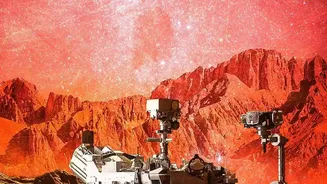
When we picture the challenges of Mars, we often think of the cold, the thin atmosphere, or the radiation. But a more immediate and constant threat lies underfoot. The fine Martian dust, or regolith, is a complex and hazardous substance. Unlike the rounded
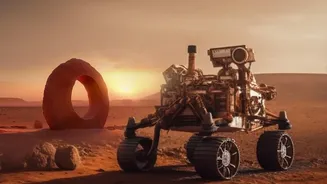
sand grains on Earth, this dust is fine and can be abrasive. More worryingly, it is chemically reactive. Analyses from Mars rovers have revealed the presence of toxic components, including perchlorates, silica, and various metals. Perchlorates can interfere with thyroid function, while inhaled silica can cause a chronic lung disease similar to silicosis, for which there is no cure. During the Apollo missions, lunar dust caused respiratory irritation and equipment failures, and Martian dust poses similar, if not greater, risks due to its composition and tiny particle size, allowing it to penetrate deep into the lungs. Any long-term human presence on Mars depends entirely on our ability to keep this insidious dust from getting everywhere.
The Suitport: A Better Airlock
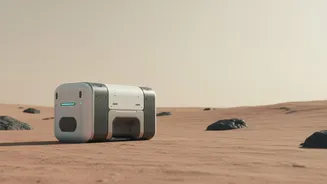
The traditional airlock, where astronauts in dusty suits enter a chamber to be depressurised, is a major source of contamination. No matter how well a suit is brushed, dust inevitably gets brought inside. The suitport offers a more elegant solution. It's a system where a rear-entry spacesuit is permanently docked to the exterior of a habitat or rover. To go on a spacewalk, an astronaut simply opens a hatch inside the vehicle, climbs into the suit, seals the backpack, and detaches. The suit never enters the habitat, meaning the vast majority of the dust stays outside where it belongs. This concept dramatically reduces the risk of both habitat contamination and astronaut exposure to airborne toxins. It also saves a huge amount of time, cutting down the hours-long process of pre-breathing and airlock cycling to potentially less than thirty minutes.
High-Tech Cleaning for What’s Left
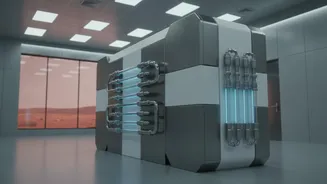
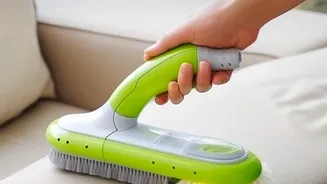
Even with suitports, some level of dust management will be essential for surfaces and equipment. This is where advanced cleaning systems come in. Researchers are developing technologies that use electrostatic forces to actively repel or remove dust. One promising technology is the Electrodynamic Dust Shield (EDS), which uses an electric field to remove particles from surfaces like solar panels, camera lenses, and even spacesuit fabrics. This could be embedded into the outer layers of a suit or applied to sensitive equipment. Other concepts involve using electrostatic and magnetic forces to capture dust and transport it to a collection bag, with some systems demonstrating cleaning rates of over 80%. These self-cleaning technologies are not just for convenience; they are a critical line of defence for maintaining equipment and protecting astronaut health.
The Path to a Dust-Free Future
While promising, these technologies are still in development. NASA and other organizations have tested suitport prototypes in simulated environments, proving the concept is viable. Likewise, electrostatic cleaning systems have been demonstrated in labs and are being refined for the specific challenges of the Martian environment. The key challenge is advancing these systems from a moderate Technology Readiness Level (TRL) to being flight-ready for a crewed Mars mission. This involves rigorous testing with high-fidelity Mars dust simulants and integrating the systems into the complex architecture of a Mars habitat and its spacesuits. The Z-series of prototype spacesuits, for instance, were designed with suitport compatibility in mind from the beginning, showing that NASA is planning for this integrated approach. Ultimately, the success of these 'housekeeping' technologies is as crucial as the rocket that gets us there.