


The Urban Buffet Opens for Business
Our cities are far from the concrete jungles we often imagine them to be. They are dynamic ecosystems, and for a special group of birds known as frugivores—or fruit-eaters—they are becoming increasingly important seasonal restaurants. Species like rose-ringed
parakeets, barbets, and even Indian grey hornbills are thriving in urban environments that offer a steady supply of fruit. As seasons change, different ornamental and native trees begin to bear fruit, creating a predictable and concentrated food source that these birds have learned to exploit. This phenomenon highlights the remarkable adaptability of certain species, which are finding ways to flourish amidst urbanisation.
More Than Just a Free Meal
While an abundance of fruit is the main draw, cities offer other compelling advantages that make them attractive havens for birds. Urban areas often function as 'heat islands', retaining warmth from buildings and paved surfaces. This can lead to milder temperatures, which not only makes winter survival easier but can also cause fruit to ripen earlier than in surrounding rural areas. Furthermore, cities generally have fewer natural predators compared to dense forests, providing a safer environment for birds to feed and nest. This combination of reliable food and relative safety makes the urban landscape an unexpectedly appealing habitat, especially during migration or harsh weather conditions when resources elsewhere are scarce.
A Discerning Palate
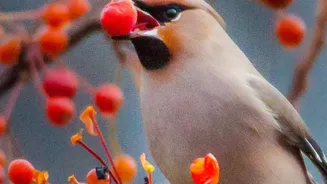
Not all fruits are created equal in the eyes of a bird. Frugivores are discerning customers, typically preferring fruits that are rich in energy and easy to digest. The brightly coloured berries and fleshy fruits of many ornamental trees, planted for their aesthetic appeal, are particularly popular. These fruits are often packed with sugars and lipids, providing a quick energy boost essential for activities like migration and breeding. In many Indian cities, native Ficus trees (figs) are a cornerstone of the urban bird diet, but non-native species planted in parks and along streets also play a significant role. The digestive systems of many primary fruit-eaters are adapted to pass food quickly, ensuring that seeds are not damaged and can be dispersed effectively.
The Unwitting Architects of the Feast
This thriving urban bird scene is, in large part, an unintended consequence of human activity. City planners, landscapers, and homeowners have historically chosen trees based on factors like beauty, shade, and resilience, often without considering their ecological role. The planting of non-native ornamental pear and crabapple trees, for example, has been shown to have a profound influence on bird populations in other parts of the world by providing fruit that persists through winter. In India, the presence of large, old fruit-bearing trees is a key reason why species like the Indian grey hornbill can survive in urban settings. These choices have inadvertently created a network of green spaces and tree-lined streets that serve as vital corridors and refuelling stations for birds.
A Relationship with Consequences
The relationship between cities and frugivorous birds is a perfect example of symbiosis. The birds get a reliable food source, and in return, they act as crucial seed dispersers. By eating fruit and depositing the seeds elsewhere, they help plants and trees to propagate across the urban landscape. This service is vital for maintaining the health and diversity of our urban green spaces. However, this can also have a downside. When birds consume fruit from non-native or invasive plant species, they can inadvertently help these undesirable plants spread, potentially outcompeting native flora. This highlights the importance of thoughtful urban planning that prioritizes planting native species to support a balanced and resilient local ecosystem.