




The Big Misconception About 'Zero Gravity'
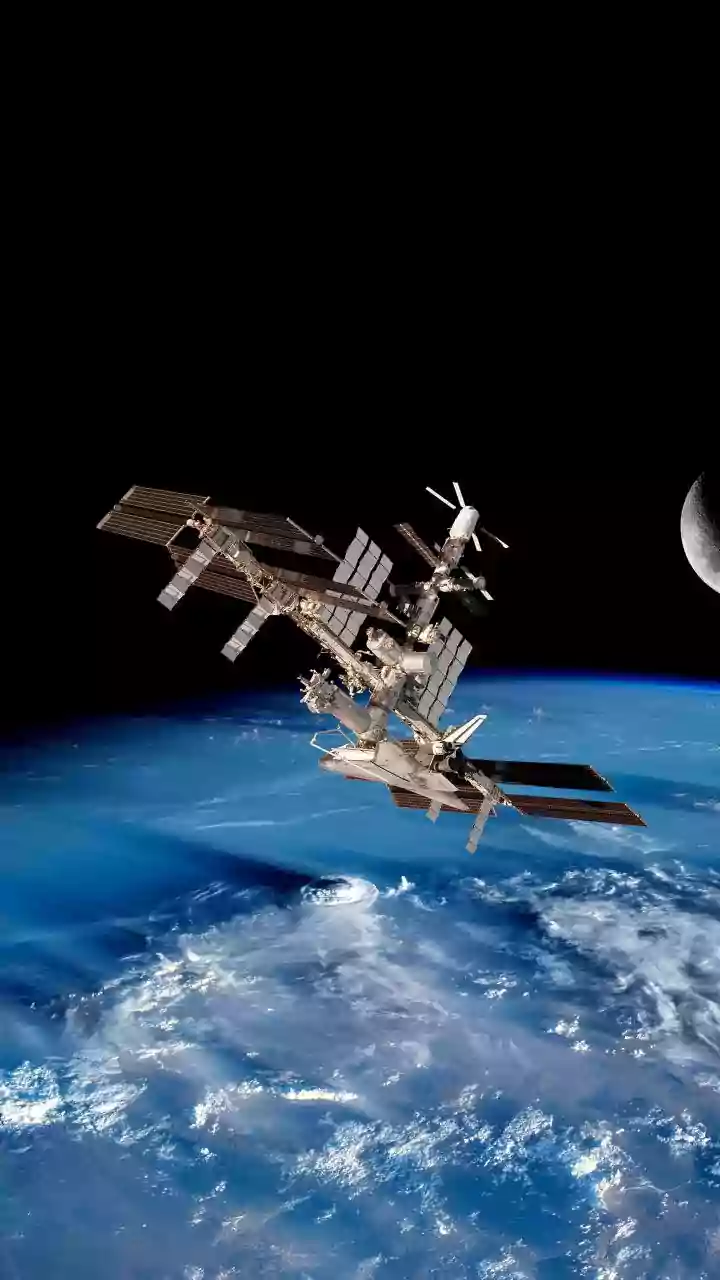
First, let's clear up the biggest myth: there is plenty of gravity in orbit. The International Space Station (ISS), for example, orbits only a few hundred miles above the Earth. At that altitude, Earth's gravitational pull is still about 90% as strong
as it is on the surface. If you could magically build a tower that high and stand on it, you would feel only slightly lighter. Astronauts and their spacecraft are very much within Earth's powerful gravitational grip. So, if gravity is still pulling on them, why do they float? The answer isn't that gravity is gone, but that they are in a constant state of freefall.
Falling, but Constantly Missing the Ground
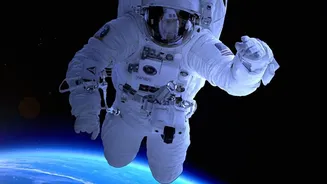
Imagine you're in an elevator and the cable snaps. For the few terrifying seconds before it hits the bottom, you and everything else in the elevator would float. You'd be weightless because you, the elevator car, and your phone that just slipped out of your pocket are all falling at the exact same rate. This is the core principle of what astronauts experience. Orbit is, simply put, a permanent state of freefall. The space station, the people inside it, and every loose object are all continuously falling toward Earth together. Because everything is falling at the same speed, the astronauts don't feel the press of a floor or chair beneath them, which is what our bodies interpret as weight.
Newton's Cannonball and the Perfect Speed
This is where orbital velocity and the planet's curvature come into play. Hundreds of years ago, Isaac Newton devised a thought experiment to explain this concept. He imagined a cannon on top of a very tall mountain, so high it was above the atmosphere to negate air resistance. If you fire a cannonball with a low speed, gravity quickly pulls it to the ground. Fire it faster, and it travels farther before landing. But, Newton theorized, if you could fire it at a precise, incredibly high speed, something amazing would happen. As the cannonball falls, the Earth's surface curves away beneath it at the exact same rate. The projectile is constantly falling, but its immense horizontal speed means it perpetually 'misses' the ground, entering a stable orbit. This is precisely what a rocket launch achieves: it gets a spacecraft high enough and, more importantly, fast enough to begin falling around the planet.
The Elegant Balance of an Orbit
To stay in a stable low-Earth orbit, a spacecraft needs to travel at a staggering speed of about 17,500 miles per hour (or about 8 kilometers per second). At this velocity, for every moment the spacecraft falls toward Earth, its forward momentum carries it just far enough that the planet's curve drops away underneath it. This creates a perfect, sustained balance between the inertia of the spacecraft (its tendency to travel in a straight line) and the constant pull of Earth's gravity. The result is a circular or elliptical path where the altitude remains more or less constant. It’s not an escape from gravity, but a masterful use of it. The sensation of weightlessness, then, is the side effect of this high-speed, globe-circling plummet. It’s a continuous fall that, thanks to the right velocity, never has to end with a crash.