






Your Daily UPI Payments Remain Free
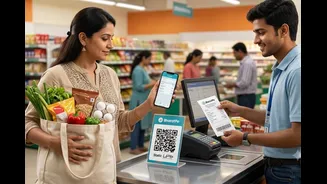
Let's clear the biggest question first: you will not be charged for your regular UPI payments. Sending money to a friend or family member (a person-to-person, or P2P, transaction) remains completely free, regardless of the amount. Scanning a QR code at
your local kirana store, tea stall, or vegetable vendor for small, everyday purchases will also continue to be free of any extra charges for you, the consumer. The government and the National Payments Corporation of India (NPCI) have been very clear that the new fee structure is not meant to affect the average citizen's daily digital transactions. In fact, over 95% of all merchant payments, which are typically for smaller amounts, fall outside the scope of these new charges.
So What Are These New Charges?
The new fee is called a Merchant Discount Rate (MDR). This is a charge that merchants pay to payment processors for providing digital payment services. From October 15, 2026, a 0.4% MDR will apply to some UPI payments made to merchants. However, this only kicks in for transactions valued at over ₹2,000. For example, on an eligible transaction of ₹3,000, the MDR would be ₹12. For very large transactions, this fee is capped at a maximum of ₹300. It's crucial to understand this is not a new tax from the government; it's a fee that gets distributed among the players in the payments ecosystem, like banks and payment app providers, who make the transactions possible.
Which Transactions Are Affected?
The new MDR specifically targets Person-to-Merchant (P2M) transactions above the ₹2,000 threshold. More precisely, the initial framework for this charge was designed for payments made via Prepaid Payment Instruments (PPIs) — think digital wallets. When you use a wallet to make a UPI payment to a merchant, it's treated differently from a direct bank-to-bank UPI transfer. The latter, your normal UPI payment, remains free. The fee is designed to apply to commercial transactions where a merchant is receiving a larger payment. Small merchants with a monthly UPI turnover of up to ₹1 lakh are also exempt, protecting the smallest businesses from this cost.
Why Was This Fee Introduced?
For years, UPI has operated on a zero-MDR model to encourage widespread adoption. This strategy was incredibly successful, making UPI a world-leading digital payments system. However, running this massive infrastructure isn't free. Banks, payment apps, and NPCI incur significant costs for technology, cybersecurity, fraud prevention, and innovation. The introduction of a small MDR on higher-value merchant transactions is a step towards making the UPI ecosystem financially self-sustainable. This ensures that service providers have a revenue stream, which in turn encourages them to keep investing in and expanding the network, especially in rural and semi-urban areas.
What Does This Mean for Merchants?
The charge is borne by the merchant, not the consumer. Banks and payment providers are instructed to ensure this cost is not passed on to the customer at the point of sale. For larger, organized businesses, this fee is similar to the MDR they already pay for credit and debit card transactions and is often treated as a standard operational cost. However, there are concerns that some smaller, unorganized businesses just above the exemption threshold might be tempted to encourage cash payments to avoid the fee. To help with this, a portion of the MDR collected will be used to create a fund to improve digital payment infrastructure for small merchants.