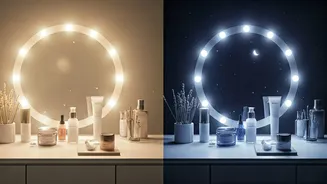









The Skin’s Internal Clock
Just like your brain knows when it’s time to sleep and wake, your skin follows its own 24-hour schedule, known as a circadian rhythm. During the day, your skin is in protection mode, fending off environmental aggressors like UV radiation and pollution.
But when you fall asleep, its function completely shifts. It transitions from a defender to a dedicated repair crew, beginning a crucial period of regeneration and recovery from the day's damage. This internal clock is so precise that a lack of quality sleep can throw the whole system off, hindering your skin's ability to heal and leading to issues like dryness, inflammation, and premature ageing.
The Midnight Repair Crew at Work
Several key processes kick into high gear while you sleep, peaking between 11 p.m. and 4 a.m. Firstly, cell regeneration and turnover accelerate significantly, with some research showing that cell division can double compared to daytime. This process helps replace old, damaged cells with fresh, new ones. Secondly, your body releases human growth hormone (HGH), which stimulates the production of collagen. Collagen is the protein responsible for keeping skin firm and elastic, so this nightly boost is essential for preventing sagging and smoothing fine lines. Finally, increased blood flow delivers a surge of oxygen and nutrients to the skin, which aids in DNA repair and helps flush out toxins, contributing to that refreshed, glowing look in the morning.
A Double-Edged Sword: Permeability and Water Loss
One of the most interesting changes at night is that your skin becomes more permeable. This is great news for your skincare products, as it means active ingredients like retinol, peptides, and hyaluronic acid can penetrate more deeply and work more effectively. However, this increased permeability also has a downside: transepidermal water loss (TEWL). As your skin barrier relaxes, more moisture can evaporate from its surface. This is why you might wake up with skin that feels tight or dry, especially if you sleep in a room with heating or air conditioning. Therefore, a good nighttime routine needs to both deliver active ingredients and lock in hydration.
Crafting Your Ultimate Nighttime Routine
To make the most of your skin’s natural repair cycle, a strategic nighttime routine is key. Start with a thorough double cleanse to remove makeup, sunscreen, and the day's grime, ensuring your pores are clear and ready to absorb what's next. Next, apply your treatment serums. This is the ideal time for potent ingredients like retinol to boost cell turnover and collagen, or peptides to support skin structure. Niacinamide is another excellent choice for calming inflammation and strengthening the skin barrier. Follow with a dedicated eye cream to address the delicate skin around the eyes. Finally, lock everything in with a nourishing moisturizer. Look for ingredients like ceramides, hyaluronic acid, and squalane to create a protective seal that both delivers hydration and prevents moisture loss overnight.
Beyond the Bottle: Lifestyle Habits for Better Skin
While products play a huge role, they can't do all the work. Aim for 7 to 9 hours of quality sleep per night and try to maintain a consistent sleep schedule to keep your skin’s circadian rhythm in sync. Simple changes to your sleep environment can also make a difference. Sleeping on a silk or satin pillowcase reduces friction on the skin and is less absorbent than cotton, meaning your expensive skincare products stay on your face, not your pillow. If you notice your skin is particularly dry in the morning, using a humidifier in your bedroom can add moisture back into the air, reducing transepidermal water loss. By aligning your skincare and sleep habits, you give your skin the best possible chance to repair, restore, and greet the morning looking its best.