




An Unseen World
It is difficult to overstate the sheer scale of the unknown. While we have mapped the entire ocean floor in low resolution, we have visually explored less than 0.001% of the deep seafloor. This means that a staggering 99.999% of the deep ocean bottom
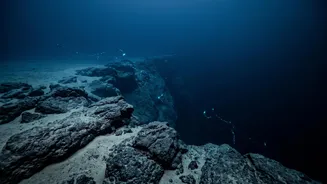
has never been seen by human eyes. This vast, unexplored territory covers two-thirds of our planet's surface and represents the largest habitat on Earth. The challenges are immense: crushing pressure thousands of times greater than at the surface, total darkness, and near-freezing temperatures make exploration incredibly difficult and expensive. Sending robotic vehicles into this hostile environment is a constant battle against corrosive saltwater and technological limitations.
The Undiscovered Life
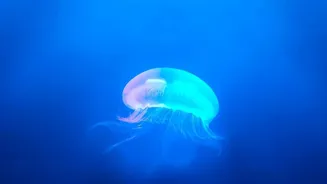
Scientists are certain that the deep sea is teeming with undiscovered life, with some estimates suggesting up to 90% of ocean species are yet to be found. Every expedition into the deep seems to prove this point. In recent years, missions have uncovered hundreds of new species, from ghost sharks and giant phantom jellyfish to entirely new families of crustaceans. Just this year, researchers have documented dozens of new species of fish, corals, sea cucumbers, and worms in previously unstudied areas. Many of these animals have developed bizarre adaptations to survive in the extreme environment, such as producing their own light—a phenomenon called bioluminescence—to attract prey, find mates, or defend against predators. For many species, we have only seen their larval stages, which can look so different from the adults that they were once classified as separate species entirely.
A Climate Regulator We Barely Understand
The deep ocean plays a critical role in regulating our planet's climate, but the exact mechanics are still being uncovered. It has absorbed more than 90% of the excess heat and about a third of the carbon dioxide generated by human activities, acting as a massive buffer against climate change. However, we know very little about the long-term consequences. How this heat and carbon are distributed through deep-sea turbulence, and how quickly they circulate, are major questions. Recent studies suggest these processes happen much faster than previously thought, on the scale of decades rather than millennia, which could have profound implications for sea-level rise and the health of marine ecosystems. The deep ocean’s capacity to absorb heat and CO2 is not infinite, and scientists are racing to understand the tipping points.
Geological Secrets and Hidden Histories
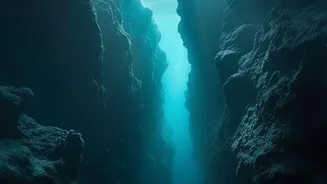
The seafloor is not a uniform expanse of mud; it is a dynamic landscape of underwater volcanoes, vast mountain ranges (seamounts), and deep canyons. These features hold the keys to understanding Earth's history, from plate tectonics to ancient climate shifts. Many of these seamounts, which can be hotspots for biodiversity, have never been studied. Scientists are also interested in what the deep sea can tell us about nutrient cycles. Much of the life in the deep depends on 'marine snow'—organic material sinking from the surface—but the exact food webs are still largely a black box. As we begin to explore these areas, we are uncovering new geological phenomena, vast cold-water coral reefs, and even graveyards of shark teeth that tell a story millions of years old.