


The Significance of Milk in Janmashtami
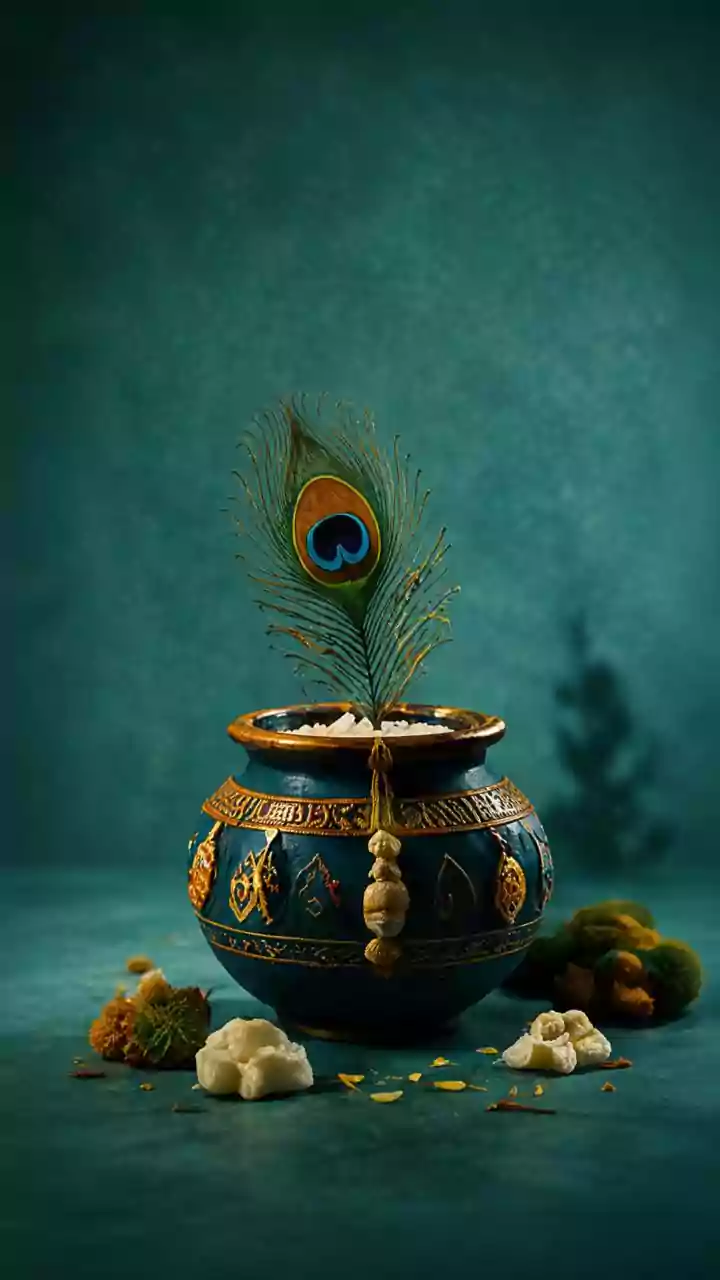
Lord Krishna’s childhood tales are filled with playful stories of his love for milk, butter (makhan), and curd. Known as Makhan Chor, or the butter thief, his fondness for these dairy delights is a central theme of his early life in Vrindavan. This divine
connection is why milk-based sweets are considered an essential part of the 'bhog' or food offerings made to him during Janmashtami. Devotees lovingly prepare these dishes to seek his blessings, and the offerings symbolise purity, devotion, and the sweetness of divine love. From simple makhan mishri to elaborate kheer, these preparations are a cornerstone of the celebration, honouring a tradition that connects directly to the deity's cherished pastimes.
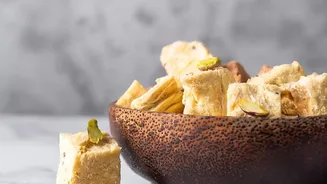
Mathura ke Pede
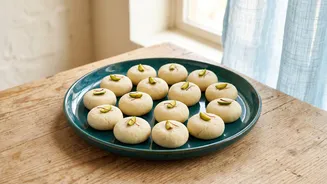
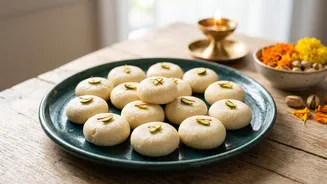
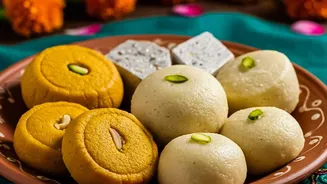
No Janmashtami bhog is complete without the iconic Mathura Peda. Originating from Lord Krishna's birthplace, this sweet is synonymous with the festival itself. It is a rich, caramelised sweet made by slow-cooking khoya (milk solids) with sugar and ghee until it achieves a beautiful golden-brown hue and a slightly grainy texture. Flavoured with cardamom, this delicacy is not just a dessert but a sacred offering, or 'prasad', that embodies the spiritual essence of Mathura. Its melt-in-the-mouth consistency and heavenly taste make it a favourite offering for devotees and a cherished sweet across the country.
Makhana Kheer
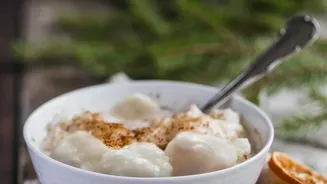
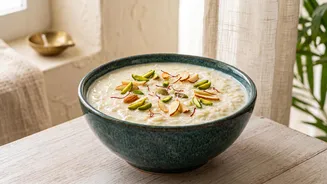
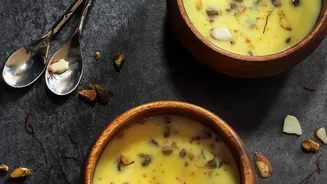
A perfect dessert for those observing a fast (vrat) on Janmashtami, Makhana Kheer is both delicious and nutritious. Made with phool makhana (fox nuts), milk, sugar, and ghee, this pudding is a creamy and satisfying alternative to traditional rice kheer. The makhana is typically roasted in ghee until crisp, then simmered in milk until the mixture thickens. The dessert is often flavoured with cardamom powder and saffron, and garnished with chopped nuts like almonds and pistachios. Its light texture and rich flavour profile make it a popular and comforting bhog offering that is easy to prepare.
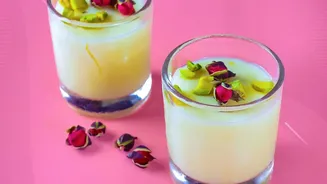
Rabri
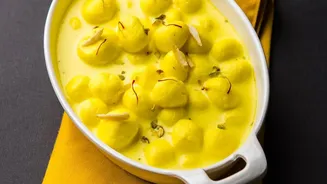
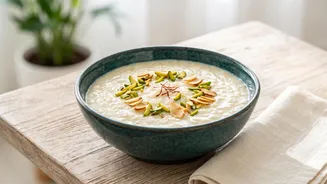
Rabri is a classic North Indian dessert that requires patience but rewards with its incredibly rich and creamy texture. It is made by simmering full-fat milk in a heavy-bottomed pan over low heat for a long time, allowing it to reduce and thicken. As layers of cream (malai) form on the surface, they are carefully pushed to the side of the pan. Once the milk has significantly reduced, these layers are mixed back in, creating a luscious, textured sweet. Sweetened with sugar and flavoured with saffron and cardamom, Rabri can be served on its own or as an accompaniment to other sweets like jalebi or malpua.
Shrikhand
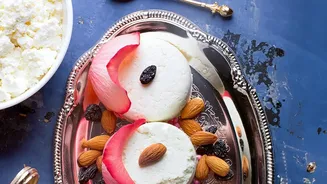
A beloved sweet from the western states of Maharashtra and Gujarat, Shrikhand is a simple yet elegant dessert made from strained yogurt, known as 'chakka'. The process involves hanging curd in a muslin cloth to drain the whey, resulting in a thick, creamy base. This thickened yogurt is then whisked with powdered sugar, saffron, and cardamom until smooth and airy. Often garnished with slivered pistachios and almonds, Shrikhand is a refreshing, cooling dessert that offers a delightful tangy and sweet flavour. It is a no-cook sweet that is perfect for festive offerings.
Gopalkala
Gopalkala, also known as Dahi Kala, is a unique Maharashtrian preparation that is central to the Dahi Handi celebrations. It is a savoury and sweet mixture that symbolises the food Lord Krishna would share with his friends, the cowherds. The dish is a potluck-style mix, signifying community and equality. It typically includes flattened rice (poha), curd, milk, cucumber, fruits like pomegranate, and a tempering of ghee, cumin seeds, and green chillies. There is no fixed recipe, and its charm lies in the combination of various simple ingredients brought together as a communal offering.