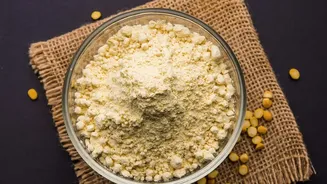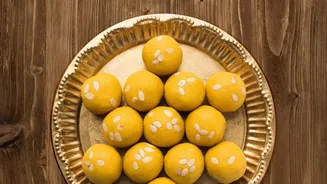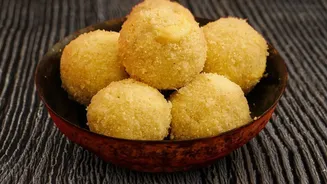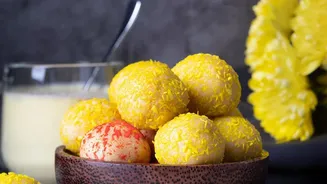





Besan ladoo should be a soft, grainy, melt-in-your-mouth marvel. But often, the result is a hard, dense ball. This guide breaks down the simple science of why that happens and how to ensure your ladoos are perfectly soft, every single time.
The Roasting Ritual
The soul of
a good besan ladoo lies in perfectly roasted gram flour (besan). This is not a step to be rushed. Roasting on a high flame is a primary reason for hard ladoos. It cooks the besan unevenly, can burn it, and results in a bitter, raw taste. The key is patience. Use a heavy-bottomed pan and roast the besan on a low to medium-low flame. You must stir continuously to ensure every granule is evenly heated. This process can take anywhere from 20 to 45 minutes, depending on the quantity. You'll know it's done not by the clock, but by the signs: the raw, beany smell will be replaced by a rich, nutty aroma, and the colour will deepen to a beautiful, even golden brown. Some recipes even mention the mixture will become airy and fluffy. Under-roasting is just as bad as over-roasting, leaving a raw flour taste that sticks to the roof of your mouth.
The Ghee-to-Besan Balance
Ghee is not just for flavour; it's the binding agent that provides the signature rich mouthfeel and ensures softness. Using too little ghee is a direct path to ladoos that are dry, crumbly, and hard. A common mistake is being stingy with the ghee to make the ladoos seem 'healthier', but this compromises the texture entirely. A good rule of thumb is a 2:1 ratio of besan to ghee by weight. It's best to start by adding about three-quarters of your ghee, roasting the besan, and then adding the rest as needed. The mixture will initially be thick and lumpy, but as it roasts, it will loosen and become more of a smooth, liquid paste. If your mixture seems too dry and isn't coming together while shaping, you can add a tablespoon of warm, melted ghee at a time until it binds.
The Sweet Science of Sugar
When you add the sugar and what kind of sugar you use are both critical. Adding sugar to a hot besan mixture is a classic mistake. The heat will instantly melt the sugar, turning the mixture into a runny, sticky syrup that will set hard and flat. You must let the roasted besan mixture cool down until it is just warm to the touch before incorporating the sugar. The type of sugar also matters. While finely powdered household sugar can work, many traditional recipes call for 'boora' or 'tagar', a type of unrefined, porous sugar that gives the ladoos a desirable grainy texture without being gritty. Using regular granulated sugar will result in a gritty mouthfeel, while some pre-packaged confectioner's sugars contain cornstarch, which can alter the final texture.
Troubleshooting Common Ladoo Failures
Even with the best intentions, things can go wrong. Here’s how to fix them. If your ladoos won't hold their shape and are crumbly, it almost always means you need more ghee. Add a little warm, melted ghee and try again. If the mixture is still too difficult to bind, some suggest refrigerating it for 10–20 minutes to help the ghee solidify slightly, which can aid in shaping. Conversely, if your mixture is too runny or greasy, you've likely added too much ghee or added the sugar when the besan was too hot. The best fix for this is to let the mixture cool completely, or even refrigerate it for 15–20 minutes. This should firm up the ghee enough to allow shaping. In a worst–case scenario, you can roast a small amount of additional besan separately (with very little ghee) and mix it into the runny batch to absorb the excess fat.