






A Flyby for the Future
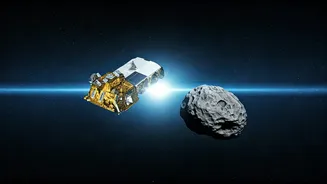
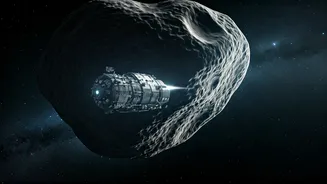
On July 5, 2026, the Japan Aerospace Exploration Agency (JAXA) conducted a crucial test for its planetary defense ambitions. Its celebrated Hayabusa2 spacecraft, famous for returning samples from the asteroid Ryugu in 2020, performed a high-speed flyby
of another near-Earth asteroid named Torifune. Travelling at over 18,000 kilometres per hour, the fridge-sized probe passed within 400 to 600 meters of the asteroid, which is located about 100 million kilometers from Earth. The goal wasn't to hit Torifune, but to prove that JAXA could autonomously guide a spacecraft with extreme accuracy to a small, fast-moving target—a foundational skill for any future mission to deflect a hazardous object.
The Importance of Precision Steering
The mission was a resounding success, confirming the spacecraft was working normally after the close encounter. JAXA team leader Yuya Mimasu highlighted the difficulty, comparing the feat to hitting a one-yen coin in Hokkaido from Okinawa. This demonstration of high-precision guidance technology is a critical step. Before you can smash into an asteroid (the kinetic impactor method) or use more subtle techniques, you first have to get there. This successful flyby proves that Japan has mastered this incredibly challenging part of the equation, making it only the second nation, after the United States, to demonstrate this level of capability for planetary defense. This proficiency is essential not just for kinetic impactors but also for developing more advanced, non-destructive deflection methods.
Kinetic Impact vs. A Softer Touch
NASA’s DART mission in 2022 was a landmark achievement, proving that ramming a spacecraft into an asteroid could successfully alter its orbit. This “kinetic impactor” technique is our most tested planetary defense strategy. Japan's test, however, supports the development of a wider toolkit. While Hayabusa2 did carry a small impactor on its original mission to Ryugu in 2019 to create a crater for study, its impact energy was too small to deflect the asteroid. The recent Torifune flyby is about mastering the guidance needed for any type of interaction. Future non-impact methods could include a “gravity tractor,” where a spacecraft flies alongside an asteroid, using its own minute gravity to gently tow it into a new orbit over time. Another concept is laser ablation, which involves using focused lasers to vaporize rock on the asteroid's surface, creating a gentle, continuous thrust to push it off course. These softer approaches may be better suited for certain types of asteroids, like loosely-packed rubble piles, and offer more controlled, precise adjustments.
A Global Effort for Planetary Safety
Defending Earth from cosmic threats is a global challenge that requires international cooperation. While the kinetic impactor is a powerful tool, having a variety of proven methods is crucial. An asteroid's size, composition, and the amount of warning time we have will all dictate the best defensive strategy. Japan's focus on precision guidance technology is a vital contribution to this international effort. With this capability, JAXA is not only prepared to develop its own kinetic impactors but is also laying the groundwork for more advanced, non-destructive techniques that could one day be indispensable. This expertise positions Japan as a world leader in asteroid exploration and a key partner in ensuring our planet's safety.
What Comes Next?
The Hayabusa2 probe is now continuing on its extended mission. Its next major objective is a rendezvous with a small, rapidly rotating asteroid known as 1998 KY26, scheduled for 2031. Meanwhile, JAXA will also collaborate with the European Space Agency (ESA) on a mission to explore the asteroid Apophis when it makes a historically close approach to Earth in 2029. The data gathered from the Torifune flyby will be invaluable for these future missions and will continue to refine the technologies needed to protect Earth. By proving it can navigate to and operate around these small celestial bodies with pinpoint accuracy, Japan is helping to turn the science fiction of planetary defense into a practical reality.