

A New Treasure Map for the Moon
The idea of water on the Moon isn't entirely new, but our understanding of it has dramatically sharpened. Early hints came from missions decades ago, but recent data from instruments like those on NASA's Lunar Reconnaissance Orbiter (LRO) and the retired
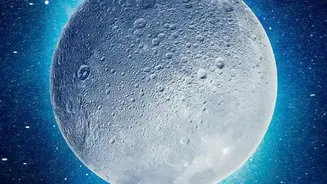
SOFIA observatory have provided a much clearer picture. Scientists have compiled this data into comprehensive maps that show where water ice is most likely to be found. These aren't simple drawings with an 'X' marking the spot. Instead, they are sophisticated data visualizations showing the probability of ice, particularly within the deep, dark floors of craters near the Moon's poles that never see sunlight. These permanently shadowed regions (PSRs) are some of the coldest places in the entire solar system, with temperatures dipping low enough to preserve ice for billions of years.
The Ultimate Lunar Resource
Finding water on the Moon is a game-changer because it's like discovering an all-in-one toolkit for survival. The most obvious use is for drinking water and life support for astronauts. But its true value lies in its components: hydrogen and oxygen. Through a process called electrolysis, the water ice can be split into these two elements. This provides breathable air for a future lunar habitat. Even more critically, liquid hydrogen and liquid oxygen are the primary components of modern rocket propellant. Having a local source of rocket fuel on the Moon would revolutionize space travel. Instead of hauling all the necessary fuel from Earth—a costly and limiting factor—missions could refuel on the Moon for journeys deeper into the solar system, to Mars and beyond. This concept, known as in-situ resource utilization (ISRU), is the cornerstone of establishing a sustainable, long-term human presence off-world.
Not Just There, But Reachable
The new maps are crucial because they don't just say water exists; they pinpoint areas where it might be accessible. However, 'accessible' is a relative term. The ice isn't a clean, frozen lake waiting to be tapped. It's expected to be mixed in with the lunar soil, or regolith, perhaps as frost, ice grains, or small chunks. The locations themselves present immense challenges. The permanently shadowed craters are rugged, dark, and unimaginably cold, with temperatures that can drop below -223°C. Any robotic or human mission would need to operate in total darkness and survive extreme temperatures that can make machinery brittle. The maps help mission planners identify areas where the ice is likely concentrated closer to the surface, potentially within the top meter, making it reachable by specialized drills and rovers.
Fueling the Artemis Generation
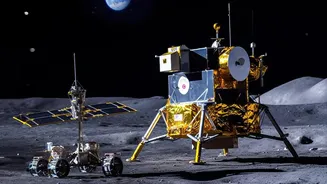
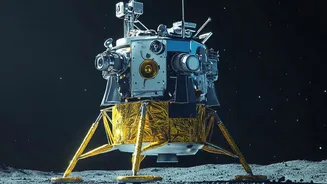
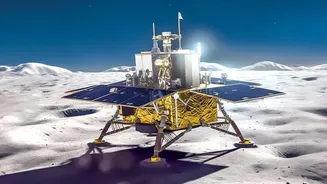
This detailed mapping directly fuels NASA's Artemis program, which aims to return astronauts to the lunar surface. A key goal of Artemis is to establish a long-term presence, and that depends entirely on using local resources. These ice maps are essential for selecting landing sites for both robotic and crewed missions. By knowing where the ice is likely to be, NASA can send missions to the most promising locations, maximizing the chances of success while minimizing risks. Upcoming robotic missions, such as the Volatiles Investigating Polar Exploration Rover (VIPER), are designed to be the next step: to go to these mapped locations, drill into the surface, and confirm exactly how much water is there and in what form. These ground-truth missions will turn the maps' probabilities into proven reserves.
From Map to Mission
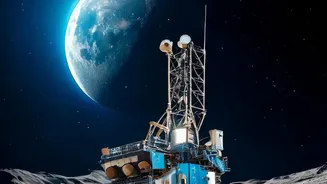
While the maps are a monumental step forward, they are just the beginning. The next phase involves deploying robotic explorers to physically verify the findings. International collaborations are also taking shape, with agencies like JAXA (Japan) and ISRO (India) planning missions with NASA to further scout for water. New techniques are also being developed to detect subsurface ice using seismic waves generated by rover drills, which could help create even more detailed 3D maps of these deposits. Each new piece of data will refine our understanding and help engineers design the technology needed to one day excavate and process this ice. These efforts are laying the groundwork, quite literally, for future lunar outposts and a thriving economy beyond Earth.