







The End of Watering Guesswork
For urban gardeners, the balcony is a precious slice of nature. But container gardening presents unique challenges. Unlike a sprawling garden bed, a pot's small soil volume makes it highly susceptible to rapid changes. Hot sun, wind, and the specific
material of the pot can cause soil to go from perfectly moist to bone-dry in a matter of hours. The classic 'finger test' is often unreliable; the surface might feel dry while the root ball is still saturated, a leading cause of plant failure in containers. This is where technology steps in, moving beyond simple timers to offer a truly intelligent solution.
What Are IoT Microbial Sensors?
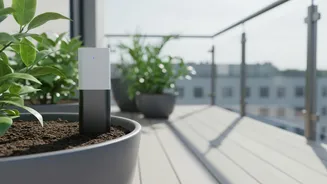
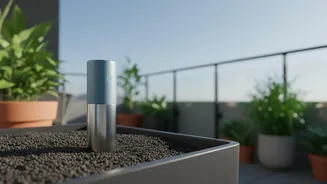
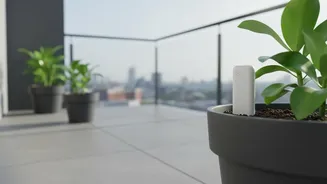
The term might sound complex, but the idea is elegantly simple. 'IoT' stands for 'Internet of Things,' which just means the sensor connects wirelessly to an app on your phone, giving you real-time data. The revolutionary part is 'microbial'. Traditional sensors measure moisture by checking the soil's electrical resistance or capacitance. Microbial sensors, often leveraging what is known as a microbial fuel cell (MFC), take a more biological approach. They essentially use the naturally occurring bacteria in the soil to generate a tiny electrical signal. As these microbes break down organic matter, their activity level changes based on the available moisture, providing a direct indicator of the soil's health and water content.
A More Plant-Centric Measurement
Why is this a better approach? A microbial sensor provides a more holistic view of the conditions at the root level. It's not just measuring water; it's measuring the activity of the soil ecosystem that your plant relies on for nutrient uptake. Research has shown that this method can be incredibly reliable, working well in both very dry and very wet conditions, which is a common issue for balcony pots that are exposed to the elements. Instead of just getting a 'wet' or 'dry' reading, you're getting a proxy for how 'alive' and functional the soil is for your plant. This allows for a more nuanced approach to watering—providing moisture when the plant’s ecosystem actually needs it.
Benefits for the Balcony Gardener
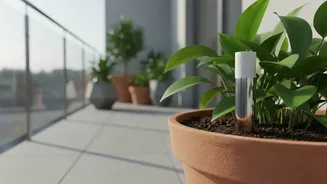
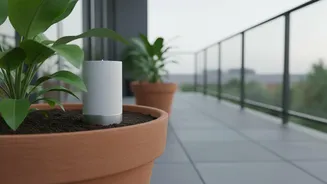
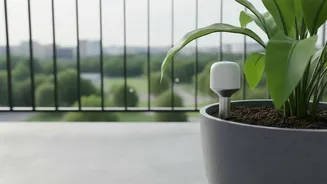
The advantages of this precise monitoring are significant for anyone with a collection of pots on their patio or balcony. First and foremost is accuracy, which helps prevent the twin evils of overwatering and underwatering, leading to healthier, more resilient plants. Second is convenience; getting an alert on your phone telling you the basil needs a drink is far easier than checking a dozen pots manually every day. This also leads to water conservation, as you only use exactly what is needed, reducing waste. For those growing herbs or vegetables, this consistent moisture level can lead to better growth and more bountiful harvests, turning a decorative space into a productive one.
How to Get Started with Smart Soil Sensors
While advanced microbial sensors are still emerging from agricultural tech into the consumer market, the smart sensor space is growing rapidly. When choosing a sensor for your balcony, look for key features. Bluetooth or Wi-Fi connectivity that pairs with a user-friendly app is essential. Check the probe length to ensure it's suitable for your pot sizes. Some sensors also measure light levels and soil nutrients, offering a more complete picture of your plant's environment. You don’t necessarily need one sensor per pot; you can start with one and rotate it among plants with similar watering needs to learn their patterns. The goal isn't to automate your hobby away, but to use data to become a more intuitive and successful gardener.