





The Challenge of Distant Worlds
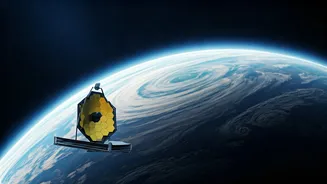
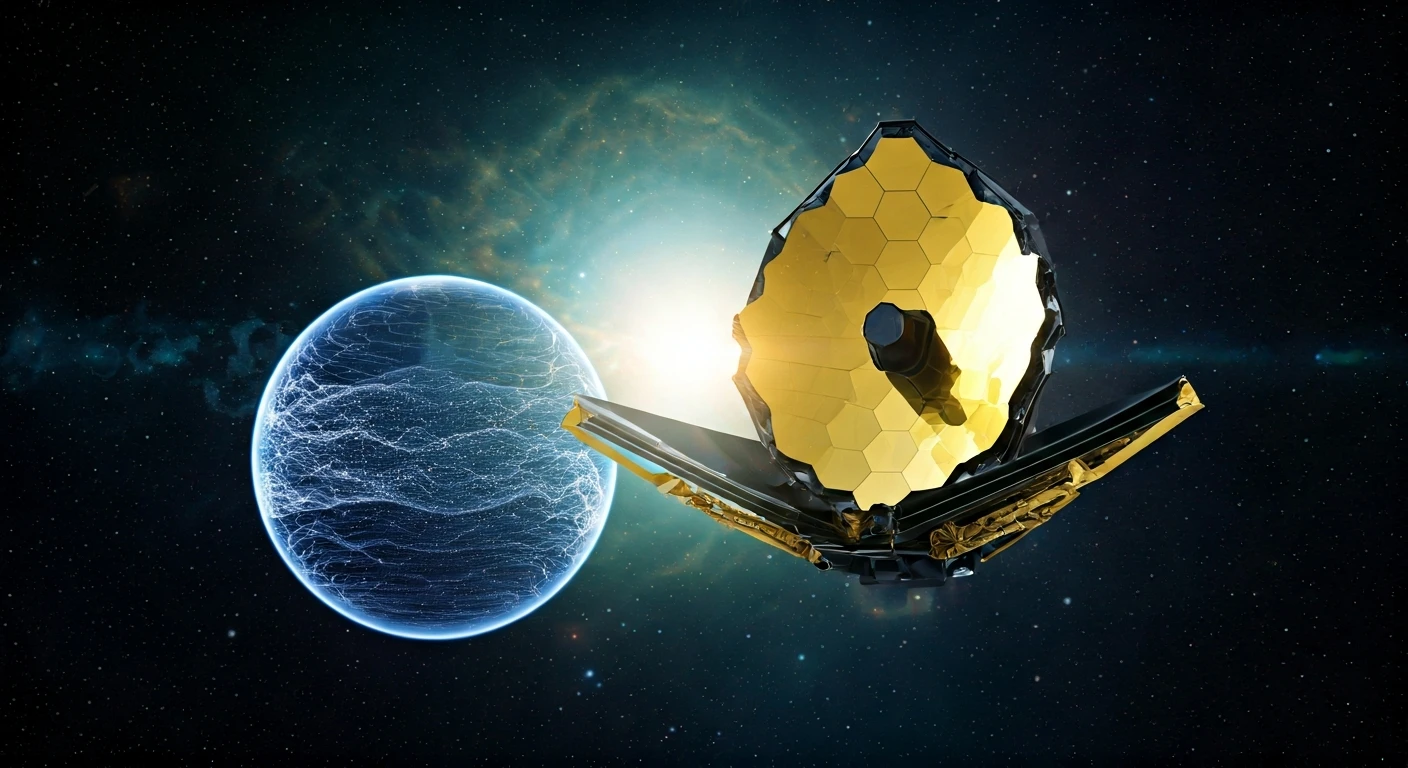
For astronomers, exoplanets present a frustrating paradox. We’ve discovered thousands of them, from gas giants larger than Jupiter to small, rocky worlds. Yet, even with powerful tools like the James Webb Space Telescope (JWST), these planets are little
more than faint specks of light, utterly dwarfed by the glare of their parent stars. Studying their atmospheres—the key to understanding their climate and potential for life—requires immense ingenuity. Scientists can't just point a telescope and see clouds or oceans. Instead, they must analyze the subtle chemical fingerprints left in starlight as it passes through a planet's atmosphere, a technique known as transmission spectroscopy.
Welcome to the Weather Extremes
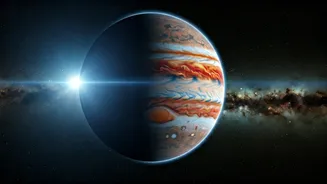
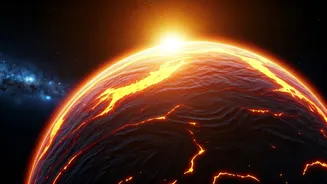
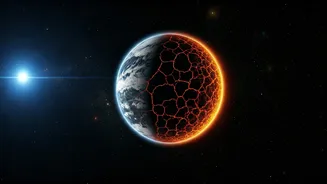
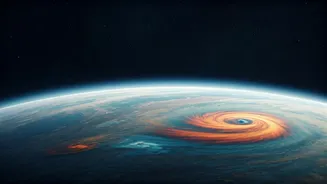
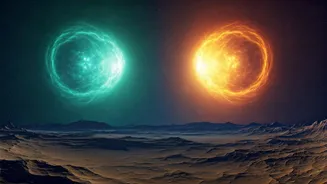
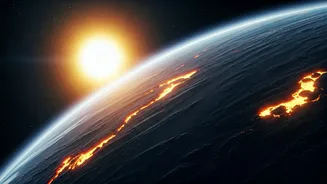
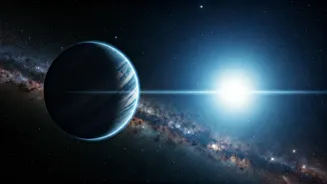
This is where alien weather comes in. Many of the first exoplanets discovered were 'hot Jupiters'—massive gas giants orbiting incredibly close to their stars. These are not friendly, temperate places. They are often tidally locked, with one side perpetually scorched by their star and the other in permanent darkness. This creates temperature differences that drive supersonic winds and weather systems unlike anything in our solar system. On some, temperatures are hot enough to vaporize rock and metal, leading to clouds of silicates and rain made of iron or even sapphires and rubies. This is the 'alien weather' that provides scientists with a unique opportunity.
A Cosmic Stress Test
These extreme worlds serve as the perfect stress test for the complex computer simulations scientists use, known as General Circulation Models (GCMs). These are sophisticated programs, often adapted from models used to forecast weather on Earth, that aim to predict the atmospheric behavior of other planets. The logic is simple: if a model can accurately predict the bizarre, asymmetric cloud patterns on a hot Jupiter like WASP-94A b—which has cloudy mornings and clear evenings—it builds confidence that the model's underlying physics is correct. If the simulation fails to match the real-world observations from JWST, scientists know their model is missing something, forcing them to refine their theories about atmospheric dynamics, cloud formation, or chemistry. This iterative process of predict, observe, and refine is fundamental to the scientific method.
From Hot Jupiters to Habitable Worlds
Studying planets that rain iron might seem far removed from the search for life, but it's a crucial stepping stone. The lessons learned from these inhospitable worlds are directly applicable to the ultimate prize: Earth-like planets. By validating their 3D climate models on the most extreme cases they can find, researchers are building more reliable tools. These fine-tuned models will be essential for interpreting the faint signals from smaller, cooler, rocky planets orbiting in their star's 'habitable zone'—the region where liquid water could exist. When JWST or future telescopes finally detect the atmosphere of a potential Earth 2.0, scientists need to be able to trust their models to correctly interpret signs of water vapor, oxygen, or methane, and to distinguish a truly living world from a sterile one.