



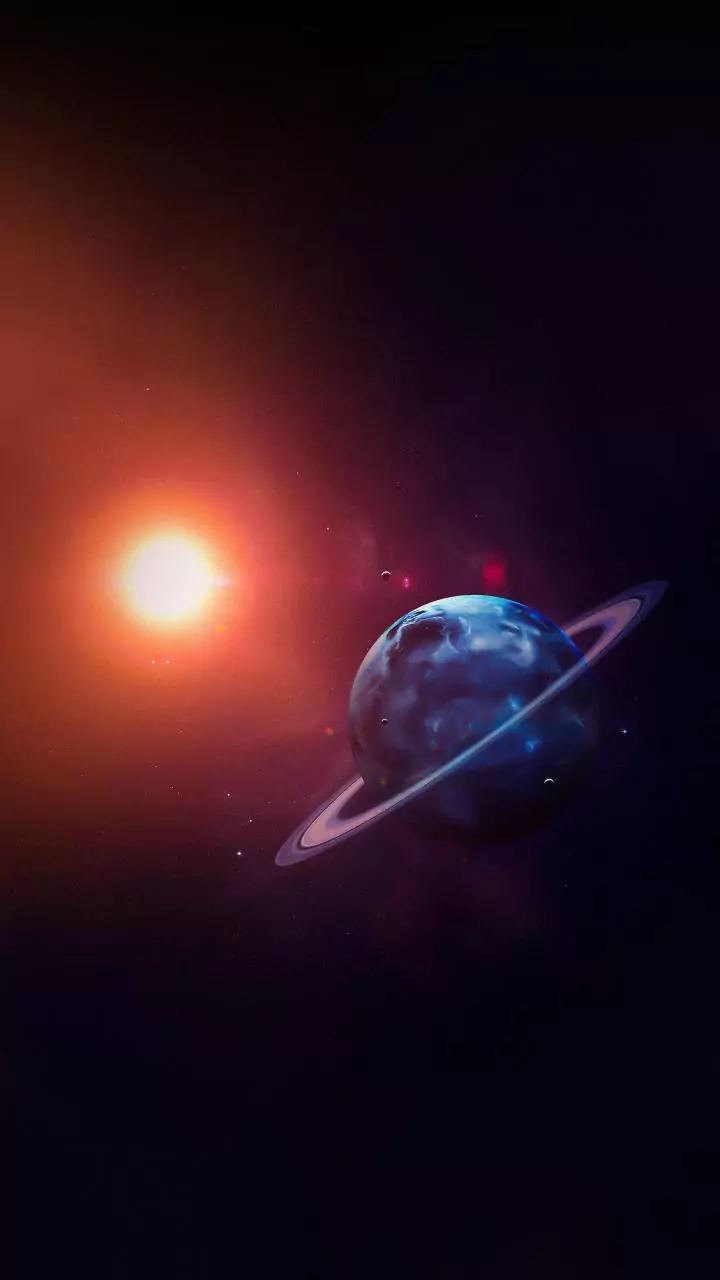
It sounds like science fiction: a massive planet, one of the first ever directly seen outside our solar system, simply vanishes. But for astronomers studying Fomalhaut b, this celestial disappearing act was a very real and baffling mystery.
A Landmark Discovery
Located about
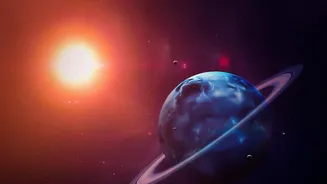
25 light-years from Earth, the star Fomalhaut is one of the brightest in our night sky. In 2008, astronomers using the Hubble Space Telescope announced a historic achievement: they had captured direct images of a planet orbiting it, a feat rarely accomplished. The object, named Fomalhaut b, appeared as a distinct dot of light and was hailed as a major discovery in the hunt for worlds beyond our own. It was believed to be a massive gas giant, possibly up to three times the size of Jupiter. This finding offered a thrilling, tangible glimpse into a distant solar system.
A Puzzling 'Planet'
Almost immediately, however, Fomalhaut b started to behave strangely for a planet. For one, it was incredibly bright in visible light but had no detectable infrared heat signature, which is highly unusual for a large planet that should be warm enough to glow in infrared light. Furthermore, its orbit was highly unusual and appeared to be on a trajectory that would carry it away from its star, rather than in a stable, elliptical path as expected. These odd characteristics led astronomers to question what they were really looking at. Some hypothesized that the brightness came from a massive dust ring surrounding the planet, perhaps created by a collision.
The Vanishing Act
The mystery deepened as astronomers continued to track the object over several years. Hubble observations showed that Fomalhaut b was gradually fading and appeared to be expanding in size. Then, in an analysis of images taken in 2014, scientists were met with a complete surprise: the object had vanished entirely. It was no longer detectable by the powerful Hubble telescope. Planets, especially massive ones, don't just disappear. The team knew they weren't witnessing a planet's destruction, but rather the final chapter of a different kind of cosmic story.
The Cosmic Collision Theory
The explanation, proposed by astronomers András Gáspár and George Rieke from the University of Arizona, is as dramatic as it is elegant: Fomalhaut b was never a planet at all. Instead, what Hubble first observed in 2004 was the immediate aftermath of a titanic collision between two large, icy bodies. They estimated that two objects, each about 200 kilometres across, smashed into each other. The 'planet' was actually a vast, expanding cloud of very fine dust particles created by this incredibly rare event.
Solving the Celestial Mystery
This theory neatly explains all of Fomalhaut b’s strange behaviours. A cloud of fine dust would reflect the starlight from Fomalhaut, making it bright in visible light, but the particles themselves would be too cold to emit significant infrared heat. The immense force of the collision would have placed the debris on an escape trajectory, explaining the object's unusual path away from the star. And finally, as the dust cloud expanded and dispersed over time, it would naturally become fainter until it grew so sparse that it fell below Hubble's detection limit, effectively 'vanishing' from our view. The event was a stroke of luck for astronomers, who estimate such a massive collision may only happen in the Fomalhaut system once every 200,000 years.