





Rowing: The Engine of Power and Rhythm
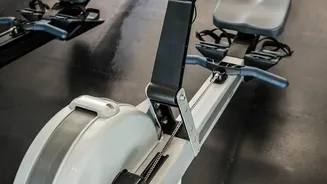
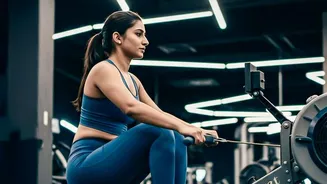
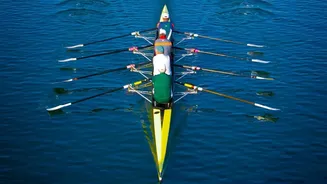
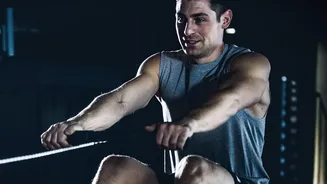
The secret to an effective rowing stroke isn't arm strength; it's a powerful, rhythmic, and perfectly sequenced leg drive. Roughly 60% of the power in each stroke comes directly from the lower body. The coordination here is linear and cyclical. It follows
a strict four-part sequence: the catch, drive, finish, and recovery. During the drive phase, you initiate the movement by forcefully extending your knees and hips, pushing off the footplate. This explosive push engages the quadriceps, glutes, and hamstrings in a coordinated blast of power. The brain and body learn this repetitive, predictable pattern, strengthening the neural pathways for this specific sequence. This makes rowing a masterclass in developing powerful, endurance-based coordination in a single plane of motion. Your body learns to generate maximum force through a consistent, repeatable movement, making your lower half the powerful engine of the machine.
Dancing: The Art of Agility and Adaptation
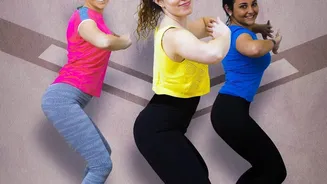
If rowing is about mastering one powerful sequence, dancing is about mastering infinite, unpredictable ones. Dancers need a highly adaptive and multi-dimensional form of coordination. Their lower body must constantly react to shifts in weight, changes in direction, and the demands of balance, often on one foot. Movements occur not just forward and back, but side-to-side and rotationally. This requires the small stabilizing muscles around the ankles, knees, and hips to be in constant communication with the brain. Think of a plié in ballet: it's not just bending the knees, but a coordinated flexion of the ankles, knees, and hips to absorb force or prepare for a jump. Studies show that dancers develop superior balance because their training creates specific neuromuscular adjustments. Their leg muscles, particularly in the calves and shins, learn to fire in unique patterns to maintain stability during dynamic movements like landing from a leap or executing a quick turn. This creates a different kind of lower-body intelligence—one built on reactivity, balance, and control across all planes of motion.
Strength vs. Stability
Both activities build formidable lower-body strength, but for different purposes. Rowing develops raw power and muscular endurance. The continuous, resisted leg drive is like performing hundreds of leg presses, building strength primarily in the quads, glutes, and hamstrings. This is strength designed for powerful forward propulsion. While rowing engages stabilizing muscles, its primary benefit is generating force in a controlled, linear path. Dance, on the other hand, prioritizes stability and control through a full range of motion. It strengthens the muscles responsible for adduction (inner thighs), abduction (outer hips), and rotation. A dancer's strength is in their ability to maintain balance on the ball of one foot, control a slow leg extension, or absorb the impact of a landing with grace. This requires not just strong primary movers but also highly conditioned stabiliser muscles and incredible proprioception—the body's awareness of its position in space.
Muscle Engagement: A Tale of Two Patterns
The pattern of muscle engagement in rowing is predictable and sequential. It’s a powerful push (concentric contraction) from the legs, followed by a controlled return (eccentric contraction) during the recovery. The same muscles fire in the same order, every time, with the intensity changing based on effort. Dancing involves far more complex and varied muscle activation. A single phrase of choreography might require an explosive jump (concentric), a soft landing (eccentric), and a held pose like an arabesque (isometric). Different dance styles also recruit muscles differently; the fast-paced Jive shows higher activation in the biceps femoris, while a slower Rumba may emphasize the gastrocnemius (calf). Dancers must also manage forces from multiple angles, strengthening muscles that rowing barely touches, like the hip abductors and rotators that are crucial for turnout and lateral movements.
Which is Right for Your Goals?
Choosing between dancing and rowing depends entirely on what you want to train. Are you looking for a low-impact, high-intensity workout that builds cardiovascular endurance and raw leg power through a rhythmic, repeatable motion? Rowing is an unparalleled choice. It’s an efficient way to build a strong posterior chain and leg drive in a controlled environment. Are you looking to improve your balance, agility, and body control, while learning to move with grace and expressiveness? Dancing offers a challenge that is as much mental as it is physical. It trains your body to be reactive, coordinated in multiple planes, and stable in unstable positions. Some athletes, including dancers, even use rowing as a form of non-impact cross-training to build endurance without adding more stress to their joints.